‘Because India is our friend’: Iran envoy updates on ‘safe passage’ in Strait of Hormuz| India News
In the dynamic currents of global diplomacy and trade, a clear declaration from a key regional player often carries significant weight. Such was the case when Mohammad Fathali, Iran’s former Ambassador to India, affirmed India’s enduring status as a trusted partner for Iran, ensuring that Indian vessels would navigate the strategic Strait of Hormuz without hindrance. This statement, resonating across maritime corridors and diplomatic circles, underscores a critical facet of regional stability and highlights the deep-rooted ties between two ancient civilizations.
Omni 360 News delves into the implications of this assurance, exploring its context, historical bedrock, and future reverberations.
Navigating the World’s Chokepoint The Strait of Hormuz
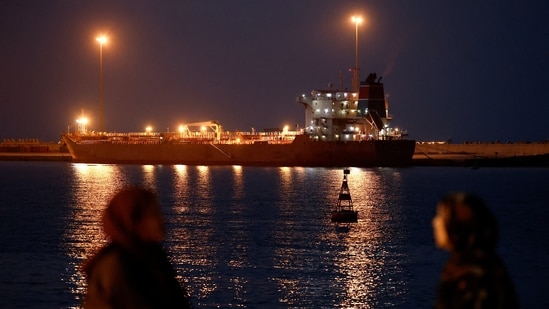
To truly grasp the significance of Fathali’s words, one must first understand the Strait of Hormuz. Imagine a narrow maritime passageway, barely 21 nautical miles wide at its narrowest point, connecting the Persian Gulf with the open waters of the Arabian Sea and beyond. This is the Strait of Hormuz, a geographical marvel and a geopolitical flashpoint. It is the sole sea passage from the Persian Gulf to the open ocean, making it an indispensable artery for global energy trade.
Roughly a fifth of the world’s total petroleum consumption, and a quarter of global liquefied natural gas (LNG) supply, passes through this strait daily. Tankers laden with oil and gas from Saudi Arabia, Iran, Iraq, Kuwait, Qatar, and the UAE must traverse these waters. Any disruption here, whether due to political tension, military exercises, or accidental incidents, sends immediate ripples through international energy markets and has profound economic consequences worldwide. For a nation like India, heavily reliant on imported energy to fuel its rapidly expanding economy, secure passage through Hormuz is not merely a preference; it is an economic imperative.
A Partnership Forged Through Time India and Iran’s Enduring Bond
The relationship between India and Iran stretches back millennia, predating modern nation-states and transcending temporary geopolitical shifts. From ancient trade routes to shared cultural heritage, the two nations have fostered a unique bond. In contemporary times, this relationship has matured into a strategic partnership, particularly vital in the energy sector and connectivity initiatives.
India has historically been one of Iran’s largest oil customers, a testament to the robust economic links that have persisted even amidst complex international sanctions regimes. While global pressures have sometimes forced India to adjust its purchasing patterns, the underlying commitment to a stable, mutually beneficial trade relationship has remained. India’s pragmatic foreign policy, characterized by strategic autonomy and an emphasis on multilateralism, has allowed it to maintain working relations with various global powers, including Iran.
A cornerstone of this modern partnership is the Chabahar Port in Iran. Located on the Gulf of Oman, Chabahar is strategically vital for India, offering an alternative trade route to Afghanistan and Central Asia, bypassing Pakistan. India has significantly invested in developing phases of this port, viewing it as a gateway to enhance regional trade and connectivity. Local reports from Iranian provinces bordering the Gulf have often highlighted the joint efforts at Chabahar as a symbol of practical cooperation, far removed from the headlines of global power struggles. This collaborative spirit, focusing on shared economic benefits and regional development, reinforces the narrative of India as a trustworthy and reliable partner.
Why the Assurance? Trust in Turbulent Waters
Mohammad Fathali’s unambiguous assurance to India arises from a confluence of factors. Iran values India’s independent foreign policy stance. Unlike many Western nations, India has generally refrained from directly participating in geopolitical disputes involving Iran, opting instead for diplomatic engagement and respecting national sovereignty. This approach has fostered a sense of trust and reliability from Tehran’s perspective.
Furthermore, India is not perceived as a military threat or an antagonistic force in the region. Its substantial energy needs and its role as a significant economic power make it an indispensable trade partner. For Iran, ensuring the smooth flow of Indian trade through the Strait of Hormuz is not just a diplomatic courtesy; it’s a recognition of mutual economic dependency and a strategic decision to maintain a vital commercial link. Amidst regional tensions, such assurances serve to delineate allies and maintain channels of stable engagement. From the perspective of regional analysts quoted in various specialized maritime journals, Iran’s message to India is a clear signal of differentiation, ensuring that its strategic friends do not bear the brunt of broader geopolitical friction.
Implications for India’s Energy Security and Maritime Trade
For India, Fathali’s statement offers a significant degree of comfort amidst an often-unpredictable geopolitical landscape. Secure access to the Strait of Hormuz is paramount for its energy security. Any disruption here could lead to skyrocketing oil prices, impacting everything from transport costs to manufacturing expenses, ultimately affecting the common citizen. This assurance directly addresses these critical vulnerabilities.
Moreover, it reinforces India’s position as a significant player in the Indo-Pacific region, capable of maintaining independent foreign relations that serve its national interests. It allows India to continue diversifying its energy sources and strengthening its trade corridors without undue external pressure. It also signals to other nations that India’s relationships are robust and resilient, built on mutual respect and long-term strategic alignment.
Looking Ahead Sustaining a Balanced Relationship
The declaration by Mohammad Fathali is more than a diplomatic nicety; it is a reaffirmation of a deep and intricate relationship that skillfully navigates the complex eddies of international relations. It highlights the importance of maintaining open channels of communication and fostering trust in an era often defined by uncertainty.
As India continues its trajectory as a rising global power, and Iran seeks to stabilize its regional standing, their partnership will remain a critical element in the broader geopolitical framework. The Strait of Hormuz, while a symbol of global energy trade, also becomes a testament to the power of diplomacy and trusted alliances.
Key Takeaways:
* Mohammad Fathali’s Assurance: Iran guarantees safe passage for Indian vessels through the Strait of Hormuz, signifying India’s status as a trusted partner.
* Strait of Hormuz Significance: A critical global chokepoint for oil and gas trade; vital for India’s energy security.
* Deep-Rooted Ties: India and Iran share ancient historical, cultural, and economic connections, bolstered by projects like the Chabahar Port.
* Strategic Autonomy: India’s independent foreign policy earns Iran’s trust, fostering a unique strategic partnership.
* Energy Security for India: The assurance directly benefits India by minimizing risks to its vital energy supplies and maritime trade.
* Regional Stability: The statement contributes to predictability and stable relations in an often volatile region.
For Omni 360 News, understanding such declarations provides crucial insight into the nuanced dynamics shaping our interconnected world, emphasizing that even amidst grand geopolitical narratives, specific, trusted partnerships hold immense power.