Bengal AIMIM leader held for violence during protests against voter deletions| India News
Malda Unrest Unpacked Political Accusations Surface
The political landscape of West Bengal finds itself once again at a critical juncture, as recent events in Malda district have stirred a hornet’s nest of accusations and counter-accusations. At the heart of this unfolding narrative is a contentious protest over alleged voter deletions, which escalated into violence, leading to a significant arrest and sharp political commentary from the state’s Chief Minister, Mamata Banerjee. Omni 360 News delves deep into the situation, piecing together reports from various local channels and ground-level sources to bring a comprehensive picture.
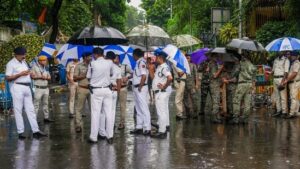
The unrest erupted in early April in several parts of Malda, a district known for its diverse demography and often sensitive political dynamics. Reports indicate that the protests stemmed from allegations of widespread and unjustified deletions of voter names from electoral rolls, a concern that resonated deeply within certain communities. What began as demonstrations quickly spiraled into disorder, with incidents of road blockades, stone-pelting, and clashes reported in areas like Sujapur and Kaliachak. Local residents, speaking to regional reporters, expressed their frustration and fear, highlighting how daily life was disrupted by the sudden eruption of discord. The atmosphere remained tense as local law enforcement struggled to contain the burgeoning protests.
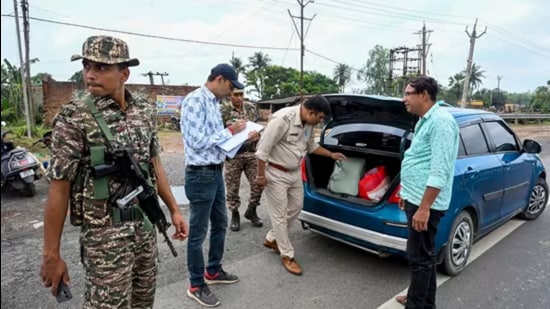
In the immediate aftermath of the violence, authorities moved swiftly. A prominent figure, Motiur Rehman, identified as an All India Majlis-e-Ittehadul Muslimeen (AIMIM) leader in West Bengal, was apprehended in connection with instigating the violence. His arrest, confirmed by district police sources, came after a thorough review of CCTV footage and witness testimonies, which allegedly placed him at the forefront of the provocative demonstrations.
Chief Minister Mamata Banerjee, known for her forthright political statements, wasted no time in addressing the development. Speaking publicly, the Chief Minister emphatically stated that Rehman’s arrest was a crucial piece of the puzzle, exposing a deeper, more sinister “conspiracy” behind the Malda disturbances. Her accusation was direct and unequivocal: she alleged that both the AIMIM and the Bharatiya Janata Party (BJP) were actively collaborating to orchestrate disturbances and create communal disharmony within the state.
Banerjee’s assertion is that these two parties, despite their ideological differences, share a common objective in West Bengal particularly ahead of crucial electoral battles: to destabilize the region and polarize the electorate. She claimed their strategy involves fomenting unrest, especially by leveraging community grievances, to gain political mileage. This viewpoint aligns with the Trinamool Congress’s long-standing narrative that opposition parties are often engaged in divisive politics aimed at undermining the state government’s efforts to maintain peace and development. Local political analysts often point to the high-stakes political environment in West Bengal, where every incident is quickly framed within a broader electoral strategy by competing parties.
Unsurprisingly, both the AIMIM and the BJP have vehemently rejected the Chief Minister’s allegations. AIMIM leaders, including party chief Asaduddin Owaisi, have dismissed the claims as politically motivated targeting, asserting that Rehman’s arrest is an attempt to silence dissenting voices and is an abuse of state power. They maintain their party advocates for the rights of marginalized communities through democratic means and has no interest in inciting violence. Similarly, BJP spokespersons in West Bengal have rubbished Banerjee’s accusations as a desperate attempt to deflect attention from the state government’s perceived failure to maintain law and order. They have often countered by blaming the ruling Trinamool Congress for creating an environment ripe for political clashes and communal tension, especially given its alleged ‘appeasement politics.’ These exchanges highlight the deep-seated animosity and distrust that characterizes the political discourse in West Bengal.
The incident in Malda, therefore, transcends a mere law and order problem. It has quickly become a flashpoint in the state’s volatile political landscape, laying bare the fierce competition and strategic maneuvering ahead of upcoming elections. For a 12th standard student trying to understand this, imagine a school playground where different groups are trying to win a game. When something goes wrong, like a fight breaks out, each group points fingers at the others, saying they started it to gain an advantage. In this case, the “game” is the election, and the “fight” is the violence in Malda. The Chief Minister is saying two other groups are secretly working together to cause trouble to make her team look bad. The other groups are, of course, denying it and blaming her.
Local reports from outlets like *Bartaman* and *Anandabazar Patrika* have provided a granular view, detailing how the allegations of voter deletions sparked genuine fear among specific electorates, providing fertile ground for political mobilization. They also shed light on the challenges faced by local police in distinguishing genuine public grievances from politically instigated provocations. The situation underscores the delicate balance between the right to protest and the imperative to maintain public peace, especially in a politically charged environment.
Key Takeaways:
* Malda Violence: Protests over alleged voter deletions escalated into violence, leading to blockades and clashes.
* AIMIM Leader Arrested: Motiur Rehman, an AIMIM leader, was apprehended for his alleged role in instigating the unrest.
* CM’s Conspiracy Claim: Chief Minister Mamata Banerjee accused AIMIM and BJP of conspiring to create disturbances and communal strife in West Bengal.
* Political Denials: Both AIMIM and BJP have strongly denied the allegations, calling them politically motivated and a deflection of responsibility.
* Electoral Context: The incident highlights the intense political rivalry and strategic posturing in West Bengal ahead of upcoming elections.
* Local Impact: The unrest caused significant disruption and fear among local residents, reflecting underlying community concerns and political mobilization efforts.