West Bengal Assembly Election 2026: PM Modi disappoints in Brigade Rally
Prime Minister Modi’s Kolkata Brigade Rally Examining Its Impact on Bengali Minds
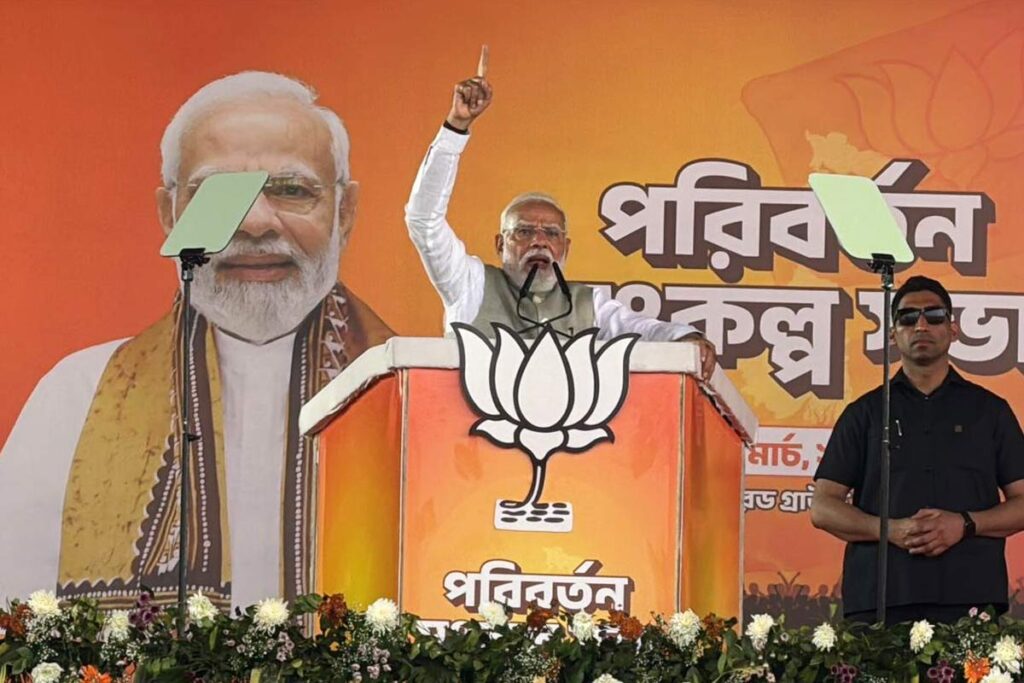
Kolkata witnessed a significant political spectacle as Prime Minister Narendra Modi addressed a massive Brigade rally. Billed by the Bharatiya Janata Party as a ‘Biggest Show’ ahead of the 2026 assembly elections, the event saw months of elaborate preparations. BJP workers tirelessly traversed districts with ‘Poriborton Jatra’ (Change Journey) rallies, spending considerable sums to ferry supporters by train and bus. As the Saturday morning crowd swelled, initial smiles were broad among party leaders, reflecting a sense of anticipation. However, as the day unfolded, that initial optimism seemed to wane, leaving many questions in its wake.
The central question lingering for many was whether the vast gathering, brought together with such effort and expense, truly found its hopes fulfilled. Did the Prime Minister’s nearly hour-long address provide the clarity and direction that thousands of workers and supporters expected? Was a genuine sense of ‘poriborton’ or change ignited in the hearts of his dedicated followers, especially with state elections on the horizon? Omni 360 News observed the diverse reactions and prevailing sentiments.
As anticipated, Prime Minister Modi began his speech in Bengali, attempting to forge a connection with the local audience by invoking revered Bengali figures like Swami Vivekananda and Rani Rashmoni. Yet, this initial cultural nod quickly pivoted to familiar themes: infiltration and political appeasement. While strong phrases like “badla chai” (we want revenge), “hisab neoa hobe” (accounts will be settled), “kattorponthider jele pathabo” (extremists will be jailed), and “toshan cholbe na” (appeasement will not be tolerated) were uttered to energize the base, many local BJP workers felt they did not receive the specific, tangible assurances or a clear roadmap for the promised ‘poriborton’ that they had been campaigning for.
The rally presented a crucial opportunity for the Prime Minister to directly challenge the state’s ruling party. Yet, the speech largely avoided direct, scathing attacks on the Chief Minister or Abhishek Banerjee. There was no clear target set for the number of assembly seats the BJP aims to win, nor were there specific promises to galvanize the party’s ground workers. While the Prime Minister did label the state government as “nirmoho” (ruthless) multiple times and touched upon issues like women’s safety and farmers’ distress, these were not necessarily perceived as Bengal’s most pressing concerns, particularly when compared to similar issues in some BJP-governed states.
Crucially, some critical local issues appeared to be either downplayed or overlooked. While the Prime Minister criticized the Trinamool Congress, his approach often leaned towards a Hindu-Muslim narrative, a political strategy that has proven ineffective in Bengal’s electoral landscape in both the 2021 and 2024 elections. Furthermore, despite discussing identity-related concerns, there was a noticeable absence of specific assurances for the Matua community, many of whom have long-standing citizenship expectations. Significant local issues such as unemployment, widespread corruption allegations, lack of industrial development, poor road infrastructure, and the stagnation of teacher recruitment were largely untouched. The only recent local issue highlighted was the alleged “insult” to President Droupadi Murmu during her Bengal visit. However, there were no clear pledges about industrial growth under a BJP government, regular teacher appointments, or the future of popular social welfare schemes like ‘Lakshmir Bhandar’, which local BJP leaders have been promising to enhance.
In essence, the Prime Minister’s hour-plus address largely concentrated on issuing warnings to “infiltrators” (interpreted by many as a veiled reference to minorities) and assertive statements against appeasement politics, aiming to establish the notion of fear among certain groups and the establishment of “rule of law.” While attempting to showcase a deeper “Bengali-ness,” the core message seemed to be a stern warning to minority communities. This raises a fundamental question for political strategists and ordinary citizens alike: can this approach truly challenge and defeat the Trinamool Congress, a party deeply rooted in Bengali identity and local welfare programs? The answer to this, many returning BJP workers might still be pondering.
Key Takeaways:
* The Brigade rally, despite massive logistical effort and expense, failed to fully meet the high expectations of BJP workers.
* Prime Minister Modi’s speech attempted local connection but quickly reverted to familiar national themes of infiltration and appeasement.
* Concrete assurances and a clear roadmap for Bengal’s ‘poriborton’ were largely absent, leaving many workers seeking more direct guidance.
* The strategy of emphasizing Hindu-Muslim division, previously unsuccessful in Bengal elections, was again a prominent feature.
* Key local issues like unemployment, industrial development, and the future of social welfare schemes received little attention.
* The primary message appeared to be a stern warning to perceived ‘infiltrators’ and against appeasement, rather than a detailed vision for Bengal’s development.