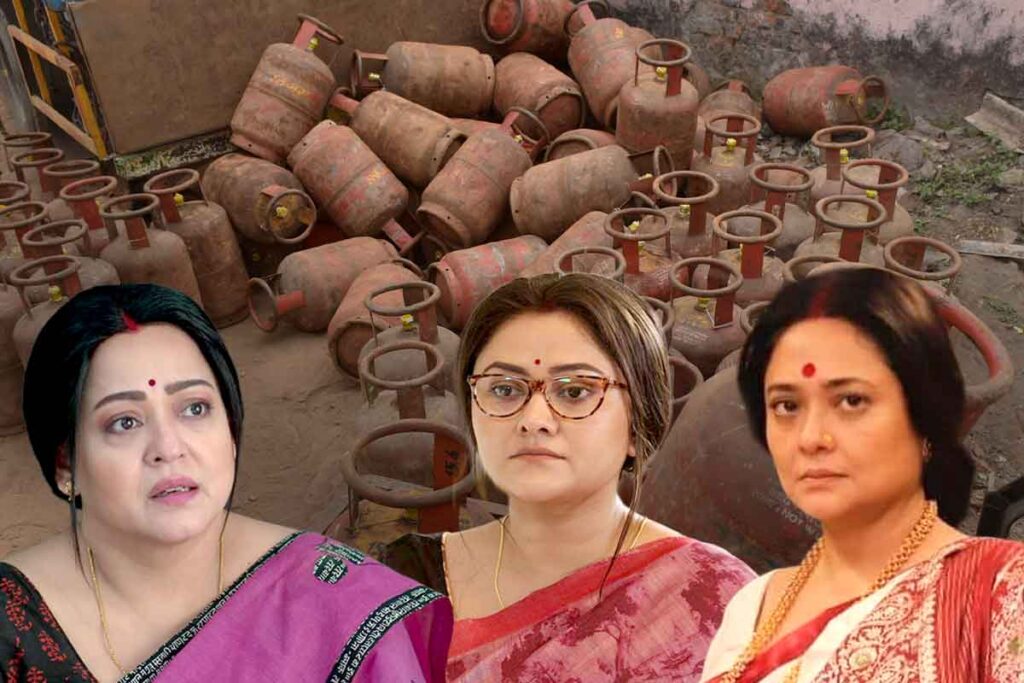
Tollywood actors are also suffering from LPG crisis
Bengal Households Face Fuel Scarcity Cooking Challenges Emerge
The hearth, a symbol of warmth and sustenance in countless Bengali homes, finds itself under a cloud of uncertainty. A palpable fuel scarcity has cast a long shadow across daily life, particularly impacting the kitchens where the essence of Bengali culture thrives. The traditional multi-course feasts, or “Panchabyanjan Bhuribhoj,” are now becoming a distant memory for many families. This pervasive challenge extends beyond the average household, reaching into the lives of Bengal’s beloved celebrities, raising questions about how they manage their daily routines amidst the crisis. Omni 360 News investigates the depths of this issue, exploring the ripple effect on households, restaurants, and the ingenuity people are employing to keep their kitchens running.
The immediate fallout of the fuel shortage is evident in the closure of several renowned restaurants across the city, unable to sustain operations without a consistent gas supply. For ordinary citizens, the situation is even more pressing. While some fortunate households resort to electric induction cooktops or microwave ovens when gas cylinders are unavailable, a significant portion of the population lacks these alternatives, finding themselves in a difficult predicament. The stress of managing daily meals has become a significant concern for countless families, who are now grappling with difficult choices.
The widespread anxiety surrounding the fuel crisis is not confined to the general public; it deeply affects even prominent figures in the Bengali entertainment industry, often perceived as shielded from such everyday worries. These stars, too, are navigating the complexities of securing cooking fuel and adapting their lifestyles.
Actress Aparajita Adhya, known for her captivating performances, shared her family’s experience. Living in a large joint family, cooking is a significant daily undertaking for them, typically involving numerous dishes. “We have collectively decided to cut down drastically on our cooking,” Adhya revealed. “We are preparing fewer dishes now.” She humorously added that her mother-in-law, who usually prepares an array of dishes, including many fried items requiring substantial gas, is currently away. “She might not have agreed to this reduction,” Adhya mused. “But with her absence, we have limited our meals to just two main dishes to conserve fuel.” Adhya emphasized her shared concern with the common person, stating, “Like any ordinary individual, I am very worried. If the administration permits, we might even have to consider cooking on charcoal if the crisis persists.” While her home has an induction oven, it is not regularly used, but she acknowledges that it might become a necessity.
The gravity of the situation is also reflected in the apprehension of actress Koninika Banerjee. “Neither of my two homes has a gas cylinder available,” Banerjee disclosed, admitting she only realized the extent of the problem recently. “With many family members, including children, feeding them is the top priority.” She stressed the need for adaptation over panic. “I’ve been telling my domestic help that we have to manage with simple meals – one main dish, one rice preparation. Food is undeniably essential, but we must curb the extravagance associated with it.” Banerjee also raised a crucial point regarding alternatives: “If everyone switches to induction cooking due to gas scarcity, will the electricity grid be able to handle such a massive demand? There’s a concern that even electricity supply could become strained. It truly makes one think that maintaining a calm and measured approach is the wisest course of action in this scenario.” She further highlighted the broader impact, noting, “Even on our film sets, the impact is visible. Just the other day, for the shooting of ‘Rannaghar,’ everyone on set had to have their meals cooked over charcoal.”
Actress Rupanjana Mitra recounted her recent struggle to secure a gas cylinder despite booking it. “We just weren’t getting gas,” Mitra explained. “Finally, Ratul managed to bring a cylinder.” She attributed these challenges directly to wider geopolitical conflicts. “This is clearly an effect of a war,” she stated. Mitra is now exploring alternatives, “I’m trying to cook some things in a rice cooker. We managed like this during the lockdown, so we’re relying on that experience.” Her thoughts often turn to others: “I keep wondering how those with only one cylinder are managing, especially many joint families. Many restaurants have already closed their doors.” Mitra concluded with a grim outlook: “Overall, it’s a very anxious time. It feels like we need to be prepared for how else the effects of conflict might disrupt our lives.”
Fortunately, actress Sneha Chatterjee has so far been spared the immediate impact, thanks to proactive measures. “I’m fortunate that my kitchen hasn’t been directly affected yet,” Chatterjee shared. “We have a double cylinder setup. As soon as one finishes, we book the next immediately.” She also utilizes an induction cooktop for smaller tasks. “I try to use the induction for minor cooking, like making tea or heating water.” However, even with a reserve, the concern remains. “While we have fuel stocked, that doesn’t mean I’m completely free of worry. Many people’s livelihoods are being disrupted by this fuel crisis, so I sincerely pray that this difficult period passes quickly.”
Singer Paushali Banerjee echoed the general sentiment of concern. “Like everyone else, I am deeply worried,” she admitted. “The impact on the kitchen is very real. We are using gas very sparingly, and relying on induction cooking.” Banerjee pointed out a disparity between urban and rural areas: “While those in the suburbs or villages might have the option of cooking with charcoal, that facility is simply not available in city apartments. This is a significant problem.” The crisis even extends to professional life: “Not only that, but even getting tea and food after long hours of shooting has become questionable. I pray this situation improves very soon.”
The narratives from these public figures vividly illustrate the broader struggle faced by countless households across Bengal. The fuel crisis is forcing a re-evaluation of culinary practices, a shift towards simpler meals, and a greater reliance on alternative cooking methods, where available. From meticulous gas conservation to the re-adoption of traditional charcoal stoves in some areas, people are adapting out of necessity. The closing of restaurants further highlights the economic implications, affecting livelihoods and the vibrant food culture of the region.
As Omni 360 News continues to monitor the situation, the collective hope is for a swift resolution to this pressing challenge. The current scenario underscores the interconnectedness of global events and local daily life, reminding everyone of the fragility of even the most fundamental necessities.
Key Takeaways
* Widespread Impact: The fuel crisis is affecting both common households and celebrities across Bengal, leading to significant changes in daily life.
* Culinary Adjustments: Families are reducing the number of dishes cooked and adopting simpler meal preparations to conserve gas.
* Reliance on Alternatives: Many are turning to electric induction cooktops, microwave ovens, or even traditional charcoal stoves, though these alternatives have their own limitations and challenges, such as potential strain on electricity supply in urban areas.
* Economic Strain: The crisis has led to the closure of several restaurants, impacting local economies and livelihoods.
* Shared Concern: Public figures express genuine worry, mirroring the anxieties of the general populace regarding sustained access to essential cooking fuel and other resources.
* Adaptation is Key: The prevailing sentiment is one of managing and adapting to the situation with caution and resourcefulness.