BJD walks out of Rajya Sabha over BJP’s Nishikant Dubey remarks on party founder| India News
BJD Signals Displeasure Sasmit Patra Steps Down From Key Parliamentary Panel Key Takeaways
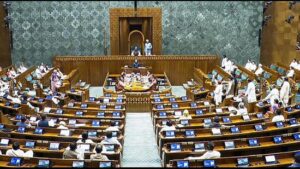
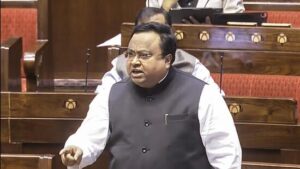
A significant political development unfolded this past Sunday, drawing attention to the often-heated debates within India’s Parliament. Sasmit Patra, a prominent Rajya Sabha member representing the Biju Janata Dal (BJD), tendered his resignation from the Parliamentary Standing Committee on Communications and Information Technology. This committee operates under the chairmanship of Bharatiya Janata Party (BJP) MP Nishikant Dubey. The move by the BJD leader came on the heels of a dramatic walkout by his party’s members from the Rajya Sabha, a strong protest against remarks made by Mr. Dubey concerning BJD founder and former Odisha Chief Minister, Biju Patnaik.
The Immediate Spark in Parliament
The catalyst for this parliamentary stir originated during a discussion on the Broadcast Services (Regulation) Bill, 2023. During this debate, Nishikant Dubey reportedly made comments about Biju Patnaik that the BJD found deeply objectionable. News reports and political observations widely confirm that the BJD contingent in the Rajya Sabha swiftly voiced their strong disapproval. They accused Mr. Dubey of showing disrespect towards a figure they consider a national icon and a towering personality in Odisha’s history. The party demanded an immediate apology from Mr. Dubey and called for his remarks to be expunged from the parliamentary records.
A Matter of Honor and Legacy
For the BJD, the issue extended beyond a mere political spat; it touched upon the venerated legacy of Biju Patnaik. Biju Patnaik, a freedom fighter, aviator, and two-time Chief Minister of Odisha, is an emotive and unifying figure for the party and the people of Odisha. His contributions to the state’s development and his stature as a national leader are sources of immense pride. Therefore, any perceived slight or derogatory comment against him is met with fierce defense, echoing the sentiments of millions in the state. Sasmit Patra himself articulated this stance, stating clearly that his party would “not compromise on the honour of legendary leaders.” This position underscores the deep cultural and political significance of Biju Patnaik within Odisha and for the BJD.
The Committee Resignation
Following the walkout and the Chairman’s response – Rajya Sabha Chairman Jagdeep Dhankhar assured a review of the records but refrained from an immediate expunction – Sasmit Patra took the decisive step of resigning from the committee. A parliamentary standing committee is a crucial body where MPs from different parties work together to scrutinize laws, policies, and the functioning of various ministries. By stepping down, Patra sent a strong message of protest. His resignation, particularly from a committee chaired by the very individual whose remarks triggered the controversy, is a clear signal of the BJD’s unwavering commitment to protecting Biju Patnaik’s honour. It reflects a strategic move to escalate their protest beyond just verbal condemnation on the floor of the House.
Parliamentary Dynamics and Political Signals
To understand this event, imagine Parliament as a large school debate club. Committees are like smaller groups working on specific projects, like ‘communications’ or ‘IT’. Even if you’re in a project group, if someone from another group insults your school’s founder during a big assembly, you might protest, walk out, and even decide not to work with them on that project until the issue is resolved. That’s essentially what happened here.
The BJD, which holds nine seats in the Rajya Sabha, has a history of maintaining a nuanced relationship with the ruling BJP at the national level. While often supporting the government on key legislative matters, they have consistently asserted their independent regional identity and fiercely guarded the legacy of their founder. This incident highlights the delicate balance of power and decorum in parliamentary proceedings. While debates are often robust, there are unwritten rules about respecting historical figures and avoiding remarks that could be seen as deeply offensive to specific communities or political parties.
Broader Implications for State and National Politics
This episode, analyzed from an Omni 360 News perspective, carries implications beyond the immediate parliamentary session. It underscores the political sensitivity surrounding regional icons, especially in states where regional parties like the BJD hold significant sway. As the political landscape gears up for upcoming elections, such incidents can resonate deeply with the electorate, reinforcing loyalty to regional identity and leadership. For the BJD, demonstrating a strong defense of Biju Patnaik’s legacy is not just about parliamentary decorum but also about solidifying its core identity and appeal among Odisha’s voters.
While the BJP and BJD often find common ground on national policies, incidents like these serve as reminders of their distinct political priorities and regional foundations. Such disagreements, though seemingly about past figures, often reflect contemporary political jostling and the assertion of regional pride against national narratives. The BJD’s firm stance signals that while they might cooperate on certain fronts, they will not shy away from confronting any perceived affront to their core values and historical figures.
Key Takeaways
* Sasmit Patra of BJD resigned from the Parliamentary Standing Committee on Communications & IT, headed by BJP’s Nishikant Dubey.
* This followed a BJD walkout from Rajya Sabha in protest against Dubey’s remarks about Biju Patnaik.
* BJD viewed Dubey’s comments as disrespectful to a national icon, demanding an apology and expunction.
* The resignation is a strong symbolic act of protest, highlighting the BJD’s commitment to protecting Biju Patnaik’s legacy.
* The incident reflects the sensitive nature of parliamentary discourse and the assertion of regional pride in national politics.