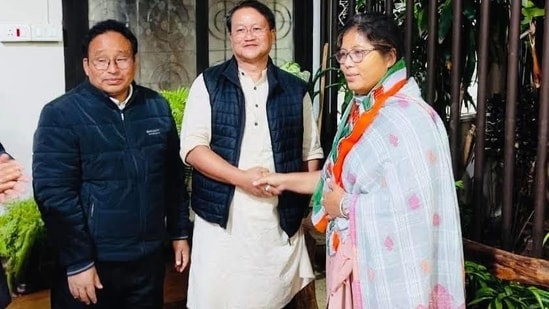
BJP minister Nandita Gorlosa joins Congress day before Assam nomination deadline; to contest from Halflong| India News
Haflong BJP Ticket Shift Nandita Gorlosa Out, Rupali Langthasa Steps In
The political landscape of Haflong, nestled amidst the scenic hills of Dima Hasao, saw a significant shift recently with the Bharatiya Janata Party’s crucial decision regarding its assembly election ticket. In a move that underscored the party’s broader strategy of refreshing its ranks, incumbent MLA Nandita Gorlosa was not given the nomination for the upcoming polls. Instead, the BJP chose to field Rupali Langthasa from the constituency, a decision that has certainly stirred local discussions and analysis. This development in Haflong mirrors similar instances across Assam where the party opted for new faces over several sitting legislators.
Nandita Gorlosa, who represented the Haflong (ST) constituency, was a well-known figure in the region’s political sphere. Having secured victory in the previous assembly elections, she had been a prominent voice from Dima Hasao. Her tenure saw various local initiatives and engagements, reflecting the unique aspirations and challenges of this hill district. Political observers and local residents often noted her active participation in addressing community issues and advocating for the region’s development within the state assembly. The decision to deny her a ticket, therefore, was not merely a procedural change but a notable departure from established representation.
The BJP’s central and state leadership meticulously reviewed potential candidates, focusing on factors like winnability, public perception, grassroots connect, and the ability to energize the party’s base. For many sitting MLAs, a combination of perceived anti-incumbency, the emergence of strong new contenders, or a strategic realignment of community representation can lead to such decisions. While specific reasons for Ms. Gorlosa’s non-retainment were not publicly elaborated by the party, it falls within a pattern where parties often seek to introduce ‘new blood’ to overcome voter fatigue or respond to evolving local dynamics.
Stepping into this significant role is Rupali Langthasa. Her selection indicates a clear intent by the BJP to present a fresh face to the electorate of Haflong. While perhaps not as widely known in the broader political arena as the former MLA, Ms. Langthasa’s strength likely lies in her local connections and dedicated work within the party structure or community circles. Parties frequently identify individuals who have demonstrated consistent dedication at the grassroots level, recognizing their potential to mobilize voters and connect directly with local sentiments. The intricate demographics of Dima Hasao, with its diverse tribal communities, often plays a crucial role in candidate selection, aiming for a balance that resonates with various groups.
For a 12th standard student trying to understand this, imagine a school election. Sometimes, a popular class leader who has done a good job might still be replaced by the school management with a different student for the next year. The management might think the new student brings fresh ideas, connects better with a different group of students, or perhaps they want to give someone else a chance to lead. In politics, it is similar. A party like the BJP, which is aiming to win an election, carefully chooses who will represent them in each area. Even if someone, like Nandita Gorlosa, was already doing the job (being the MLA), the party might decide that a new person, like Rupali Langthasa, has a better chance of winning this time, or fits better with their overall plan for the state.
The immediate aftermath of such a decision typically involves a mixture of reactions. Supporters of the denied candidate might express disappointment, while the newly nominated individual’s camp would certainly show renewed enthusiasm. The BJP’s strategy across Assam for the previous assembly polls involved a calculated risk-taking, anticipating that the introduction of new faces would mitigate any anti-incumbency sentiment and project an image of dynamism and responsiveness to public desire for change. This approach was visible in several constituencies, not just Haflong, where the party aimed for a fresh mandate.
The outcome of this strategic shift in Haflong will be keenly watched by political analysts. It tests the party’s ability to seamlessly transition from one representative to another while retaining its stronghold and support base. The challenge for Rupali Langthasa will be to quickly consolidate party workers, engage with the electorate, and build upon the existing party structure to ensure a successful campaign. This move highlights the pragmatic nature of electoral politics, where strategic decisions, sometimes tough ones, are made with the ultimate goal of securing electoral victory. This kind of detailed local political analysis is what Omni 360 News strives to bring to its readers.
Key Takeaways:
* BJP’s Strategic Shift: The party replaced sitting MLA Nandita Gorlosa with Rupali Langthasa in Haflong.
* Rationale Behind the Change: Likely part of a broader BJP strategy to introduce fresh faces, address potential anti-incumbency, or realign community representation for electoral advantage.
* New Candidate’s Role: Rupali Langthasa’s selection suggests a focus on grassroots connect and new energy in the constituency.
* Local Political Impact: The decision underscores the dynamic nature of electoral politics in Dima Hasao, with its unique demographic considerations.
* Party Discipline: Such decisions test party unity and the ability to rally support behind the new nominee.