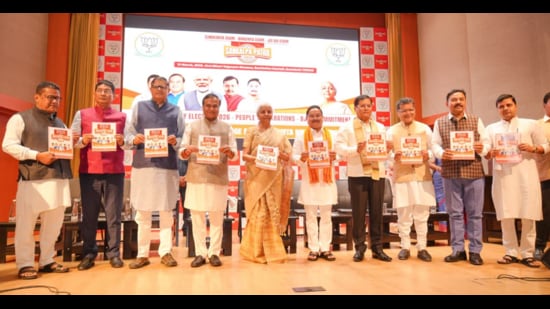
BJP’s Assam poll manifesto promises deportations, evictions, UCC| India News
Assam’s UCC Approach Himanta Biswa Sarma Pledges Tribal Protection
The Uniform Civil Code (UCC), a long-standing point of discussion in India’s political and social landscape, has seen a significant clarification from Assam Chief Minister Himanta Biswa Sarma. Sarma recently affirmed that tribal communities within the state would be kept outside the purview of any potential UCC implementation. This statement aims to address concerns regarding the preservation of distinct customary laws and cultural identities unique to Assam’s indigenous tribal populations.
For many years, the concept of a Uniform Civil Code, which proposes a common set of laws governing personal matters like marriage, divorce, inheritance, and adoption for all citizens, irrespective of religion, has been a contentious issue. Proponents argue it promotes national unity and gender equality, while critics express worries about its potential to infringe upon religious and cultural freedoms, particularly for minority communities and indigenous groups with deeply entrenched customary practices.
Understanding the Uniform Civil Code A Simple Explanation
Imagine India has different rulebooks for personal life based on religion. For example, laws for marriage or inheriting property might be different for Hindus, Muslims, Christians, or various tribal groups. The Uniform Civil Code aims to replace all these different rulebooks with one common rulebook for everyone in India. This means whether you are Hindu, Muslim, Christian, or from any other community, the laws about marriage, divorce, property, or adoption would be the same for all. The idea behind it is to bring equality and make sure everyone follows the same set of civil laws, rather than having personal laws based on religious or customary practices.
Assam’s Unique Fabric and the UCC Debate
Assam, a state rich in cultural diversity, is home to numerous tribal communities, each with its own distinct traditions, social structures, and customary laws that have been passed down through generations. These customary laws often govern aspects of daily life that would typically fall under a Uniform Civil Code, such as property inheritance, marriage rituals, and dispute resolution. The fear among these communities has always been that a UCC could erode their unique identities and self-governance.
Chief Minister Himanta Biswa Sarma’s recent announcement directly confronts these apprehensions. Speaking on the matter, Sarma explicitly stated that the state government is committed to safeguarding the customary laws and traditions of Assam’s tribal communities. This assurance comes at a crucial time, especially as discussions around the UCC intensify across the nation. Local news reports from Guwahati and regional outlets have highlighted how this promise resonates deeply within tribal councils and community organizations, many of whom have historically advocated for special protections. Omni 360 News understands that such an exemption could be crucial for maintaining social harmony in a diverse state like Assam.
The Chief Minister’s remarks align with a broader understanding that the northeastern states, with their significant indigenous populations and unique constitutional provisions (like those under the Sixth Schedule), require a nuanced approach to the UCC. Many tribal areas in these states operate under their own administrative councils and legal frameworks, designed to protect their unique socio-cultural heritage and land rights. Overriding these systems without careful consideration could lead to widespread discontent.
Impact and Implications
Sarma’s statement is perceived as a strategic move to allay fears among tribal communities, assuring them that their distinctive cultural heritage will remain untouched. This commitment could foster greater trust between the government and indigenous groups, who have often felt marginalized in national policy debates. For political observers, this also signals a recognition of the complex social realities in the Northeast, where a one-size-fits-all approach to law might not be feasible or desirable.
The exemption for tribals, if formalized, would mean that their customary laws regarding personal matters would continue to be recognized and enforced. This would allow these communities to maintain their traditional practices concerning marriage, divorce, inheritance, and land ownership, which are often deeply intertwined with their cultural identity and belief systems. It effectively creates a safeguard, ensuring that the push for a uniform national code does not inadvertently homogenize or erase diverse cultural practices.
Key Takeaways
* Tribal Exemption Assam CM Himanta Biswa Sarma has assured that tribal communities in the state will be exempt from the Uniform Civil Code.
* Protecting Customary Laws This decision aims to safeguard the unique traditions, social structures, and customary personal laws of Assam’s indigenous tribal populations.
* Addressing Concerns The move seeks to alleviate fears among tribal groups regarding the erosion of their cultural identity and self-governance under a national UCC.
* Regional Nuance It highlights the understanding that diverse states like Assam, with significant indigenous populations, require a specific and tailored approach to the UCC.
* Maintaining Harmony The exemption is seen as crucial for fostering trust and maintaining social harmony within the culturally rich and diverse fabric of Assam.
This proactive stance by the Assam Chief Minister represents a thoughtful engagement with a complex national issue, demonstrating a commitment to balance national policy goals with the imperative of protecting regional cultural diversity. The ongoing dialogue around the UCC continues to evolve, with states like Assam offering critical insights into how such a code might be adapted to respect India’s vast and varied heritage.