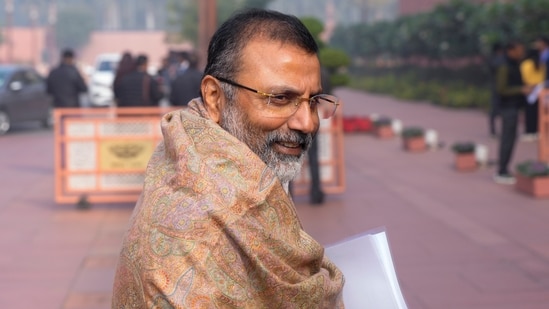
BJP's Nishikant Dubey offers apology over remarks on Biju Patnaik's after backlash: ‘Mistakenly understood’| India News
Nishikant Dubey’s Biju Patnaik Comments Ignite Odisha Political Stir Apology and Key Takeaways
The political landscape of Odisha recently witnessed a significant tremor, stemming from remarks made by a prominent Member of Parliament. A seemingly off-hand comment in the Lok Sabha by BJP MP Nishikant Dubey regarding former Odisha Chief Minister Biju Patnaik quickly spiraled into a heated controversy, drawing strong condemnation and protests from the ruling Biju Janata Dal (BJD). The episode underscores the profound reverence for Biju Patnaik in his home state and the sensitivities surrounding his legacy.
The controversy ignited when Nishikant Dubey, during a parliamentary discussion, alleged that Biju Patnaik, a towering figure in Odisha’s history, had demanded a 10% share of mineral resources from Tata Steel for allowing the company to establish its operations in the state. This assertion, delivered on a national platform, immediately struck a raw nerve within Odisha’s political circles and among its citizens who hold Biju Patnaik in high esteem. Biju Patnaik, a freedom fighter, aviator, and two-time Chief Minister, is remembered for his industrial vision and contribution to Odisha’s development, making any suggestion of impropriety a highly sensitive matter.
News of Dubey’s comments spread rapidly across Odisha, prompting an immediate and forceful backlash from the BJD. Local news outlets like OTV, Sambad, and Kalinga TV extensively covered the unfolding drama, highlighting the party’s outrage. BJD leaders, including MPs and MLAs, vehemently condemned the remarks, labeling them as a deliberate insult to Odisha’s pride and a distortion of history. Protests erupted both inside and outside the Odisha Legislative Assembly. BJD members staged demonstrations, raising slogans and demanding an unequivocal apology from Dubey. Effigies were reportedly burned in various parts of the state, signaling the depth of public sentiment stirred by the controversy. The BJD asserted that such allegations were baseless and aimed at tarnishing the image of a national hero.
The pressure mounted swiftly. Faced with the widespread condemnation and the unified voice of the BJD, Nishikant Dubey soon offered an apology in the Lok Sabha. He clarified that he had “mistakenly understood” the information he presented, and that he intended no disrespect towards Biju Patnaik. He expressed regret if his words had hurt anyone’s sentiments, especially those of the people of Odisha. This apology, delivered in Parliament, was accepted by BJD parliamentary party leader Pinaki Misra, who acknowledged Dubey’s retraction. This swift resolution in the Lok Sabha helped to de-escalate the immediate parliamentary tension, but the ripple effects across Odisha were palpable.
For the people of Odisha, Biju Patnaik is more than just a political figure; he is an icon deeply woven into the state’s cultural and historical fabric. His adventurous spirit, his role in India’s freedom struggle, his international diplomacy, and his vision for an industrialized Odisha continue to inspire. His son, Naveen Patnaik, currently serves as the Chief Minister, leading the BJD, which draws significant strength from its connection to Biju Patnaik’s legacy. Therefore, any perceived attack on Biju Patnaik is often seen as an attack on the collective identity and pride of Odisha itself. Such incidents can quickly become potent political tools, especially in a state where regional sentiments play a crucial role in electoral dynamics.
The episode serves as a powerful reminder of the delicate balance in political discourse, particularly when discussing historical figures held in high regard by specific regions. For Omni 360 News, the incident highlights how quickly remarks made in one forum can ignite widespread public sentiment and political contention across state lines. It underscores the importance of factual accuracy and sensitivity when leaders speak on public platforms, especially concerning revered personalities.
Key Takeaways:
* Historical Reverence: Biju Patnaik remains an immensely respected figure in Odisha, and any negative comments about his integrity are met with strong resistance.
* Political Sensitivity: Attacks on historical leaders can quickly escalate into major political controversies, mobilizing public opinion and opposition parties.
* Power of Apology: A timely and sincere apology can help de-escalate tensions, though the initial impact of the remarks may linger.
* Fact-Checking Matters: Public figures must exercise extreme caution and verify information before making statements, especially in legislative bodies.
* Regional Pride: The incident demonstrated the deep sense of regional pride and how it intertwines with the legacy of state leaders.
This whole episode illustrates how words, even when later retracted, can stir up significant emotions and political storms. It’s a testament to the enduring power of historical legacies and the ever-present sensitivities in India’s diverse political landscape.