Book Box
Navigating Narratives Understanding West Asia Amidst Conflict with Deeper Reads
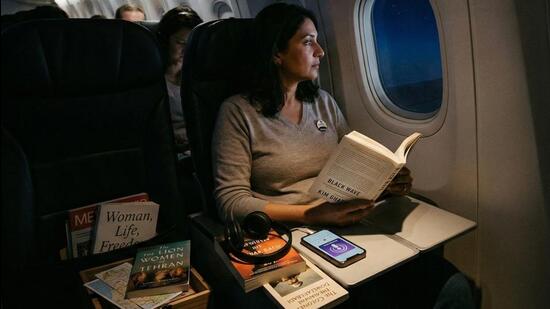
The ongoing situation in West Asia has sent ripples across the globe, creating a complex web of information and, often, misinformation. For many, the relentless cycle of breaking news and social media chatter proves insufficient to grasp the deeply rooted historical, political, and human dimensions of the conflict. In an effort to sift through the noise and find clarity, a growing number of individuals are turning to more enduring forms of media: books, podcasts, and even graphic narratives. This shift reflects a profound human need for context, nuance, and genuine understanding, a principle Omni 360 News stands by in its commitment to informed public discourse.
The Quest for Deeper Understanding in a Fast-Paced World
The digital age, while offering instant access to information, often prioritizes speed over depth. Headlines can oversimplify, social media algorithms can create echo chambers, and the sheer volume of updates can lead to a sense of overwhelming confusion. When it comes to a region as historically intricate and emotionally charged as West Asia, relying solely on fleeting news updates can leave readers feeling ill-equipped to form nuanced opinions.
This is why many are consciously seeking out resources that demand more time and reflection. As local book clubs discuss titles relevant to the Middle East and independent podcast channels see spikes in listens for historical deep-dives, it signals a collective desire to move beyond superficial reporting. University literature departments and community cultural centers have also noted an increased interest in academic discussions and reading lists pertaining to the region’s history and geopolitics, indicating a grassroots movement toward informed engagement.
Books Illuminating History and Personal Journeys
Books, with their ability to build comprehensive narratives, are proving invaluable. Readers are gravitating towards both historical analyses and deeply personal accounts that humanize the conflict. Works like Rashid Khalidi’s “The Hundred Years’ War on Palestine A History of Settler Colonialism and Resistance” offer a scholarly yet accessible framework, detailing the conflict’s origins and evolution over a century. Such historical perspectives are crucial for understanding the contemporary landscape, providing the necessary backdrop that daily news often lacks.
Similarly, “The Iron Cage The Story of the Palestinian Struggle for Statehood” by Avi Shlaim, an Israeli historian, presents a critical internal examination, highlighting diverse viewpoints within the conflict. Memoirs, like Ari Shavit’s “My Promised Land The Triumph and Tragedy of Israel” or Raja Shehadeh’s “Palestine A Personal Story,” offer intimate glimpses into the lives affected by the region’s realities, fostering empathy and challenging preconceived notions. These narratives allow readers to connect on a human level, moving beyond abstract geopolitical terms to the tangible experiences of individuals. Independent bookstores, far from major chain outlets, have reported increased sales in these specific genres, reflecting a community-level interest in these deep dives. Literary journals and local critics frequently highlight such works as essential reading for informed citizenship, reinforcing their importance.
Podcasts Offering Expert Insights and Nuance
Podcasts have emerged as another powerful tool for those seeking context. Their audio format makes complex topics digestible, often featuring interviews with academics, seasoned journalists, and policy experts who can explain intricate historical and political details in an engaging manner. Programs such as BBC’s “The Inquiry” or Al Jazeera’s “The Take” frequently dedicate episodes to untangling specific aspects of the West Asia conflict, offering perspectives that might not make it into standard news bulletins.
These audio narratives allow for a more conversational exploration of sensitive subjects, enabling listeners to hear directly from diverse voices. From deep-dives into international law surrounding the conflict to discussions on cultural identity, podcasts provide a space for nuanced discourse. They often feature extended discussions, giving experts time to elaborate on positions and counter common misconceptions, thereby helping listeners develop a more critical understanding of the information they encounter elsewhere. Smaller, independent podcast networks focusing on geopolitical analysis have also gained traction, indicating a listener base eager for alternative explanations and analyses.
Graphic Narratives Visualizing Complex Realities
Perhaps surprisingly, graphic narratives and comics are also playing a significant role. Far from being merely entertainment, these visual storytelling mediums can convey complex emotional and historical realities with striking impact. Joe Sacco’s “Palestine” and “Footnotes in Gaza,” for instance, blend journalism with the accessible power of sequential art, offering firsthand accounts and historical context through a highly engaging format. Marjane Satrapi’s “Persepolis,” while focusing on Iran, demonstrates the power of graphic novels to convey geopolitical and personal turmoil.
These visual stories can make difficult subjects more approachable, especially for younger audiences, without simplifying the inherent complexities. They humanize conflict by putting faces and experiences to statistics, often highlighting the daily struggles and resilience of ordinary people. Local libraries and independent comic shops have noted an uptick in interest for graphic novels addressing social and political issues, including those related to the Middle East, showing their increasing acceptance as serious forms of journalism and historical documentation.
Key Takeaways
* Deeper Context is Crucial: Readers are seeking comprehensive historical and political context beyond fast-paced news cycles.
* Diverse Media Matters: Books, podcasts, and graphic narratives offer varied ways to engage with complex topics.
* Combating Misinformation: These resources equip individuals with knowledge to critically evaluate information and narratives.
* Fostering Empathy: Personal stories and nuanced discussions humanize the conflict, building greater understanding.
* Informed Public Discourse: The move towards thoughtful engagement supports a more educated and empathetic public conversation.
Omni 360 News Commitment to Informed Engagement
The shift towards deeper forms of media consumption underscores a vital truth: in an age of abundant information, critical thinking and a quest for authentic understanding are more important than ever. Omni 360 News recognizes this profound need and remains dedicated to providing comprehensive, verified, and thoughtfully presented news and analysis. We encourage our readers to seek out diverse sources, engage with nuanced perspectives, and foster an informed curiosity about the world. By embracing a variety of credible narratives, we can collectively navigate complex global events like the situation in West Asia with greater clarity and empathy, moving beyond the noise to truly understand the stories that shape our world.