Book Box
Navigating West Asia Truth Books Podcasts Graphic Stories Offer Clarity
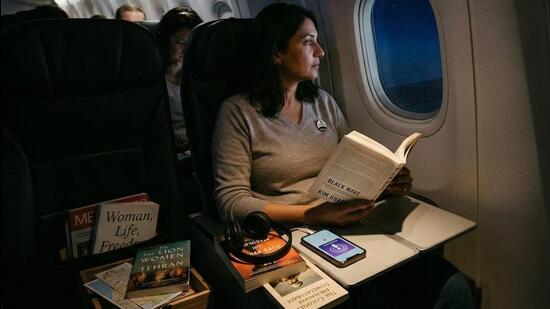
As the West Asia conflict continues to unfold, a profound shift is evident in how people seek to understand its intricate layers. Amidst the relentless flow of breaking news and the proliferation of digital updates, a growing number of individuals are turning away from the immediate headlines. Instead, they are gravitating towards more traditional and in-depth forms of media—books, podcasts, and even graphic narratives—to grasp the historical roots, complex political dynamics, and human stories behind the crisis. This movement reflects a deep-seated desire to separate enduring facts from fleeting misinformation, fostering a more informed and nuanced perspective.
The modern news landscape, while offering instant access to events, often struggles to provide the comprehensive context needed for such a multifaceted conflict. Rapid fire updates, though essential for real-time awareness, can inadvertently simplify or even distort realities. This constant stream can leave many feeling overwhelmed and inadequately informed about the profound historical grievances and geopolitical forces at play. Recognising this gap, readers globally are proactively seeking sources that offer deeper analysis, multiple viewpoints, and the necessary historical perspective. This trend is not just confined to academic circles; it is a widespread phenomenon observed in community discussions, local book clubs, and individual learning journeys, reflecting a broader hunger for substantive knowledge.
The Enduring Power of Books for Historical Depth
For centuries, books have stood as pillars of knowledge, offering unparalleled depth and sustained narratives. In the current climate, their value has amplified. Unlike fleeting news snippets, a well-researched book can meticulously trace the origins of the West Asia conflict, detailing centuries of intertwined histories, political decisions, and cultural developments. These volumes provide the long view, allowing readers to understand how past events continue to shape present-day realities. Historical accounts, political analyses, and ethnographic studies serve as invaluable guides, helping to demystify seemingly intractable issues. They offer carefully vetted information, often compiled by scholars and journalists with decades of expertise, ensuring a foundation of accuracy that is crucial when confronting complex international relations. Libraries and independent bookstores in many communities report sustained interest in non-fiction titles pertaining to global conflicts and regional histories, underscoring this public demand for thorough historical grounding.
Podcasts as a Soundboard for Nuance
The rise of podcasts marks another significant shift in information consumption. These audio programs have become powerful platforms for in-depth conversations, expert interviews, and diverse perspectives that are often absent from mainstream news cycles. Podcasts offer a unique format where complex topics can be explored over extended periods, allowing for a level of detail and nuance that is hard to achieve in other mediums. Listeners can hear directly from historians, political scientists, diplomats, and individuals with lived experiences in the region, gaining insights that humanise the conflict beyond mere statistics or geopolitical maneuvers. This accessibility, often available on demand, empowers individuals to engage with a variety of viewpoints at their own pace, fostering critical thinking and a more rounded understanding. Many local educational groups and online forums recommend specific podcasts for discussions on international affairs, highlighting their role in broadening perspectives within communities.
Graphic Narratives Unpacking Complexity Visually
Perhaps one of the more surprising yet effective mediums gaining traction for understanding the West Asia conflict is the graphic narrative. These visual stories, often resembling comic books but with serious journalistic or historical intent, leverage the power of imagery combined with text to convey complex information in an accessible and emotionally resonant way. For a generation accustomed to visual content, graphic narratives offer a gateway into challenging subjects, making historical timelines, political structures, and personal testimonies digestible and engaging. They can powerfully illustrate the human toll of conflict, bypass language barriers with universal visual cues, and present diverse perspectives in a format that encourages empathy and understanding without oversimplification. This innovative approach helps to bridge the gap for those who might find traditional academic texts daunting, yet still seek substantive information. Local educators are increasingly exploring these formats to engage younger audiences with global topics, demonstrating their growing recognition as legitimate and effective learning tools.
A Public Quest for Informed Perspectives and Clarity
The collective turn towards books, podcasts, and graphic narratives signals a deeper public demand for authentic and verifiable information. In an era where facts are easily distorted, and narratives are often manipulated, individuals are actively seeking sources that prioritise accuracy, context, and a multiplicity of voices. This is more than just a trend; it represents a conscious effort by communities and individuals to become better informed citizens, capable of discerning truth amidst noise. For a comprehensive understanding of the West Asia conflict, relying on a singular news source or fleeting headlines simply isn’t enough. Omni 360 News acknowledges this essential need for diverse information streams, supporting the public’s robust efforts to explore, question, and ultimately comprehend the intricate realities shaping our world. This proactive engagement with diverse media forms is crucial for building a resilient, informed society equipped to navigate complex global challenges.
Key Takeaways:
* The public increasingly seeks in-depth understanding of the West Asia conflict beyond rapid news cycles.
* Books provide essential historical context and analytical depth, countering misinformation.
* Podcasts offer nuanced discussions and diverse expert perspectives in an accessible audio format.
* Graphic narratives make complex historical and political realities approachable through visual storytelling.
* This shift reflects a proactive community effort to find factual, multi-faceted information and foster critical thinking about global events.