Book Box
Navigating the West Asia Narrative Beyond the Headlines
In an age saturated with instant information, the unfolding situation in West Asia presents a formidable challenge for those seeking genuine understanding. The rapid fire of news alerts and social media posts, often laced with bias or outright falsehoods, leaves many feeling disoriented. Amid this digital haze, a growing number of readers are turning to more enduring forms of media—books, podcasts, and graphic narratives—to anchor their comprehension and sift fact from the dense fog of misinformation. This deeper dive helps individuals, from concerned citizens to students, piece together the intricate tapestry of a conflict that defies simple explanations, a critical pursuit for informed perspectives, as observed by Omni 360 News.
The conflict in West Asia is not merely a series of current events; it is a complex historical saga spanning decades, even centuries. To truly grasp its current manifestations, one must understand the layers of history, political movements, social dynamics, and personal experiences that have shaped the region. Unfortunately, bite-sized news updates, while timely, rarely offer this essential background. This void is where traditional and emerging narrative forms find their crucial role.
Books as Beacons for Historical Depth
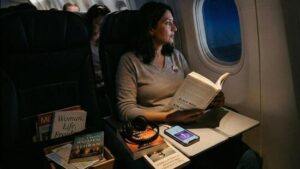
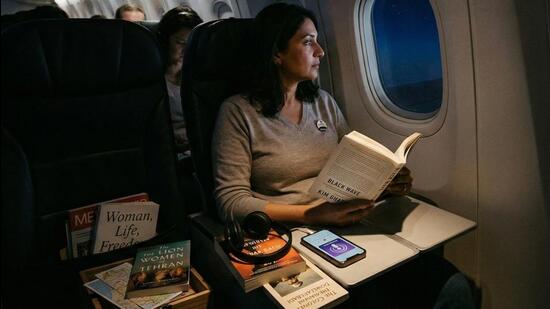
For many, a physical book remains an indispensable tool for serious inquiry. Unlike fleeting digital content, books offer comprehensive analyses, meticulously researched histories, and diverse perspectives from scholars, journalists, and those directly affected. Works like Nur Masalha’s “Palestine: A Four Thousand Year History” provide a sweeping historical arc, allowing readers to trace the origins of today’s struggles far beyond recent events. Similarly, Raja Shehadeh’s personal accounts offer intimate glimpses into life under occupation, grounding the geopolitical narrative in human experience.
These texts serve as an antidote to simplistic narratives often found online. They demand patience and reflection, rewarding the reader with a nuanced understanding of territorial claims, ideological divides, and the long-term impact of various policy decisions. By engaging with detailed arguments and historical contexts, readers can better identify the omissions and oversimplifications present in much of the fast-paced news cycle. Local community reading groups, often formed around these very topics, illustrate this collective desire for deeper knowledge, encouraging shared learning and critical discussion that transcends partisan echo chambers.
Podcasts Offering Diverse Voices and Analysis
While books provide foundational knowledge, podcasts offer a dynamic and accessible way to engage with ongoing discussions and diverse viewpoints. Programs like “Throughline” from NPR, which frequently delves into the historical context of current events, or independent journalistic podcasts focusing on specific regions, provide extended interviews with experts, historians, and individuals living through the conflict. These audio formats allow for exploration of topics in greater depth than typical news segments, often featuring voices not regularly heard in mainstream reports.
Listeners can absorb complex geopolitical analysis during their commute or daily routines, gaining insights into the differing perspectives of Israelis and Palestinians, or the wider regional implications. Many podcasts dedicate entire series to unpacking specific historical moments or political figures, offering a richer, multi-faceted understanding that helps listeners identify gaps or biases in other media they consume. For instance, a local academic’s podcast series might explore the nuances of international law pertaining to the conflict, providing clarity often missing in daily updates.
Graphic Narratives Illuminating Personal Realities
Perhaps the most surprising, yet incredibly effective, medium emerging in this quest for understanding is the graphic narrative, or graphic novel. These visual storytelling tools can convey complex historical events and deeply personal experiences in a way that is both accessible and profoundly moving. By combining text with powerful imagery, graphic narratives can simplify dense information without sacrificing emotional impact or historical accuracy.
Marjane Satrapi’s “Persepolis,” while focused on Iran, exemplifies how graphic novels can humanize complex geopolitical shifts through personal memoirs. Similarly, works like Joe Sacco’s “Palestine” or “Footnotes in Gaza” visually document the experiences of Palestinians, offering a direct, often raw, perspective that resonates deeply. For a 12th-grade student, these visual stories can be particularly impactful, making distant conflicts tangible and fostering empathy by showing the human face of political decisions. They bridge the gap between abstract geopolitical discussions and the lived realities on the ground, making it easier to connect with the subject matter and remember key historical points.
Key Takeaways
1. Combatting Misinformation Books, podcasts, and graphic narratives provide essential depth and context, serving as crucial tools against the spread of inaccurate information about the West Asia conflict.
2. Historical Foundation Long-form content, particularly historical books, helps readers understand the deep roots of current events, moving beyond superficial news cycles.
3. Diverse Perspectives Podcasts offer a platform for a variety of expert voices and personal testimonies, enriching understanding and revealing nuances often overlooked by mainstream media.
4. Accessible Storytelling Graphic narratives provide a unique, visual, and emotionally resonant way to convey complex histories and humanize the conflict, making it accessible for a wider audience, including younger learners.
5. Empowered Understanding By engaging with these diverse resources, individuals can develop a more comprehensive, empathetic, and critical understanding of the West Asia situation, fostering informed dialogue and discerning truth in a noisy world.
In a world where information overload often leads to confusion, the deliberate choice to engage with these richer forms of storytelling reflects a collective yearning for truth and genuine understanding. As Omni 360 News continues to observe, this proactive approach to consuming information equips individuals with the clarity needed to navigate complex global events, moving beyond headlines to grasp the intricate human stories beneath.