'BRICS must play independent role': Iran on what President Pezeshkian told PM Modi| India News
Omni 360 News: High-Level Talks Chart Future for India Iran Relations
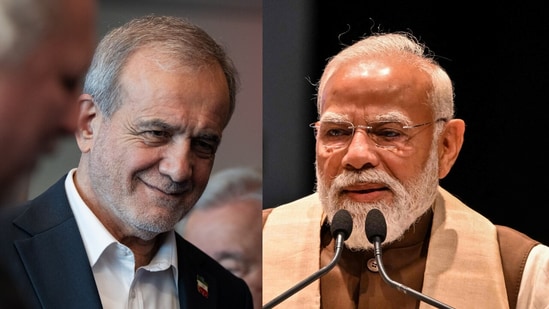
A significant diplomatic encounter unfolded as Iran’s President Masoud Pezeshkian met with Indian Prime Minister Narendra Modi. The discussions, held amidst a dynamic global landscape, touched upon strengthening long-standing bilateral ties and navigating intricate regional and international developments. This meeting signals a renewed commitment from both nations to foster deeper engagement across various sectors, echoing sentiments of cooperation that resonate far beyond their respective borders.
The dialogue between President Pezeshkian and Prime Minister Modi was a crucial step in evaluating the trajectory of a relationship steeped in history and mutual respect. For Omni 360 News readers, understanding the nuances of these interactions is vital, as they often lay the groundwork for future geopolitical and economic alignments. The leaders’ agenda covered a broad spectrum, from enhancing economic partnerships to aligning perspectives on shared challenges in their immediate neighborhoods and across the globe.
Deepening Bilateral Economic Bonds
At the heart of the bilateral discussions lay the imperative to bolster economic cooperation. India, a rapidly growing economy, and Iran, a resource-rich nation strategically positioned, possess complementary strengths. Energy security remains a cornerstone of this relationship. While specific deals were not detailed, the underlying understanding is clear: both countries seek stable and reliable energy pathways, which Iran has historically provided. For instance, discussions often revolve around long-term supply agreements and payment mechanisms that ensure seamless trade flows, benefiting industries and consumers in both countries.
A recurring, pivotal point of collaboration is the Chabahar Port. Located on Iran’s southeastern coast, this port offers India a crucial gateway to Afghanistan and Central Asian countries, bypassing Pakistan. The port’s development is more than just an infrastructure project; it is a strategic economic corridor designed to unlock trade potential and enhance regional connectivity. Local businesses in states like Gujarat and Maharashtra in India, involved in export and import, closely monitor developments around Chabahar, envisioning reduced transit times and costs. Similarly, Iranian businesses in the Sistan-Baluchestan province view the port as a catalyst for regional economic growth, creating jobs and fostering local enterprise. Progress on operationalizing various phases of the port, including rail links and free trade zones, likely featured prominently, emphasizing a shared vision for its full potential.
Beyond energy and infrastructure, avenues for cooperation extend into various other sectors. Pharmaceuticals, an area where India holds global prominence, presents opportunities for collaboration and supply to Iran. Similarly, agricultural products, IT services, and manufacturing could see increased engagement. Both leaders likely stressed the importance of streamlining trade processes, simplifying customs procedures, and exploring rupee-rial trade mechanisms to circumvent global financial complexities, thereby insulating their economic partnership from external pressures. Such measures are crucial for local traders and small and medium-sized enterprises (SMEs) that form the backbone of both economies, enabling them to participate more effectively in international trade.
Navigating Regional Dynamics
The conversation naturally extended to the complex tapestry of regional developments. Afghanistan’s stability, or lack thereof, remains a significant concern for both India and Iran, given their geographical proximity and historical ties to the nation. Both countries have invested in Afghanistan’s reconstruction and development over the years. Discussions likely centered on humanitarian aid, preventing the resurgence of terrorism, and promoting an inclusive government that respects the rights of all Afghans. Local communities in border regions, particularly those affected by potential refugee flows or security spillover, would see such diplomatic efforts as critical to their own peace and stability.
Central Asia, a region where India seeks enhanced connectivity and trade, also falls within Iran’s sphere of influence as a transit country. The International North-South Transport Corridor (INSTC), a multi-modal network aimed at linking India and Central Asia via Iran, would have been a topic of mutual interest. Accelerating the implementation of INSTC promises to significantly reduce freight costs and transit times, offering a viable alternative to traditional routes. This infrastructure push has tangible benefits for businesses in landlocked Central Asian nations, as well as for Indian exporters looking for new markets.
Beyond these immediate concerns, the leaders likely exchanged views on the broader West Asian and Middle Eastern landscape. The need for de-escalation, peaceful resolution of conflicts, and regional stability is a shared objective. For nations like India and Iran, both seeking to protect their energy supply lines and economic interests, fostering an environment of peace is paramount. Local media in both countries often highlight the economic implications of regional instability, underscoring the importance of such high-level diplomatic efforts.
Addressing International Developments and Global Challenges
On the international front, the discussions broadened to encompass global challenges and multilateral cooperation. India and Iran, both members of various international forums like BRICS and the Shanghai Cooperation Organization (SCO), likely explored avenues for closer coordination within these platforms. Their shared perspectives often lean towards a multipolar world order, emphasizing sovereignty, non-interference, and equitable international relations.
Global issues such as climate change, food security, and energy transition also featured in their dialogue. India’s ambitious renewable energy targets and Iran’s significant hydrocarbon reserves present opportunities for technological exchange and collaboration on sustainable energy solutions. Furthermore, ensuring global food security, especially in the wake of disruptions to supply chains, is a common goal that would benefit from coordinated efforts. Both leaders would have reiterated their commitment to addressing these challenges through cooperative, rather than confrontational, approaches.
Key Takeaways from the Diplomatic Exchange
The meeting between President Pezeshkian and Prime Minister Modi underscored several critical points. Firstly, it reaffirmed the enduring strategic importance of India-Iran relations, particularly in energy and connectivity. Secondly, the emphasis on projects like Chabahar and INSTC highlights a shared commitment to building robust alternative trade routes, crucial for regional economic integration. Thirdly, the discussions on Afghanistan and broader regional stability reflect a common desire for peace and security in their shared neighborhood. Finally, their alignment on global issues signals a united front in advocating for a more balanced and equitable international system.
This engagement sends a clear message that despite global complexities, India and Iran are committed to nurturing a resilient partnership. The path ahead involves diligent follow-through on the discussed initiatives, ensuring that the dialogue translates into tangible progress on the ground. For Omni 360 News, this diplomatic interaction represents a pivotal moment, showcasing the continuous efforts required to build bridges of cooperation in an ever-evolving world. The future of India-Iran relations appears poised for continued growth, driven by mutual interest and a shared vision for regional prosperity and global stability.