
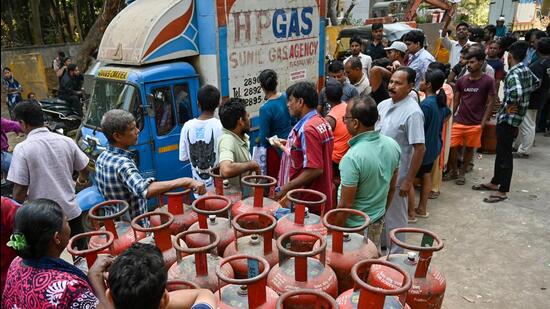
Centre says eKYC needed only for unauthenticated LPG customers| India News
India’s remarkable journey towards cleaner kitchens and improved household well-being is underscored by compelling figures: a robust network of over 330 million Liquefied Petroleum Gas (LPG) customers across the nation. This expansive reach signifies a profound shift in how millions of Indian families cook their meals and power their homes. At the heart of this transformation lies the Pradhan Mantri Ujjwala Yojana, an initiative that has extended its hand to 105.1 million beneficiaries, profoundly changing daily life for some of the most vulnerable sections of society.
**Connecting India A Glimpse into the Numbers**
The sheer scale of 330 million LPG connections is a testament to India’s concerted efforts to ensure energy access for its vast population. For decades, traditional cooking fuels like firewood, coal, and cow dung cakes were the primary source of energy for a significant portion of Indian households, particularly in rural areas. While deeply ingrained in cultural practices, these fuels came with severe health and environmental costs. Indoor air pollution, caused by burning biomass, contributed to respiratory illnesses, particularly among women and children, and also significantly impacted local air quality.
Achieving such widespread LPG penetration means that a substantial majority of Indian homes now have access to a cleaner, more efficient cooking fuel. This transition is not merely about a change in fuel; it represents an upgrade in lifestyle, health, and environmental consciousness for millions.
**The Ujjwala Yojana A Catalyst for Change**
Launched in 2016, the Pradhan Mantri Ujjwala Yojana (PMUY) emerged as a focused program to provide free LPG connections to women from economically weaker sections. The target was clear: to empower women, safeguard their health, and protect the environment by replacing smoky chulhas (traditional stoves) with clean cooking gas. The program initially aimed for 50 million connections, but its success and demand led to expanded targets, eventually reaching and surpassing the 100 million mark.
The 105.1 million beneficiaries under PMUY are not just statistics; they represent families, predominantly in rural and semi-urban settings, who have shed the arduous task of collecting firewood daily and the constant exposure to harmful smoke. For many, this scheme offered their very first entry into the clean energy ecosystem. Local reports from various districts often highlight how beneficiaries speak of reduced eye irritation, fewer coughing spells, and a dramatic improvement in the overall cleanliness of their homes. Women often cite the increased time they now have for other productive activities or for their children’s education, freed from hours spent gathering fuel.
**More Than Just a Connection Challenges and Continuous Efforts**
While the initial connection is a significant step, ensuring sustained usage remains a key challenge. Affordability of refills, particularly for families with limited disposable income, is a recurring theme in ground-level observations. Reports from villages sometimes indicate that families, despite having an LPG connection, occasionally revert to traditional fuels when refill costs become prohibitive.
The government and public sector oil marketing companies are continuously working on addressing these concerns. Initiatives such as targeted subsidies, awareness campaigns on safe usage, and efforts to improve last-mile delivery mechanisms are crucial. Expanding the network of distributors, especially in remote areas, and streamlining the refill booking process through digital platforms are ongoing endeavors. *Omni 360 News* frequently covers these grassroots efforts and the evolving landscape of LPG access across diverse regions.
**Economic and Environmental Ripples**
The widespread adoption of LPG, significantly boosted by schemes like Ujjwala, has far-reaching benefits beyond individual households. Economically, it stimulates a robust supply chain, from gas production and bottling to distribution and cylinder maintenance, creating employment opportunities. Environmentally, the reduction in biomass burning contributes to cleaner air, less deforestation, and a smaller carbon footprint, aligning with national and global climate goals.
This shift also represents a stride towards gender equality by reducing the burden on women and improving their health outcomes. It fosters a safer home environment, minimizing the risks associated with open fires.
**Key Takeaways**
* India’s 330 million LPG connections demonstrate a massive leap in energy access.
* The Pradhan Mantri Ujjwala Yojana has been instrumental in providing 105.1 million connections to underprivileged women.
* This initiative significantly improves health outcomes by reducing indoor air pollution.
* It saves women considerable time and effort previously spent on fuel collection.
* Challenges like refill affordability and last-mile delivery are continuously being addressed through various governmental and industrial efforts.
* The overall impact extends to economic growth, environmental protection, and enhanced social equity.
The journey towards complete clean cooking fuel penetration is ongoing, but the foundation laid by these impressive numbers, especially the human stories behind the Ujjwala scheme, paints a picture of substantial progress for India.