
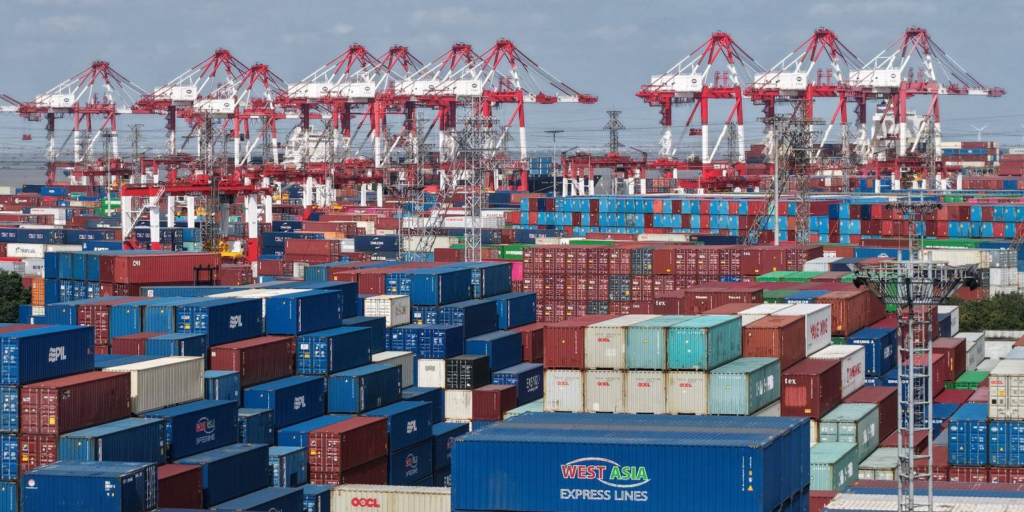
China’s Growing Trade Surplus Raises Global Economic Concerns, Experts Warn
The global economy is once again under close watch as China’s influence in international markets continues to grow rapidly. Economists, policymakers, and market observers around the world are debating whether China’s rising trade surplus is a sign of strength or a warning signal for future instability.
According to Professor Ishwar Prasad, a well-known global economist, China’s growing trade surplus may actually be a bigger risk to the world economy than the import tariffs once imposed by former US President Donald Trump. He believes that the flood of cheap Chinese goods into international markets is hurting manufacturing sectors in both developed countries and middle income nations.
When countries are unable to compete with cheaper imports, their local industries suffer. Factories slow down, jobs are lost, and economic growth becomes uneven. This is the concern many experts are now raising as Chinese exports continue to expand across several regions of the world.
However, not everyone agrees with this cautious view. Hu Xijin, a prominent Chinese commentator, has strongly defended China’s economic model. According to him, the Chinese economy is highly resilient and capable of surviving any trade war. He argues that no trade conflict can completely stop China’s exports because the country conducts its business with discipline, honesty, and hard work.
Hu Xijin believes that China’s success is not based on unfair practices but on strong production capacity, efficient supply chains, and consistent effort. From this perspective, China’s growing presence in global trade is a natural outcome of its economic strength rather than a threat.
To understand this debate better, it is important to look at the main reasons behind China’s large trade surplus. The biggest factor is strong exports combined with limited growth in imports. While Chinese exports to the United States have declined in recent years due to trade tensions and policy changes, exports to other regions have increased significantly.
China has seen notable export growth in Africa, Europe, and ASEAN countries. These regions have become important markets for Chinese goods, ranging from consumer products to industrial equipment. This shift has helped China maintain a strong export performance even when demand from the US weakened.
On the other hand, China’s imports have not grown at the same pace. One major reason is weak domestic demand. Inside China, consumer spending has slowed down compared to previous years. Sales of consumer goods are growing more slowly, which means people are spending less than before.
Another major challenge is the housing sector. China’s real estate market has been under stress, with falling property sales and reduced investment. Since construction and housing are closely linked to many other industries, this slowdown has reduced overall investment and demand for imported raw materials and goods.
As a result, while exports remain strong, imports stay limited, leading to a massive trade surplus. This surplus clearly reflects China’s powerful manufacturing base. The country can produce large volumes of goods efficiently and supply them to markets around the world.
For the global economy, this situation can be seen as both good news and a cause for concern. On the positive side, strong Chinese production helps keep global supply chains running smoothly and ensures that goods remain affordable for consumers worldwide. In times of inflation, cheaper products can help reduce pressure on household budgets.
However, if China’s domestic demand remains weak for a long time, risks may increase. A global economy depends not only on exports but also on balanced growth. If one major economy keeps exporting far more than it imports, trade imbalances can widen. This may lead to political tension, protectionist policies, and renewed trade disputes.
Recognising these risks, Chinese policymakers have signalled some changes in approach. There are indications that China plans to gradually expand imports and restore trade balance over time. Steps such as slowly withdrawing VAT benefits for exporters and exploring agreements with the Eurozone suggest an effort to correct the imbalance.
China has also stated that it wants export growth to support its domestic market rather than exist separately from it. Whether export earnings are flowing back into the local economy and boosting internal demand will play a crucial role in deciding the future of the trade surplus.
In simple terms, the future depends on whether China can encourage its people to spend more and rebuild confidence in sectors like housing and services. If domestic demand strengthens, imports will rise, and the trade surplus will naturally reduce.
In conclusion, China’s growing trade surplus highlights both its economic strength and the challenges it faces. While strong manufacturing and exports have helped China expand its global influence, weak domestic demand could create long-term risks. The world will be closely watching how China balances exports, imports, and internal growth in the coming years, as the outcome will affect not just China but the global economy as a whole.