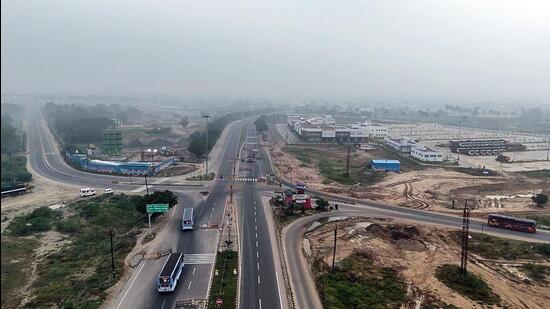
Construction of national highways slows; 8,600km built against 10,000km target| India News
From Record Speeds to Slower Lanes India’s Highway Expansion Story an Omni 360 News Report
India’s ambition to build a robust national highway network has been a cornerstone of its infrastructure development strategy for decades. This monumental task, aimed at connecting remote corners and boosting economic activity, has seen periods of unprecedented acceleration and, more recently, a noticeable tempering of pace. An Omni 360 News review delves into the ebb and flow of this critical infrastructure journey, highlighting the remarkable achievements and the current challenges facing India’s road construction.
The nation celebrated a significant milestone in 2020-21, a period that saw the fastest expansion of national highways in India’s history. During this time, an impressive 13,327 kilometers of highways were constructed. This translates to an average daily construction rate of 33.83 kilometers, a staggering pace that underscored the government’s strong focus and the collective efforts of engineers, laborers, and policymakers. This surge was often attributed to a combination of streamlined processes, increased budgetary allocations, and perhaps even the unique circumstances of the pandemic which, in some areas, led to fewer traffic disruptions allowing for continuous work. The momentum built during these years was a testament to a clear vision for enhanced connectivity and faster transit across the country.
However, the rapid tempo observed in 2020-21 has since moderated. Recent data indicates a shift in the speed of national highway construction. In the latest assessment, approximately 8,600 kilometers of national highways were built, falling short of the ambitious 10,000-kilometer target set for the period. This current figure also represents a decline when compared to the 10,331 kilometers constructed in 2022-23 and the 10,457 kilometers in 2021-22, indicating a clear deceleration from the peak.
Understanding the reasons behind this slowdown requires a look at the ground realities of large-scale infrastructure projects. Several factors often emerge as significant hurdles. Land acquisition, a perennially complex issue, frequently delays projects. Local reports from various regions consistently highlight challenges in obtaining necessary land parcels, often leading to prolonged negotiations and legal battles. Similarly, securing environmental clearances can be a time-consuming process, essential for ecological balance but often adding months or even years to project timelines. Rising costs of essential construction materials like cement, steel, and bitumen also play a role, impacting project budgets and sometimes leading to delays as contractors grapple with revised financial models. Furthermore, challenges such as ensuring adequate labor availability, managing contractor performance, and navigating seasonal disruptions, particularly during the monsoon, collectively contribute to project timelines stretching beyond initial estimates.
The importance of a robust national highway network cannot be overstated. These arteries are the lifelines of the economy, facilitating trade, reducing logistics costs, and connecting producers to markets. Improved road infrastructure enhances tourism, reduces travel times for commuters, and provides better access to essential services for communities, especially in remote areas. It underpins industrial growth by ensuring seamless movement of goods and raw materials, thereby fostering regional development. For a country as diverse and expansive as India, efficient road connectivity is paramount to achieving inclusive growth and integrating its vast regions.
Despite the recent shift in pace, the commitment to enhancing India’s road infrastructure remains strong. Government bodies are continually working to address the challenges through policy reforms, digital platforms for clearances, and improved coordination mechanisms. The long-term vision for a world-class road network is firmly in place, recognizing its crucial role in the nation’s progress. The aim is not just to build roads, but to build a foundation for sustained economic prosperity and social cohesion.
Key Takeaways:
* India achieved its highest national highway expansion in 2020-21, constructing 13,327 kilometers at 33.83 kilometers per day.
* Recent construction has slowed, with 8,600 kilometers built against a 10,000-kilometer target, a decrease from previous years.
* Factors contributing to the slowdown include persistent challenges in land acquisition, environmental clearances, and rising material costs.
* A strong national highway network is vital for India’s economic growth, trade, logistics, and regional connectivity.
* Despite challenges, the long-term commitment to infrastructure development remains a national priority, with ongoing efforts to overcome hurdles.