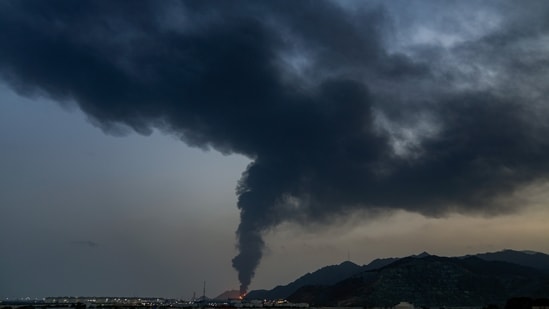
‘Don’t go out for photos, videos': Indian embassy's advisory to nationals in UAE amid Iran war| India News
UAE Reiterates Firm Warning on Filming Public Incident Sites and Airports Omni 360 News
A recent advisory disseminated through various channels, including embassy statements, has brought renewed focus to the United Arab Emirates’ stringent regulations concerning unauthorized filming. The warning specifically targets individuals involved in recording incidents at public locations or within airports, underscoring the serious legal ramifications for non-compliance. For residents and visitors alike, understanding these rules is not merely a matter of courtesy but a critical aspect of navigating the nation’s legal landscape.
The Core of the Warning: Public Safety and Privacy
The essence of the UAE’s directive stems from a comprehensive approach to maintaining public order, protecting individual privacy, and ensuring national security. In a digitally interconnected world, the impulse to document and share events in real-time is pervasive. However, in sensitive environments like incident sites – be they accidents, emergency responses, or security situations – and high-security zones such as airports, uncontrolled filming can pose significant risks.
Local authorities and emergency services often face challenges when onlookers disrupt their operations by filming. Such actions can inadvertently compromise ongoing investigations, reveal sensitive information, or even endanger rescue personnel and victims. Moreover, the unauthorized capture of individuals, particularly during moments of vulnerability or distress, constitutes a severe breach of privacy, a right fiercely protected under UAE law.
Understanding the Legal Framework
The UAE operates under a robust legal system that includes specific provisions addressing digital conduct and photography. The primary legislative instruments governing these matters include the UAE Penal Code and the Cybercrime Law. These laws are designed to regulate content creation and sharing, especially concerning public figures, private citizens, and national interests.
For instance, Article 44 of the Cybercrime Law (Federal Decree Law No. 34 of 2021) explicitly criminalizes the use of information technology to invade the privacy of another person, which includes taking pictures, publishing news, or recording conversations without consent. While this typically applies to private individuals, its principles extend to public scenarios where individuals expect a degree of privacy, especially during emergencies or sensitive situations. Furthermore, filming at accident scenes or security incidents could be interpreted as obstructing justice or interfering with official duties, carrying distinct penalties.
Airports, by their very nature, are critical infrastructure and high-security zones. Photography and videography are often restricted to maintain operational security, protect sensitive information, and prevent acts of terrorism or espionage. These restrictions are universally applied at airports globally, but the UAE’s enforcement is notably strict, reflecting its broader commitment to security. Warnings are typically posted, and passengers are expected to adhere to these rules.
What Constitutes an “Incident Location”?
An “incident location” is broadly interpreted. It could range from a minor traffic accident to a major public emergency. What defines it is the presence of an event that requires official intervention, draws public attention, and involves individuals who may be vulnerable or sensitive to being filmed. The underlying principle is to prevent interference with official duties and protect the dignity and privacy of those involved.
The Consequences: A Serious Undertaking
The warning from the embassy is not an empty threat. Individuals found to be in violation of these regulations face a range of penalties, which can include substantial fines, imprisonment, and even deportation for foreign nationals. The severity of the penalty often depends on the nature of the violation, the extent of the disruption caused, and whether the filmed content was subsequently shared online, particularly if it went viral or caused harm.
For example, disseminating footage of an incident that compromises public safety or incites panic could lead to severe penalties under the Cybercrime Law, which has provisions for spreading rumors or false information. Local courts have, in previous cases, imposed significant fines and jail sentences on individuals who have violated privacy laws through unauthorized filming and sharing.
Guidance for Residents and Visitors
To avoid inadvertently falling foul of these laws, Omni 360 News advises both residents and visitors to exercise caution and common sense:
1. Always Seek Permission: If unsure, always assume filming is prohibited. If you wish to capture content in a public space, especially one where an incident has occurred or where security is paramount, seek explicit permission from authorities or airport personnel.
2. Respect Privacy: Never film individuals without their express consent, especially children or those in distress. The right to privacy is a fundamental aspect of UAE law.
3. Avoid Incident Scenes: When encountering an accident or emergency, prioritize safety and allow emergency services to work unimpeded. Refrain from filming or taking photographs.
4. Observe Airport Rules: Inside airports, be mindful of signs indicating restricted photography areas. Generally, filming security checks, staff, or critical operational zones is strictly prohibited.
5. Think Before You Share: Even if you believe you have legitimately captured footage, consider the implications of sharing it online. Does it invade someone’s privacy? Could it be misinterpreted? Could it cause public alarm?
Broader Implications for Digital Content Creators
This reiteration of filming regulations also serves as a crucial reminder for social media influencers and content creators operating within the UAE. The pursuit of viral content must not override legal and ethical responsibilities. The UAE encourages innovation and digital engagement, but it balances this with a robust framework of laws designed to protect society and individuals.
The message is clear: while sharing experiences and connecting digitally is part of modern life, it must be done within the bounds of the law, with respect for privacy, and without hindering public safety efforts.
Key Takeaways
* The UAE has issued a stern warning against unauthorized filming at incident locations and within airports.
* This measure is rooted in protecting public safety, national security, and individual privacy.
* Violations can lead to severe penalties, including substantial fines, imprisonment, and deportation, as per the UAE Penal Code and Cybercrime Law.
* Residents and visitors are advised to always seek permission before filming, especially in sensitive areas, respect privacy, and refrain from interfering with official operations.
* The warning underscores the importance of responsible digital conduct and adherence to local laws for everyone in the UAE.
Adherence to these guidelines ensures a smooth and lawful experience for everyone within the United Arab Emirates, reflecting the nation’s commitment to order and respect for all.