EAM Jaishankar meets top EU leadership; discusses trade, global issues| India News
S Jaishankar in Brussels Charting India Europe Future
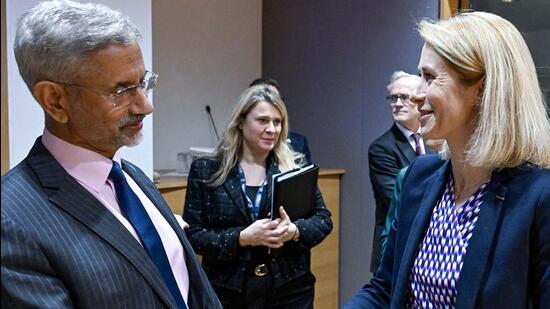
The heart of European diplomacy recently welcomed a significant guest from the East as India’s External Affairs Minister, S Jaishankar, arrived in Brussels. His visit, at the invitation of European Union Foreign and Security Policy chief Kaja Kallas, for a meeting of the Foreign Affairs Council, underscores a deepening engagement between India and the 27-member bloc. This gathering was more than a routine diplomatic exchange; it represented a strategic convergence at a time of complex global challenges.
For decades, the relationship between India, the world’s largest democracy, and the European Union, a unique political and economic union, has steadily evolved. From trade partners to strategic allies, both entities recognize the indispensable role the other plays in fostering a stable, prosperous, and rules-based international order. Minister Jaishankar’s presence at the Foreign Affairs Council, a forum typically reserved for the foreign ministers of EU member states, highlights India’s increasing global stature and the EU’s acknowledgment of its crucial role in multilateral discussions.
The discussions in Brussels covered a broad spectrum of critical issues. A primary focus was the prevailing geopolitical landscape, particularly the ongoing conflict in Ukraine and its far-reaching consequences on global energy, food security, and supply chains. Both India and the EU have a shared interest in de-escalation and finding pathways to peace, though their approaches may differ. The complex situation in the Middle East and its potential for wider regional instability also featured prominently, with diplomats keen to understand diverse perspectives and seek common ground for humanitarian aid and peace efforts.
Beyond immediate crises, the dialogue extended to long-term strategic cooperation. The Indo-Pacific region, a vital corridor for global trade and a hotspot for geopolitical competition, was a significant topic. Both sides reiterated their commitment to a free, open, and inclusive Indo-Pacific, emphasizing adherence to international law and unimpeded commerce. This alignment on regional security underscores a broader shared vision for a balanced global order.
Economic partnership remains a cornerstone of India-EU relations. Conversations likely touched upon the ongoing negotiations for a comprehensive Free Trade Agreement and Investment Protection Agreement, which promise to unlock immense potential for bilateral trade and investment. Digital transformation, green technologies, climate change mitigation, and sustainable development also formed crucial parts of the agenda. India’s vast market and technological prowess, combined with Europe’s innovation and regulatory experience, create a powerful synergy for tackling global challenges. Security cooperation, including counter-terrorism and maritime security, also found its place in these high-level talks, reflecting a shared resolve to address threats to international peace.
To put this in perspective for a 12th standard student: Imagine all the top foreign policy makers from Europe’s biggest countries gather to discuss the world’s most pressing problems, like how to deal with conflicts, ensure everyone has enough food, and protect the environment. Now, imagine they invite India’s most senior diplomat, S Jaishankar, to join their meeting. Why? Because India is a huge country with a massive population, a growing economy, and a strong voice on the global stage. Europe wants to hear India’s views, share ideas, and work together on these big challenges. It’s like when different group leaders in a school project come together to ensure their final presentation is the best, bringing their unique skills and insights to the table. They talk about everything from making trade fairer to fighting climate change, trying to make the world a safer and more prosperous place for everyone.
The visit is expected to lay the groundwork for strengthened dialogue mechanisms and potentially spark concrete collaborations in various sectors, from research and innovation to defense and sustainable infrastructure. India’s nuanced approach to global issues, combined with its democratic credentials, positions it as an invaluable partner for the EU in navigating a multipolar world. Omni 360 News will continue to monitor the practical outcomes and evolving dynamics stemming from such crucial diplomatic engagements.
Key Takeaways:
* Minister Jaishankar’s participation in the EU Foreign Affairs Council signifies India’s rising influence in global diplomacy.
* Discussions focused on pressing geopolitical challenges, including Ukraine and the Middle East, alongside the Indo-Pacific strategy.
* Economic cooperation, climate action, and digital partnership remain central to India-EU relations.
* The visit reinforces shared democratic values and a commitment to a rules-based international system.
* This engagement promises to deepen strategic understanding and open new avenues for collaboration between India and Europe.
Ultimately, S Jaishankar’s trip to Brussels was more than a series of meetings; it was a testament to the enduring and increasingly vital strategic partnership between India and the European Union. In a world grappling with uncertainty, such high-level diplomatic interactions are essential for fostering mutual understanding, finding common solutions, and charting a future of shared prosperity and stability.