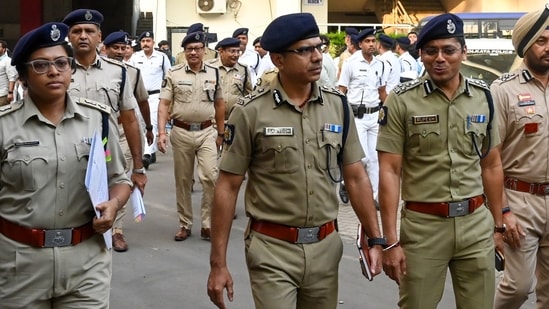
EC transfers 173 police station heads across Bengal ahead of Assembly polls| India News
West Bengal Polls Election Commission Reinforces Impartiality
As West Bengal braces for a pivotal democratic exercise, with assembly elections scheduled in two phases on April 23 and April 29, and votes to be meticulously counted on May 4, the Election Commission of India (ECI) has once again demonstrated its unwavering commitment to ensuring a level playing field. In a significant pre-poll move, the ECI has ordered the transfer of 173 police station heads across the state. This decisive action underscores the Commission’s resolve to maintain strict neutrality and build voter confidence as the state prepares to elect representatives for its 294-member assembly.
The transfers involve numerous officers-in-charge (OICs) and circle inspectors (CIs), key figures at the grassroots level of law enforcement. This widespread reshuffling is not merely a routine administrative exercise; it is a strategic step taken by the ECI to address potential concerns regarding impartiality and to prevent any undue influence during the election process. Local reports, often picked up by community newspapers and online portals, consistently highlight the importance of police neutrality, especially in regions with a history of electoral contestations.
The Election Commission’s mandate is clear: to conduct free, fair, and credible elections. To achieve this, it frequently takes proactive measures to insulate the electoral machinery from any perceived political bias. In the run-up to these critical West Bengal assembly polls, complaints from various political parties often form the basis for such actions. These grievances typically revolve around allegations of officers being too close to the ruling party, having a prolonged tenure in a particular posting, or exhibiting behavior that could be interpreted as politically motivated. The ECI, in its role as the guardian of democratic integrity, meticulously reviews these complaints and acts where necessary, sending a clear message that neutrality is non-negotiable.
Understanding the significance of these transfers is crucial for a 12th standard student, or indeed, any engaged citizen. Imagine a game where one team’s referee seems to be playing favorites. It would be unfair, right? In an election, the police and administration act like the referees. If some officers stay in one place for too long or are seen as too friendly with a particular political party, there’s a risk they might not act completely fairly. They might not stop people from breaking election rules, or they might not protect voters equally. By moving these officers, the Election Commission is essentially changing the referees to ensure everyone gets a fair chance, and that no one feels scared or pressured when they go to vote.
This proactive approach by the ECI extends beyond West Bengal, as the Commission often undertakes similar measures across other states to uphold election sanctity. The systematic transfer of police officials ahead of elections is a well-established practice aimed at preventing local muscle-flexing or intimidation that could influence voter behavior. It ensures that the administration remains impartial and focused solely on facilitating a peaceful and orderly polling process. For Omni 360 News, monitoring these ground-level actions provides vital insight into the real efforts being made to safeguard democratic principles.
The impact of such transfers is multifaceted. On one hand, it can temporarily disrupt local administrative continuity, as new officers take charge. On the other hand, the benefits often outweigh these short-term challenges. The fresh perspective brought by new officers, unburdened by past allegiances or local political pressures, can significantly boost public confidence. Voters in West Bengal, particularly in sensitive areas, need to feel secure that their vote will be cast freely and counted fairly, without any coercion or manipulation. These transfers are designed to instill that very confidence, ensuring that the democratic process truly reflects the will of the people.
The ECI’s firm stand signals that no deviation from the code of conduct will be tolerated. Officers are expected to perform their duties without fear or favor, maintaining law and order, and swiftly addressing any electoral malpractices. This environment is crucial for parties to campaign freely, for candidates to connect with voters, and most importantly, for citizens to exercise their franchise without intimidation. As West Bengal heads to the polls, the actions of the Election Commission are a testament to the robust mechanisms in place to uphold the integrity of India’s democratic fabric.
Key Takeaways:
* The Election Commission has transferred 173 police station heads in West Bengal ahead of the April 23 and April 29 assembly elections.
* This move aims to ensure free, fair, and impartial elections by preventing political influence and addressing complaints.
* The transfers involve Officers-in-Charge (OICs) and Circle Inspectors (CIs), key local law enforcement figures.
* The ECI acts to maintain neutrality and build voter confidence, ensuring a level playing field for all political parties.
* These actions are crucial for voters to feel secure and empowered to cast their ballots freely.