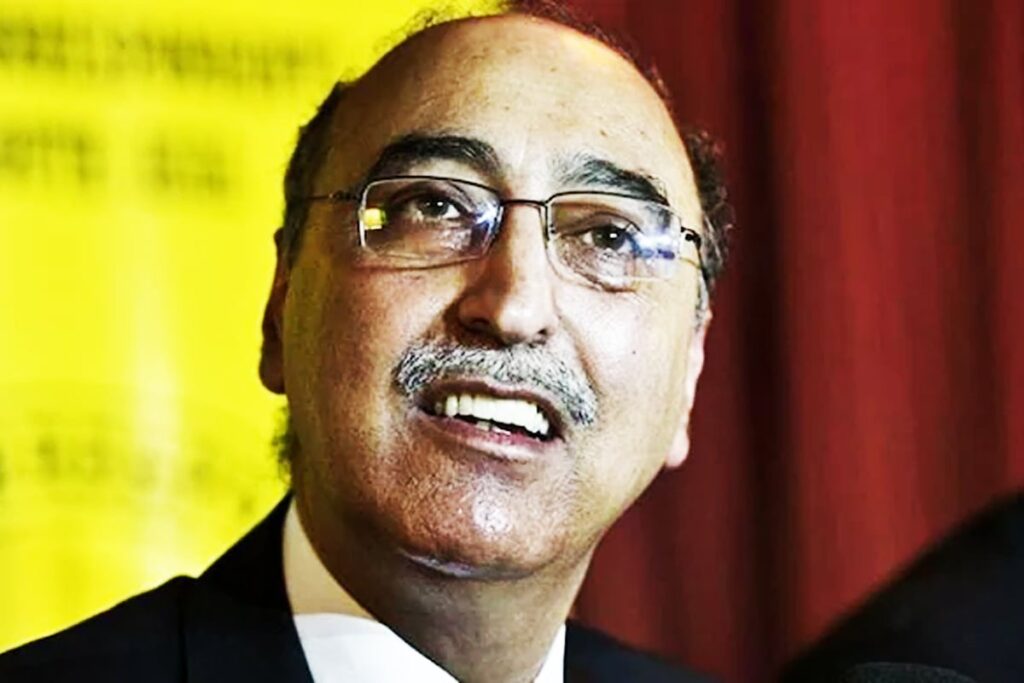
If US targets our nukes, we'll bomb Delhi, Mumbai, Ex-Pak envoy's bizarre remark
Former Pakistani Diplomat Abdul Basit Stokes Controversy with Bold India Attack Claim
Recent remarks by Abdul Basit, Pakistan’s former High Commissioner to India, have ignited significant debate, drawing attention to the often-tense diplomatic landscape between the two South Asian nuclear powers. Basit, known for his direct and sometimes provocative stance during his diplomatic tenure, made a striking claim during a television program with a Pakistani news outlet. He suggested that if a foreign power, such as the United States, were to launch an attack on Pakistan, Islamabad should retaliate by targeting India, specifically mentioning cities like Mumbai and Delhi.
The former diplomat’s comments, widely reported across various news platforms including those monitored by Omni 360 News, have been met with a mix of surprise and concern. Addressing viewers, Basit articulated a scenario where, in the event of an American offensive against Pakistan, Islamabad should “without a moment’s hesitation attack India.” He went on to describe potential bombings in major Indian cities, stating, “We should not spare them. What happens next, we can see later.”
Intriguingly, Basit himself qualified his own statement, describing such a situation as “improbable.” He elaborated, “If someone holds hostile intentions towards us, Pakistan will have no other option but to attack India wherever it deems fit. However, we do not wish for such a scenario, and neither does India.” This addition slightly softens the initial aggressive tone but does not diminish the gravity of the underlying threat perception.
Understanding the context behind Abdul Basit’s career sheds light on the weight of his words. He served as Pakistan’s High Commissioner to India from 2014 to 2017. This period was marked by considerable diplomatic strain and several complex challenges in bilateral relations. During his ambassadorship, relations between India and Pakistan witnessed events such as the Uri attack and the surgical strikes that followed, further deepening mistrust and raising cross-border tensions. His experience at the heart of these diplomatic challenges provides him with an intimate, albeit often critical, perspective on India-Pakistan dynamics.
The timing of Basit’s remarks is also noteworthy. They emerge against a backdrop of Pakistan’s ongoing and often bloody conflict with Afghanistan. Regional observers have pointed out that Pakistan is currently grappling with internal security challenges and external pressures, particularly along its western border. In such a volatile environment, a former senior diplomat’s suggestion of an aggressive posture towards a neighbouring nuclear state, even hypothetically, can be seen as highly sensitive.
From a strategic standpoint, the notion of Pakistan attacking India as a response to a third-party attack on Pakistan raises numerous questions about foreign policy doctrine and the principles of national defense. Such a strategy deviates from conventional military responses, which typically involve direct retaliation against the aggressor. The suggestion to redirect aggression towards a neutral party in a hypothetical conflict adds a layer of complexity and potential destabilization to an already delicate regional security architecture. It could be interpreted as an attempt to leverage regional rivalries or to communicate a drastic, albeit unlikely, red line to international players.
Security analysts often discuss the concept of “escalation ladders” in conflict situations, where actions and reactions can quickly spiral out of control. Basit’s statement, even if framed as improbable, touches upon a dangerous precedent where a state might choose an unconventional retaliatory path. Such rhetoric, coming from someone who has held a significant diplomatic post, can fuel existing narratives of distrust and perpetuate cycles of suspicion between nations. It also serves as a stark reminder of the underlying anxieties and historical grievances that continue to shape the subcontinent’s geopolitical landscape.
While Basit’s comments are his personal views and do not officially represent current Pakistani government policy, they nonetheless provide insight into certain segments of strategic thinking within Pakistan. They highlight a persistent undercurrent of perceived vulnerability and the potential for extreme measures in scenarios of existential threat. For India, such statements, regardless of their feasibility, reinforce concerns about Pakistan’s strategic intentions and the potential for miscalculation in times of crisis.
The episode serves as a powerful example of how public statements by former officials can reverberate across borders, shaping public opinion and influencing diplomatic discourse. In an era of constant news cycles and rapid information dissemination, every word from influential figures is scrutinized for its potential implications for regional stability and international relations. Omni 360 News continues to monitor these developments for their broader impact on peace and security in South Asia.
Key Takeaways
- Abdul Basit, former Pakistani High Commissioner to India, suggested Pakistan should attack India (Mumbai, Delhi) if a foreign power attacks Pakistan.
- He described this scenario as “improbable” but also indicated Pakistan might have “no other option” under hostility.
- Basit served as High Commissioner from 2014-2017, a period of heightened India-Pakistan tensions.
- The remarks come amidst Pakistan’s ongoing conflict with Afghanistan, adding to regional complexities.
- Such statements from former diplomats, while not official policy, can influence perceptions and diplomatic narratives between nuclear-armed neighbours.
- The suggestion of attacking a non-aggressor nation in a hypothetical conflict raises concerns about regional stability and strategic miscalculation.