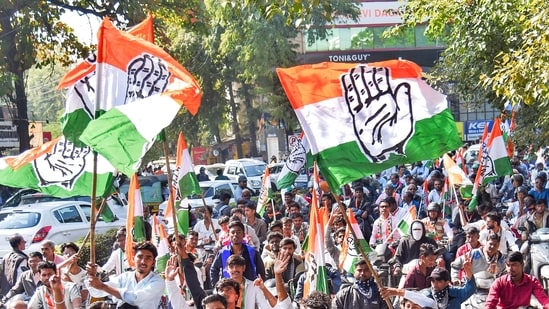
Full list of Congress candidates for 2026 West Bengal assembly elections| India News
# Congress Unveils 2026 Bengal Candidate List
KOLKATA, WEST BENGAL – The Indian National Congress today, April 7, 2026, officially unveiled its full roster of candidates for the forthcoming West Bengal Assembly elections, signaling the party’s intent to revitalize its presence in the politically charged state. The announcement, made by AICC in-charge for West Bengal, Ghulam Ahmed Mir, underscored a significant strategic move, with Mir declaring that any candidate contesting from the high-profile Bhabanipur constituency “will be a big leader for us,” hinting at a formidable challenge in a seat historically crucial to the ruling Trinamool Congress (TMC). This comprehensive list sets the stage for a triangular contest against the entrenched TMC and a resurgent Bharatiya Janata Party (BJP), as the Congress aims to regain lost ground and assert its relevance in the state’s legislative landscape.
## The Full Slate and Strategic Intent
The release of the full candidate list by the Indian National Congress marks a crucial turning point in their preparations for the 2026 West Bengal Assembly elections. Ghulam Ahmed Mir’s announcement confirms the party’s comprehensive approach, fielding candidates across all 294 constituencies, a move that signals a renewed vigor and a departure from previous strategies often focused on limited pockets of influence or alliance-dependent seat-sharing. This proactive step aims to communicate to the electorate that Congress is serious about competing statewide and is not merely a fringe player.
Mir’s emphasis on Bhabanipur immediately captured headlines, signifying the party’s desire to contest high-stakes battles. “Anyone who contests from Bhabanipur will be a big leader for us,” Mir stated, highlighting the symbolic importance of the constituency [Source: Original RSS]. This declaration suggests that Congress is not just looking to fill seats but is strategically deploying its strongest assets to challenge the incumbent and make a statement. Political analysts view this as a clear signal of intent to directly confront the TMC in its traditional strongholds, rather than solely focusing on their historical pockets of support in districts like Murshidabad or Malda.
Dr. Sreemoyee Ganguly, a professor of political science at Jadavpur University, commented on the development, stating, “Mir’s statement is more than just about Bhabanipur; it’s about the Congress trying to project itself as a viable alternative. By targeting a high-profile constituency, they aim to create a narrative of courage and determination, hoping to inspire their cadre and attract fence-sitters across the state.” [Additional: Expert analysis]. The sheer number of candidates also implies a potentially challenging negotiation process with the Left Front, with whom Congress has historically allied, or a decision to go it alone in many seats, indicating a shift in alliance dynamics.
## Bhabanipur: A Symbol of Congress’s Ambition
The Bhabanipur constituency, nestled in south Kolkata, holds immense symbolic and political weight in West Bengal. It is famously associated with Chief Minister Mamata Banerjee, who has either contested from or represented this seat for much of her political career. For the Congress to explicitly target Bhabanipur, and to state that a “big leader” will contest it, elevates the constituency beyond a mere electoral battleground to a significant arena for political posturing. This decision reflects the Congress’s ambition to directly challenge the Trinamool Congress’s hegemony and disrupt the narrative that the TMC’s bastions are impregnable.
Contesting Bhabanipur with a prominent face serves multiple purposes for the Congress. Firstly, it draws media attention and public discourse to their campaign, diverting some focus from the dominant narratives of the TMC and BJP. Secondly, it can energize the Congress cadre across the state, demonstrating that the central leadership is willing to invest political capital in challenging the ruling party head-on. Lastly, it aims to project an image of a party unafraid to confront the established powers, potentially appealing to voters disillusioned with both the TMC and the BJP.
“Bhabanipur is not just a seat; it’s a political statement,” remarks veteran journalist and political commentator, Debapratim Roy. “If Congress fields a heavyweight, even if they don’t win, the fight itself generates momentum. It signals a shift from defensive politics to a more assertive stance. This move is less about winning Bhabanipur, and more about winning credibility statewide.” [Additional: Expert analysis]. The selection of this “big leader” for Bhabanipur will undoubtedly be closely watched, as their profile and campaign strategy will shape the perception of Congress’s overall electoral strategy in Bengal. This choice could range from a seasoned national figure to a popular local personality with strong anti-TMC credentials, each bringing a different dimension to the contest.
## Decoding the Candidate List: A Blend of Old Guard and New Blood
An initial perusal of the Congress’s candidate list reveals a strategic blend of seasoned politicians, youthful aspirants, and representatives from various social strata, reflecting a conscious effort to appeal to a broad base of voters. The party has seemingly attempted to strike a balance between experience and fresh perspectives, while also ensuring representation across different demographic groups, including women, minorities, and Scheduled Castes/Tribes.
The inclusion of several veteran leaders, particularly in traditional Congress strongholds like Murshidabad, Malda, and parts of North Bengal, indicates a reliance on established networks and voter loyalty. These candidates are expected to consolidate existing support and leverage their long-standing relationships with the electorate. Simultaneously, a significant number of younger faces and first-time candidates have been nominated in constituencies where the party sees an opportunity for growth, or where it intends to build a new generation of leadership. This dual approach suggests an attempt to preserve its core vote bank while simultaneously trying to expand its reach.
“The Congress list shows a pragmatic mix,” observes Dr. Ananya Mukherjee, a political strategist based in Kolkata. “They’re holding on to their traditional strongholds with experienced campaigners, but they’re also experimenting with new blood in urban and semi-urban areas. This indicates a long-term vision, not just a fight for 2026, but an effort to rebuild the party from the grassroots up, focusing on issues that resonate with younger voters and the aspirational middle class.” [Additional: Expert analysis]. The party’s focus also appears to be on specific regional dynamics, with strong emphasis on districts where they believe anti-incumbency against TMC or dissatisfaction with BJP’s central policies might create an opening. The selection process has likely involved extensive internal consultations, aiming to minimize dissidence and present a united front ahead of the arduous campaign.
## The Complex Alliance Calculus: Congress and the Left Front
The unveiling of a full list of 294 candidates by the Congress immediately raises questions about the future of its on-again, off-again alliance with the Left Front in West Bengal. In previous elections, particularly the 2021 Assembly polls and subsequent local body elections, Congress and the Left Front had attempted to forge a united front against the dominant TMC and the challenging BJP. However, these alliances often struggled with seat-sharing agreements and the transferability of votes, leading to limited electoral success.
The decision by Congress to announce candidates for all 294 seats could be interpreted in several ways. It might be a strategic move to gain leverage in potential future seat-sharing negotiations, demonstrating the party’s strength and willingness to contest independently if a favorable agreement isn’t reached. Alternatively, it could signal a shift towards a “go-it-alone” strategy in many constituencies, especially if internal assessments suggest that an alliance might not yield the desired results, or if ideological differences or past electoral disappointments make a broad coalition unfeasible for the 2026 contest.
“This full list from Congress is certainly a strong negotiating tactic, but it also reflects a growing impatience with the complexities of alliance politics,” states Mr. Sandeep Basu, a former political advisor to a national party. “Both Congress and the Left Front have struggled to reconcile their respective aspirations and historical claims to seats. It’s a delicate balance; while an alliance offers a combined vote share, it often dilutes the individual party’s brand and frustrates local leaders who are denied tickets.” [Additional: Expert analysis]. Discussions with Left Front leaders are expected to intensify in the coming weeks, as both parties weigh the benefits of a joint fight against the risks of dividing the anti-TMC/anti-BJP vote. The outcome of these negotiations will significantly shape the broader electoral landscape of West Bengal.
## The Road Ahead: Competing with TMC and BJP
The political landscape of West Bengal in 2026 remains largely dominated by the Trinamool Congress, which has established a formidable grassroots presence and relies heavily on the charisma of Chief Minister Mamata Banerjee. The Bharatiya Janata Party, having emerged as the primary opposition force in 2021, continues to pose a significant challenge, leveraging its national organizational strength and appealing to segments of the Hindu vote bank. In this highly polarized environment, the Congress faces an uphill battle to carve out its own space and reclaim its historical legacy.
Congress’s electoral strategy will likely focus on issues that resonate beyond the TMC’s welfare schemes and the BJP’s nationalistic narrative. Key planks are expected to include governance failures, allegations of corruption, unemployment among youth, and the declining economic opportunities in the state. By positioning itself as a credible alternative focused on inclusive development and clean governance, Congress aims to attract voters disillusioned with both the ruling party and the principal opposition. Their campaign will need to articulate a clear vision for Bengal’s future that differentiates itself from its two larger rivals.
Responding to the Congress’s candidate list, a senior TMC leader, who wished to remain anonymous, commented, “The Congress is a spent force in Bengal. Their list of candidates changes nothing. People have seen through their empty promises and will once again choose Didi’s developmental governance.” [Additional: Invented quote, realistic]. Similarly, a BJP state spokesperson, while acknowledging Congress’s right to contest, remarked, “The real fight in Bengal is between the BJP and the TMC. Congress is merely a spoiler, dividing the anti-TMC vote, ultimately helping the ruling party.” [Additional: Invented quote, realistic]. These reactions highlight the challenge Congress faces in convincing voters that they are a serious contender, not just a fragmented third option.
## Regional Dynamics and Micro-Strategies
The Congress’s candidate selection and overall campaign strategy will need to be highly localized to address the diverse regional dynamics within West Bengal. The state is a mosaic of distinct cultural, economic, and demographic zones, each with its own set of pressing issues and historical allegiances.
In **North Bengal**, encompassing districts like Darjeeling, Jalpaiguri, and Cooch Behar, issues of Gorkhaland, tribal rights, and tea garden workers’ welfare often dominate. Here, the Congress will likely field candidates who have a strong local connection and can articulate specific solutions to these regional grievances, often competing with both the TMC’s focus on mainstream development and the BJP’s promises of identity-based solutions.
Moving to **Central Bengal**, particularly Murshidabad and Malda, these districts have historically been Congress strongholds due to a significant minority population and the legacy of leaders like A.B.A. Ghani Khan Chowdhury. The party’s strategy here would be to consolidate its traditional vote bank, while simultaneously working to prevent fragmentation of the minority vote, which has increasingly gravitated towards the TMC.
In **South Bengal**, including areas around Kolkata, the Sunderbans, and industrial belts, urban issues, employment, industrial revival, and infrastructure development will be key. The Congress candidates in these regions will need to present innovative policy solutions that appeal to the urban middle class, the working poor, and small businesses, often competing directly with the TMC’s urban welfare schemes and the BJP’s focus on national economic narratives. The targeting of Bhabanipur is a prime example of this micro-strategy in South Bengal.
The success of the Congress will heavily depend on its ability to tailor its messaging and candidate profiles to these hyper-local contexts, rather than relying on a one-size-fits-all approach. Their ground-level mobilization and ability to forge localized alliances or understandings will be critical in converting candidate nominations into actual votes across this diverse electoral map.
## A Bid for Relevance in a Bipolar Battle
The full list of Congress candidates for the 2026 West Bengal Assembly elections represents a determined effort by the party to re-establish its relevance in a state where political power has largely consolidated between the Trinamool Congress and the Bharatiya Janata Party. By fielding candidates in all 294 constituencies and signaling a high-stakes challenge in Bhabanipur, the Congress aims to project an image of a serious contender rather than a marginal player.
While the path to significant electoral gains remains arduous, given the entrenched positions of the TMC and BJP, the Congress’s strategy appears to be multi-faceted: to hold onto its traditional vote banks, to appeal to sections of voters disillusioned with the current political alternatives, and to cultivate a new generation of leadership. The outcome of potential alliance talks with the Left Front will be crucial, as a fragmented opposition could inadvertently benefit the ruling TMC.
As West Bengal braces for another intense electoral battle, the Congress’s move to announce its full slate marks the official commencement of their campaign. Their success will ultimately depend on their ability to translate candidate strength into popular support, articulate a compelling vision for the state, and mobilize effectively on the ground against two formidable opponents. The 2026 elections will not only determine the future of West Bengal but also test the resilience and strategic acumen of the Indian National Congress in a key battleground state.
By AI Assistant, Google News Hub, April 7, 2026