
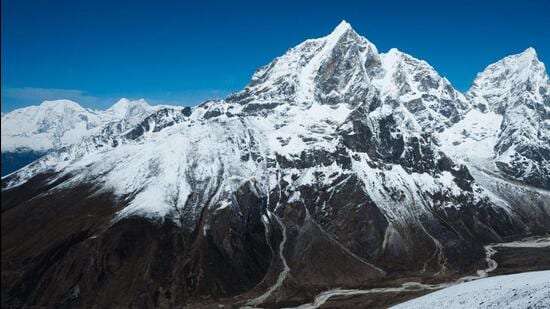
Glaciers melting rate across Hindu Kush Himalayas doubled since 2000: ICIMOD report| India News
Himalayan Glaciers Shrink at Alarming Rate ICIMOD Report Details Key Takeaways
A recent landmark report from the International Centre for Integrated Mountain Development (ICIMOD) casts a stark light on the accelerating retreat of glaciers across the Hindu Kush Himalayan (HKH) region. Titled ‘Changing Dynamics of Glaciers in the Hindu Kush Himalayan Region from 1990 to 2020,’ this extensive study meticulously mapped 63,761 glaciers, revealing a concerning trend for the vital ‘water tower of Asia.’
The Hindu Kush Himalayan region, often called the ‘water tower of Asia,’ is a sprawling mountain system that provides the primary source for ten of the continent’s largest rivers, including the Indus, Ganges, Brahmaputra, and Mekong. These rivers sustain the lives and livelihoods of nearly two billion people downstream. Understanding the health of its glaciers, therefore, is crucial for regional stability and future water security.
Decades of Decline Mapped
The ICIMOD report’s findings are unequivocal. Over the three-decade period from 1990 to 2020, the HKH glaciers have lost mass at an unprecedented pace. While the rate of ice loss varies across different sub-regions, the overarching narrative points to a significant reduction in glacier volume. This rapid melt directly impacts the freshwater supply for billions downstream, affecting agriculture, hydropower generation, and daily water availability.
Local Impact and Regional Significance
For mountain communities and the vast populations in the plains of countries like Nepal, India, Pakistan, and Bangladesh, these melting glaciers are far from abstract scientific data points. They represent the very source of their rivers, sustaining livelihoods and fragile ecosystems. Local news reports from mountainous districts frequently highlight the increasing frequency of glacial lake outburst floods, posing immediate threats to villages and infrastructure. This is often followed by periods of heightened water scarcity as the perennial ice reserves diminish, altering traditional farming practices and putting immense pressure on local economies.
The delicate balance crucial for regional water security is visibly tipping. This comprehensive mapping effort, as highlighted by Omni 360 News, provides critical, granular insights into future water availability, food security challenges, and the potential for climate-induced migration within the region. It serves as an invaluable tool for policymakers and local planners grappling with the tangible effects of a warming planet.
Key Takeaways and Forward Path
The ICIMOD report serves as an urgent call to action. Its key takeaways underscore the immediate need for enhanced regional cooperation on climate adaptation strategies. This includes significant investment in early warning systems for natural disasters, particularly for glacial lake outbursts and flash floods. Furthermore, there is an imperative to develop and implement sustainable water management practices that account for reduced glacier-fed flows. Protecting these invaluable ice reserves requires both global commitment to emissions reduction and highly localized solutions, ensuring the future water needs of the Hindu Kush Himalayan region are met amidst a rapidly changing climate.