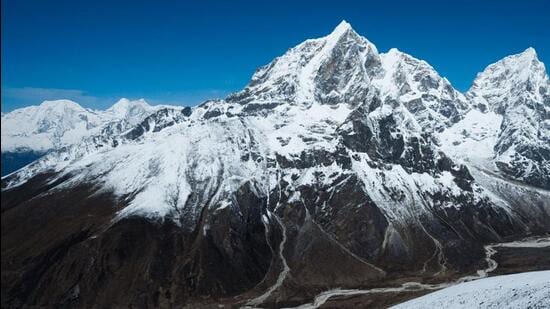
Glaciers melting rate across Hindu Kush Himalayas doubled since 2000: ICIMOD report| India News
Hindu Kush Glaciers Shrink ICIMOD Report Alarms Region
A recent study from the International Centre for Integrated Mountain Development (ICIMOD) casts a stark light on the changing landscape of the Hindu Kush Himalayan region. Titled ‘Changing Dynamics of Glaciers in the Hindu Kush Himalayan Region from 1990 to 2020’, the report meticulously mapped 63,761 glaciers, revealing significant, concerning shifts over three crucial decades. This comprehensive analysis serves as a vital update for Omni 360 News readers, highlighting an urgent environmental issue impacting billions.
ICIMOD’s extensive research confirms that these massive ice bodies, often called the “water towers of Asia,” are experiencing accelerated changes in their size and volume. For someone in 12th standard, imagine the Himalayas as a colossal natural freezer. This freezer slowly releases water throughout the year, feeding major rivers like the Indus, Ganges, Brahmaputra, Mekong, and Yangtze. These rivers are the lifelines for drinking water, agricultural irrigation, and hydroelectric power for approximately 1.9 billion people across South and Southeast Asia.
The report’s findings underscore that between 1990 and 2020, the retreat of these glaciers has intensified. This means the ice is melting faster than new snow can accumulate, leading to a net loss of glacier mass. While a short-term increase in meltwater might initially boost river flows, the long-term outlook points towards potential water scarcity as these vital reservoirs diminish. Such changes directly threaten the livelihoods of millions in local mountain communities who rely on predictable water sources for their daily lives and farming practices.
The primary driver behind this accelerated melting is global climate change, manifesting as rising temperatures throughout the region. Local factors, such as airborne pollution depositing dark soot on ice surfaces, can also play a role by making the glaciers absorb more sunlight and thus melt faster. The intricate balance of these mountain ecosystems is fragile, and the ICIMOD report serves as a stark reminder of the escalating risks.
Key Takeaways:
- Glacier Retreat: 63,761 Hindu Kush Himalayan glaciers mapped, showing significant shrinking from 1990 to 2020.
- Water Security Threat: This accelerated melt endangers the long-term water supply for billions in Asia.
- Local Impact: Mountain communities face immediate disruptions to livelihoods, agriculture, and daily life.
- Climate Urgency: The report reinforces the critical need for global climate action and regional cooperation to mitigate these impacts.
Understanding these complex dynamics is not just an academic exercise; it is crucial for informed policy-making and sustainable development across the vast Hindu Kush Himalayan region. The report’s findings demand immediate attention and concerted efforts to protect these essential natural resources for future generations.