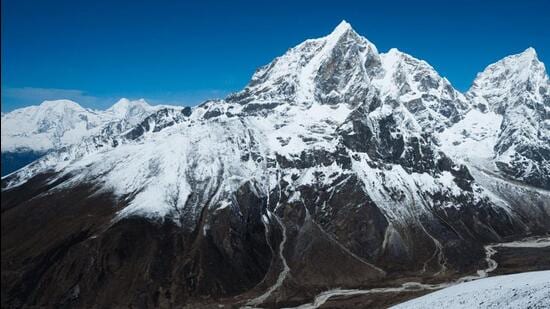
Glaciers melting rate across Hindu Kush Himalayas doubled since 2000: ICIMOD report| India News
Hindu Kush Himalayan Glaciers Documenting Decades of Significant Retreat
The majestic Hindu Kush Himalayan (HKH) region, often called the world’s Third Pole, serves as a vital water source for billions across Asia. A recent report from the International Centre for Integrated Mountain Development (ICIMOD), titled ‘Changing Dynamics of Glaciers in the Hindu Kush Himalayan Region from 1990 to 2020,’ has unveiled a stark reality: the region’s glaciers are shrinking at an accelerated pace, posing profound implications for the delicate ecosystem and the livelihoods dependent on them. This comprehensive study meticulously mapped 63,761 glaciers, offering an unprecedented look at their dramatic changes over three decades.
The HKH region spans eight countries, from Afghanistan to Myanmar, and is home to the largest volume of ice outside the polar regions. Its glaciers feed ten of Asia’s largest river systems, including the Indus, Ganges, Brahmaputra, Mekong, and Yangtze. These rivers are the lifeblood for approximately 240 million people living in the mountains and 1.65 billion downstream, providing water for drinking, irrigation, hydropower, and maintaining crucial biodiversity. For communities in places like Nepal’s Everest region, India’s Uttarakhand, or Pakistan’s Gilgit-Baltistan, these glaciers are not just natural features; they are the literal foundation of their existence, influencing everything from crop cycles to cultural practices.
The ICIMOD report, drawing on extensive satellite imagery and field data, paints a concerning picture of glacial health. It reveals that the rate of glacier melt in the HKH region has notably increased since 2000 compared to the preceding decade. While glaciers naturally fluctuate, the observed changes from 1990 to 2020 show a clear and alarming trend of accelerated mass loss. This isn’t just about ice disappearing; it’s about a fundamental shift in the regional water balance, directly impacting everything from agricultural yields in the fertile plains to the frequency and intensity of natural disasters in mountain communities.
Local news outlets across the region have consistently highlighted the tangible effects of these changes. In Ladakh, India, village elders speak of shrinking streams and delayed monsoon patterns affecting traditional farming methods. Reports from the Kathmandu Post have documented increasing instances of Glacial Lake Outburst Floods (GLOFs) in Nepal, where rapidly melting glaciers form unstable lakes that can burst, devastating downstream villages and infrastructure. The Himalayan Times frequently covers the challenges faced by local communities adapting to less predictable water supplies and the impact on their primary income sources, such as yak herding and mountain tourism. Similarly, reports from Pakistan’s Dawn newspaper have detailed concerns over water scarcity impacting agricultural belts and potential energy crises due to fluctuating river flows essential for hydropower projects. These local narratives underscore the human face of climate change, revealing how scientific data translates into daily struggles and uncertainties for millions.
The report emphasizes that rising global temperatures are the primary driver behind this accelerated melting. Even minor changes in average temperatures can have disproportionate effects in high-altitude environments. For a 12th-grade student, think of it like this: imagine putting an ice cube tray in a freezer that’s just barely cold enough to keep the water frozen. If the freezer temperature rises just a tiny bit, those ice cubes will start melting much faster. The HKH glaciers are like those ice cubes, very sensitive to even small temperature increases.
The implications extend beyond immediate water availability. Changes in glacier melt impact river flow patterns, leading to more extreme events like droughts and floods. This variability makes water management incredibly challenging for agricultural planning, urban water supply, and hydropower generation. Biodiversity also suffers as habitats change and water stress affects unique mountain flora and fauna. The socio-economic fabric of the region is under immense pressure, with potential for increased migration and resource-based conflicts if effective adaptation and mitigation strategies are not implemented swiftly.
Addressing this monumental challenge requires a concerted effort from local communities to international bodies. The ICIMOD report serves as a robust scientific foundation for policy-making. It highlights the urgent need for enhanced regional cooperation among the HKH nations to monitor glacial changes, share data, and implement cross-border adaptation strategies. This includes developing early warning systems for GLOFs, investing in resilient infrastructure, promoting sustainable water management practices, and supporting communities in diversifying livelihoods less dependent on highly variable glacial water sources. As reported by Omni 360 News, many local initiatives are already underway, demonstrating community resilience and innovative approaches to water conservation and sustainable agriculture, but these efforts need broader support and scalability.
Key Takeaways:
* The ICIMOD report maps 63,761 Hindu Kush Himalayan glaciers, revealing significant melting from 1990 to 2020.
* Glacier melt rates have accelerated since 2000, primarily due to rising global temperatures.
* This melting threatens water security for 1.9 billion people across Asia, impacting agriculture, hydropower, and drinking water.
* Mountain communities face increased risks of flash floods (GLOFs), water scarcity, and disruptions to traditional livelihoods.
* Urgent regional cooperation, adaptive strategies, and sustainable water management are crucial for mitigating impacts.
The findings from ICIMOD underscore that the fate of the Hindu Kush Himalayan glaciers is not merely an environmental concern; it is a profound human development issue. The changes unfolding in these high mountains demand immediate attention, proactive measures, and a unified global response to safeguard the future of one of the world’s most critical water towers and the billions who rely on its enduring presence.