Govt calls all-party meet tomorrow to discuss Iran-US war, amid Oppn uproar| India News
India Navigates Global Tensions Amidst Domestic Debate Key Takeaways
The global landscape today presents a complex tapestry of geopolitical shifts, economic uncertainties, and evolving alliances. For a nation like India, with its growing influence and strategic ambitions, navigating these turbulent waters demands astute diplomacy and a clear vision. Recent parliamentary discussions have brought India’s foreign policy into sharp focus, particularly following Prime Minister Narendra Modi’s address in the Lok Sabha on the nation’s stance amid escalating international conflicts. This development has inevitably drawn spirited criticism from the Opposition, sparking a nationwide debate on the core tenets of India’s international engagement, as reported by Omni 360 News.
Understanding India’s Diplomatic Balancing Act
India’s foreign policy has historically been characterized by strategic autonomy, a principle that emphasizes making decisions based on national interest rather than aligning unconditionally with any particular power bloc. This approach has become particularly pronounced in the face of contemporary global tensions, such as the ongoing conflict in Ukraine, the intricate dynamics in the Middle East, and the simmering rivalries between major global players. India has consistently advocated for dialogue and diplomacy as pathways to resolution, maintaining communication channels with all involved parties. This posture, often described as multi-alignment, seeks to maximize India’s strategic space and foster economic growth by engaging with diverse global partners.
For an average citizen, understanding this “balancing act” is crucial. Imagine a student with many friends, some of whom are in disagreement. Instead of picking a side, the student tries to maintain good relations with everyone, focusing on their own studies and well-being, while also trying to encourage peaceful interactions among their friends. This is akin to how India approaches global challenges – prioritizing its own development and security while advocating for peace and stability on the world stage.
Prime Minister Modi’s Lok Sabha Address
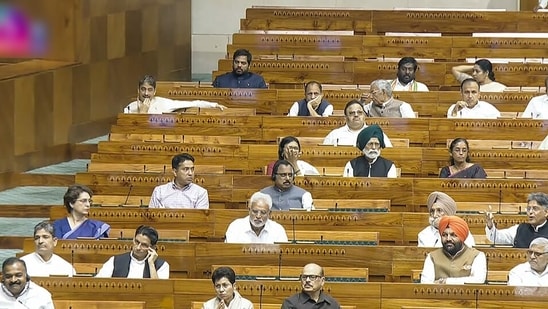
During his recent address in the Lok Sabha, Prime Minister Modi elaborated on India’s position regarding these global challenges. His speech underscored the nation’s commitment to its sovereign interests, its growing role as a voice for the Global South, and its proactive efforts to contribute to global peace and stability. The Prime Minister reportedly highlighted India’s ability to maintain strong ties with countries across the geopolitical spectrum, from the United States and European nations to Russia and countries in West Asia. He asserted that India’s independent foreign policy has earned it respect on the international stage, allowing it to champion issues pertinent to developing nations without succumbing to external pressures. The address also touched upon India’s economic resilience and its efforts to project strength through self-reliance, which, according to the government, are intrinsically linked to its foreign policy objectives.
The Opposition’s Scrutiny and Critiques
However, the Prime Minister’s statements and India’s broader foreign policy approach have not gone unchallenged. The Opposition parties have voiced strong criticisms, arguing that the government’s stand on global tensions lacks clarity and conviction. Prominent Opposition leaders, as widely reported by regional news channels and parliamentary dispatches, have questioned whether India’s strategic autonomy is being effectively translated into robust diplomatic action. Some critics contend that India’s perceived neutrality might be interpreted as indecisiveness, potentially diluting its influence among traditional allies and weakening its moral standing on critical global issues.
Specific points of contention raised by the Opposition often include:
* Lack of decisive condemnation: Critics argue that India has sometimes refrained from unequivocally condemning actions by certain global powers, which they believe undermines the nation’s commitment to international law and democratic values.
* Impact on bilateral relations: Concerns have been raised about whether the current approach might be creating unease among long-standing democratic partners or missing opportunities for stronger alliances.
* Clarity of vision: Opposition leaders frequently demand a more transparent and articulate strategy, questioning whether the government is adequately explaining its complex diplomatic choices to the public and the international community.
* Domestic implications: Some critiques link foreign policy decisions to their potential domestic impact, such as economic consequences or effects on India’s standing as a secular democracy.
These criticisms reflect a fundamental difference in how different political factions perceive India’s role in a fragmented world. While the government emphasizes pragmatism and national interest above all else, the Opposition often calls for a foreign policy that is more explicitly aligned with India’s democratic ideals and global responsibilities.
The Government’s Defense and Future Trajectory
In response to the Opposition’s broadsides, government spokespersons and ruling party leaders have consistently defended India’s foreign policy as pragmatic, principled, and firmly rooted in national interest. They assert that India’s independent stance has allowed it to navigate complex situations without being drawn into conflicts that do not serve its strategic objectives. This approach, they argue, has enabled India to secure vital resources, maintain critical trade relationships, and garner international support for its own developmental goals. They point to India’s successful evacuation efforts during crises abroad and its leadership in international forums as evidence of an effective and respected foreign policy.
The ongoing debate underscores the democratic vitality of India, where even sensitive matters of foreign policy are subject to rigorous parliamentary scrutiny and public discourse. As the world continues to grapple with unprecedented challenges, India’s diplomatic choices will remain under the microscope, both domestically and internationally. The dialogue between the government and the Opposition, though often heated, ultimately serves to refine India’s approach, ensuring that its foreign policy remains robust, responsive, and reflective of the nation’s aspirations.
Key Takeaways:
* India maintains a policy of strategic autonomy amid global tensions.
* PM Modi’s Lok Sabha address emphasized national interest and multi-alignment.
* The Opposition criticizes India’s stance for perceived lack of clarity and conviction.
* Debate highlights differing views on India’s global role and responsibilities.
* Government defends policy as pragmatic and effective for national interests.
The path ahead for India on the global stage is undoubtedly challenging, requiring continuous adaptation and astute decision-making. The rich parliamentary debate, while sometimes contentious, is a testament to the democratic process at work, shaping a foreign policy that aims to serve India’s best interests in a rapidly changing world.