‘Grateful to BJP’: K Annamalai clarifies after party snub from Tamil Nadu polls, cites ‘choice’| India News
K Annamalai’s Candidacy Stance Focus on Party Strength
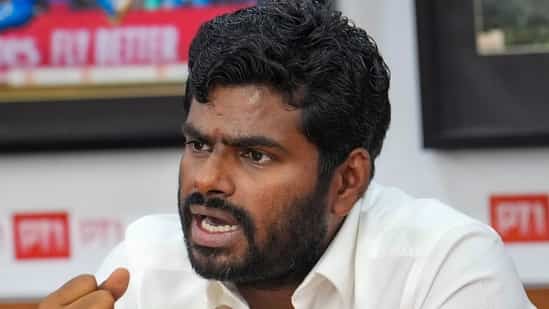
The political landscape in Tamil Nadu often presents intricate narratives, and the recent Lok Sabha elections added another layer of intrigue with State BJP President K. Annamalai’s decision not to contest. Amidst the buzz of candidate announcements, Annamalai’s candid statement resonated strongly: “If I had decided to contest, the choice of constituency wouldn’t have mattered and I could have contested from anywhere.” This declaration, widely reported across Tamil Nadu’s media landscape, provided a clear insight into his strategic approach and commitment to the Bharatiya Janata Party’s broader vision in the state.
Annamalai’s words came at a crucial juncture, just as political parties were finalising their candidate lists for the national elections. With the BJP aiming to establish a stronger foothold in Tamil Nadu, a state traditionally dominated by Dravidian parties, the absence of its high-profile state chief from the electoral battle naturally drew significant attention. Local news sources, from regional dailies to online news portals, extensively covered the immediate speculation that followed his non-inclusion in the candidate roster. Was it a party directive? Was it a strategic move? Annamalai swiftly addressed these questions, dispelling any notions of a “snub” and articulating a clear rationale behind his stance.
His public statements, widely quoted in regional publications like DT Next and Dinamalar, consistently underlined his primary role as the state unit’s president. Annamalai emphasised that his focus was to lead the charge across all 39 parliamentary constituencies in Tamil Nadu. This meant dedicating his efforts to campaigning, mobilising party cadres, and coordinating strategies throughout the length and breadth of the state, rather than concentrating his energy on a single electoral battleground. This statewide commitment, he clarified, was a conscious strategic choice, made with the full understanding and support of the party’s central leadership.
The essence of his message was one of unwavering party loyalty and a focus on collective strength. By stating that the “choice of constituency wouldn’t have mattered,” Annamalai projected confidence in his own electoral viability from any seat, while simultaneously reinforcing his dedication to the party’s larger electoral goals. This perspective was pivotal, especially as it aimed to reassure party workers and supporters that his decision was not a retreat, but a strategic repositioning for maximum impact across the state. Regional political analysts noted that this approach could potentially galvanise the party machinery by having its top leader visible and active in multiple regions, rather than confined to one campaign.
For a 12th standard student, understanding this dynamic is like a captain of a cricket team deciding not to play in one specific match, but instead travelling with the whole team to mentor and support every player in all the matches throughout the tournament. The captain believes his presence and guidance across the entire competition will benefit the team more than his individual performance in a single game. Similarly, Annamalai’s role as state president necessitates a broader focus on the BJP’s overall performance in Tamil Nadu, rather than chasing a personal electoral victory in one constituency. His emphasis on strengthening the party organisation and expanding its base across all districts, a vision frequently highlighted in his interactions with the regional press, aligns with this strategic choice.
His decision underscores a tactical emphasis on building the party’s long-term presence and influence in Tamil Nadu. As a leader, Annamalai appears keen on demonstrating that the BJP’s aspirations in the state extend beyond individual candidacies to a comprehensive effort to establish a strong grassroots network. This commitment to strengthening the party’s foundation is a recurring theme in his public pronouncements and reflects a carefully considered approach to Tamil Nadu politics.
Reporting from Omni 360 News, it is evident that such political choices are often layered with strategic considerations. Annamalai’s statement effectively redirected the conversation from speculative narratives to a clear articulation of his role and the party’s collective ambition. It projected an image of a leader who places the party’s statewide objectives above personal electoral pursuits, aiming to foster a sense of unity and purpose among the BJP cadre in Tamil Nadu. This approach, observers suggest, could be critical for the party as it continues its efforts to carve out a significant space in the state’s political landscape.
Key Takeaways:
- K. Annamalai chose not to contest the Lok Sabha elections, citing a strategic decision to focus on statewide campaigning.
- He stated that if he had decided to contest, the constituency would not have mattered, underscoring his confidence.
- His role as Tamil Nadu BJP President involved leading and coordinating efforts across all 39 constituencies.
- The decision was a conscious party strategy to strengthen the BJP’s base throughout the state.
- Annamalai’s stance dispelled notions of a “snub,” reaffirming his commitment and gratitude to the party leadership.
In conclusion, K. Annamalai’s clarification regarding his non-participation in the Lok Sabha elections was a calculated move to reinforce his commitment to the BJP’s statewide agenda. His words, that the choice of constituency would have been irrelevant had he decided to contest, served as a powerful declaration of confidence and strategic intent. It highlighted a leadership approach focused on broader party growth and influence in Tamil Nadu, rather than individual electoral gains, setting a distinct tone for the BJP’s journey in the state’s complex political arena.