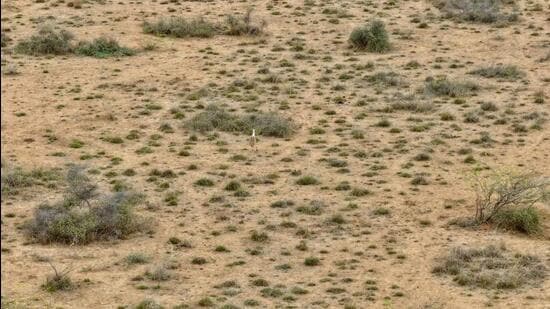
Gujarat: Great Indian Bustard chick sighted in wild for 1st time in decade| India News
Hope Takes Flight A Great Indian Bustard Chick’s Journey to the Wild
In a significant triumph for wildlife conservation, a Great Indian Bustard (GIB) chick, hatched from a captive-bred egg meticulously transported from Rajasthan, has been sighted thriving in the wilds of Gujarat. This remarkable achievement, confirmed by Union Minister Bhupender Yadav, marks a decade since such a sighting in the region, offering a much-needed beacon of hope for one of the world’s most endangered bird species. This successful trans-state effort exemplifies a new chapter in the fight to save the magnificent GIB.
The Urgent Plight of the Great Indian Bustard
The Great Indian Bustard, a majestic bird that can stand as tall as a human child, once roamed the grasslands of India in large numbers. Today, fewer than 150 individuals are estimated to exist globally, primarily confined to fragmented habitats in Rajasthan and Gujarat. These iconic birds face immense threats, including habitat loss due to agriculture and infrastructure development, collisions with power lines, and disturbance from human activities. Their slow breeding rate, with females laying only one or two eggs per year, makes every individual, and every chick, incredibly precious. For years, conservationists have sounded the alarm, highlighting the GIB’s critical status and the urgent need for intervention. The very survival of this national heritage hung by a thread, compelling dedicated teams to explore every possible avenue for their recovery.
A Delicate Mission The Egg’s Journey
On March 22, a carefully orchestrated mission unfolded, demonstrating the peak of collaborative conservation. An egg, bred at the Great Indian Bustard Conservation Breeding Centre in Sam, Jaisalmer, Rajasthan, embarked on a critical journey. Under the watchful eyes of experts from the Wildlife Institute of India (WII) and the respective state forest departments, this precious cargo was transported across state lines to a chosen GIB nest within a protected area in the Kutch district of Gujarat. The strategy, often referred to as ‘cross-fostering’ or ‘egg swapping,’ involves carefully replacing a wild GIB’s infertile or unviable egg with a healthy captive-bred one. The hope is that the wild mother will incubate and raise the captive-bred chick as her own, thereby augmenting the wild population with genetically robust individuals. This delicate operation required precise timing, specialized equipment, and unwavering dedication from all involved. The success hinged on minimizing stress to the egg and ensuring its seamless integration into the wild nest, a testament to years of research and planning.
A Decade’s Wait The Kutch Chick Sighting
The painstaking efforts bore fruit when a Great Indian Bustard chick, hatched from the transported egg, was observed thriving in the harsh yet vital landscape of Kutch. Local forest department officials and WII researchers, who had been diligently monitoring the nest site, confirmed the sighting. This event is particularly significant because it marks the first time in a decade that a GIB chick has been sighted in the wild in Gujarat, injecting renewed optimism into conservation circles. The successful hatching and the subsequent survival of the chick demonstrate the viability of cross-fostering as a critical tool in GIB conservation. It validates the immense investment in captive breeding programs, which aim to create a safety net for the species while simultaneously working to protect and restore their natural habitats. Local communities, often the first line of defense for wildlife, have also played an instrumental role in protecting the nesting sites, understanding the importance of these fragile creatures to the region’s ecosystem.
Collaboration A Cornerstone of Success
This landmark achievement is a shining example of inter-state and inter-agency collaboration. The Rajasthan and Gujarat Forest Departments, the Wildlife Institute of India, and the Union Ministry of Environment, Forest and Climate Change have worked in concert, pooling resources, knowledge, and dedication. Such coordinated efforts are essential when dealing with species whose territories span multiple administrative boundaries. The Great Indian Bustard project, as reported by Omni 360 News and local sources from both states, relies on a holistic approach that includes captive breeding, habitat improvement, power line mitigation, and community engagement. This broad strategy acknowledges that saving a species requires more than just protecting individual animals; it demands a comprehensive understanding and management of their entire ecosystem and the challenges within it.
Key Takeaways
* A captive-bred Great Indian Bustard egg from Rajasthan was successfully transported and placed in a wild nest in Gujarat on March 22.
* This conservation effort led to the sighting of a GIB chick in the wild in Gujarat, the first in over a decade.
* The project highlights the success of cross-fostering techniques and inter-state collaboration between Rajasthan and Gujarat Forest Departments and the Wildlife Institute of India.
* The Great Indian Bustard remains critically endangered, making this success a crucial step in preventing its extinction.
Looking Ahead A Fragile Future
While the sighting of this GIB chick offers immense encouragement, the journey to secure the species’ future is far from over. Ongoing threats persist, and sustained efforts are paramount. The focus must remain on safeguarding remaining habitats, implementing innovative solutions for power line mitigation, and fostering greater awareness and support from local populations. This success story serves as a powerful reminder that with scientific rigor, dedicated teamwork, and a shared vision, even the most endangered species can be pulled back from the brink. The Great Indian Bustard, a symbol of India’s natural heritage, now has a slightly brighter future, thanks to the commitment of many. This single chick, thriving in the expansive grasslands of Kutch, represents not just a bird, but a tangible hope for biodiversity conservation across the nation.