Half of Odisha’s most vulnerable tribals cut off from welfare schemes: CAG report| India News
Odisha’s Vulnerable Left Behind CAG Audit Reveals Welfare Gaps and MGNREGS Failures Key Takeaways for Inclusive Growth
A recent audit by the Comptroller and Auditor General (CAG) of India has cast a stark light on significant lapses in welfare scheme implementation and employment generation in Odisha, particularly impacting the state’s most vulnerable populations. The comprehensive report, for the year ended March 31, 2021, and tabled in the state assembly earlier this year, highlights how a substantial portion of Particularly Vulnerable Tribal Groups (PVTGs) are excluded from critical government support, alongside widespread shortcomings in the Mahatma Gandhi National Rural Employment Guarantee Scheme (MGNREGS). This detailed examination, crucial for public understanding and good governance, was also prominently covered by various local news outlets across Odisha, including OTV and Sambad English, verifying the gravity of the findings.
Understanding the Plight of Odisha’s PVTGs
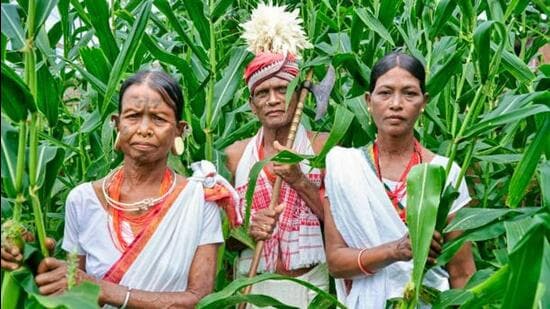
Odisha is home to a significant number of tribal communities, and among them, 13 are identified as Particularly Vulnerable Tribal Groups (PVTGs). These groups, such as the Dongria Kondh, Bonda, Lanjia Soura, and Kutia Kondh, are characterized by pre-agricultural levels of technology, stagnant or declining population, extremely low literacy rates, and a subsistence-level economy. Their unique vulnerabilities make them highly dependent on targeted welfare programs designed to uplift them from extreme poverty and social exclusion. The state government implements various schemes tailored to their specific needs, ranging from food security to housing and educational support.
However, the CAG’s audit paints a concerning picture. It revealed that a staggering 54 percent of PVTG households in Odisha were found to be excluded from any welfare scheme benefits. This means that more than half of these already marginalized families, who need assistance the most, are not receiving the support they are entitled to. This exclusion can stem from a variety of issues including lack of awareness about the schemes, difficulties in obtaining necessary documentation like Aadhaar cards or ration cards, administrative bottlenecks, or geographical remoteness that hinders access to government services. For a PVTG family struggling for daily survival, being cut off from schemes like the Public Distribution System (PDS) for food grains or housing initiatives can perpetuate a cycle of destitution and hinder any chance of upward mobility. The audit underscores a profound disconnect between policy intent and ground-level reality.
MGNREGS Shortfalls: A Promise Unfulfilled
Beyond the PVTGs, the CAG report also critically examined the performance of the Mahatma Gandhi National Rural Employment Guarantee Scheme (MGNREGS) in Odisha. This flagship national program aims to enhance livelihood security in rural areas by providing at least 100 days of guaranteed wage employment in a financial year to every household whose adult members volunteer to do unskilled manual work. It serves as a vital safety net, particularly for daily wage earners and agricultural laborers, offering a much-needed source of income during lean seasons and contributing to rural asset creation.
The audit, however, found that the scheme is significantly underperforming in Odisha. It highlighted that a shocking 90 percent of eligible households did not receive the promised 100 days of work. This widespread failure to meet the statutory guarantee means that a vast majority of rural families who rely on MGNREGS for their sustenance are left without adequate work and income. The implications are severe: increased poverty, distress migration, food insecurity, and a general decline in rural well-being.
Reasons for this shortfall can include insufficient project planning, delayed wage payments, administrative inefficiencies, a lack of demand for work being registered, or even corruption. Whatever the root causes, the outcome is a scheme that fails to deliver on its core promise for the vast majority of its beneficiaries in Odisha, as confirmed by official audit findings echoed across local news platforms.
The Broader Implications and Call for Action
These findings from the CAG report are not mere statistics; they represent real people facing hardship and unfulfilled promises. The exclusion of PVTGs from welfare schemes directly impacts their access to food, shelter, healthcare, and education, perpetuating their vulnerability. Similarly, the failure of MGNREGS to provide adequate work deprives rural households of essential income, forcing them into deeper poverty or seeking precarious livelihoods elsewhere.
The detailed report urges immediate and targeted action from the state government. Addressing these gaps requires a multi-pronged approach. For PVTGs, this includes intensive outreach programs to ensure awareness of schemes, simplified documentation processes, proactive registration drives, and better coordination among various government departments. For MGNREGS, it necessitates improved planning and execution of projects, timely wage disbursements, stronger monitoring mechanisms, and a responsive system for registering and fulfilling work demands. The insights provided by this audit are critical for policymakers seeking to achieve genuine inclusive growth and ensure that development benefits reach every section of society, especially those at the very bottom.
Key Takeaways for Inclusive Growth
The CAG audit in Odisha delivers several critical messages for all stakeholders, highlighting areas that demand urgent attention:
- Deep Disparities Exist: Despite numerous welfare programs, over half of Odisha’s most vulnerable tribal groups remain excluded.
- MGNREGS Needs Reform: The flagship employment guarantee scheme is failing to provide statutory workdays to 90% of eligible households, undermining its core objective.
- Administrative Gaps: The report points to systemic inefficiencies, documentation hurdles, and implementation failures in reaching the intended beneficiaries.
- Call for Accountability: The audit serves as a clear signal for the government to enhance oversight, streamline processes, and ensure effective delivery of welfare and employment benefits.
- Focus on the Vulnerable: Renewed efforts are crucial to identify, include, and empower PVTGs and rural poor, ensuring their constitutional rights to livelihood and dignity.
For Omni 360 News, these findings underscore the vital role of independent audits in holding governments accountable and pushing for tangible improvements in governance and social justice. The path to a truly equitable Odisha lies in diligently addressing these audit observations and ensuring that development reaches the last person standing, irrespective of their social or economic background.