T20 World Cup: Hardik Pandya accused of insulting the national flag
Hardik Pandya Faces Flag Respect Complaint After T20 World Cup Win
The euphoria gripping India after its sensational triumph in the T20 World Cup has been momentarily tempered by a new development concerning star all-rounder Hardik Pandya. Amidst widespread celebrations and national pride, a legal complaint has been formally lodged against Pandya in Pune, accusing him of disrespecting the national flag. This unexpected turn of events brings into sharp focus the deep reverence accorded to national symbols and the responsibilities that come with public recognition.
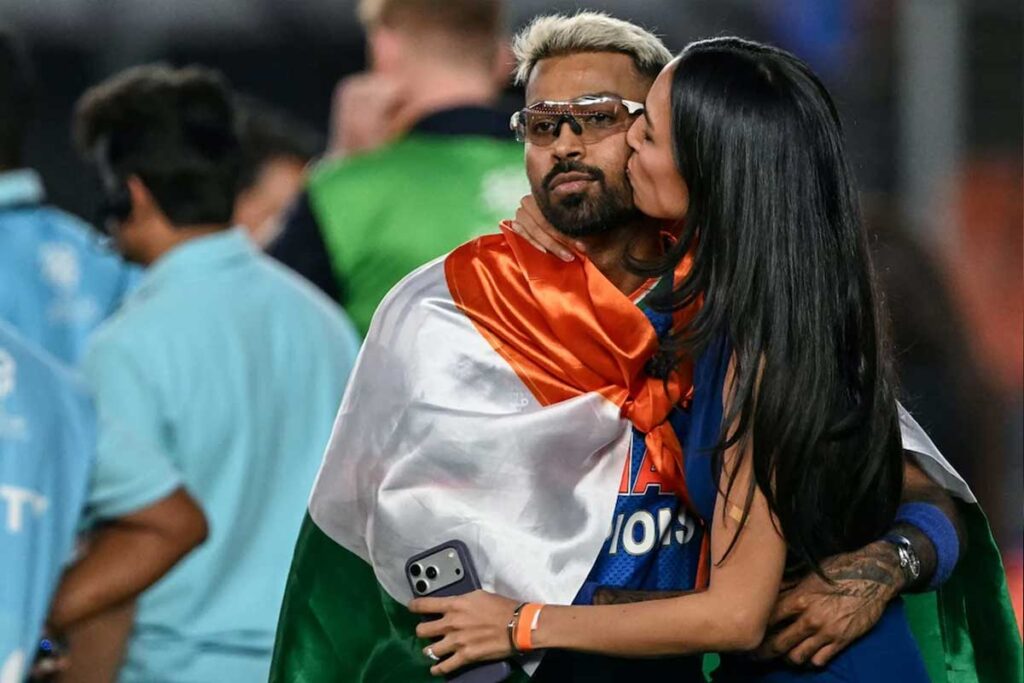
The complaint was initiated by Wajid Khan, a seasoned lawyer based in Pune, who approached the Shivaji Nagar Police Station with his grievance. Khan’s primary objective is to prompt the police to register a First Information Report (FIR) against Pandya, alleging a breach of the provisions outlined in the National Flag Act. The specific incident that forms the basis of this complaint is reported to have occurred during the jubilant post-match celebrations on the field, immediately after the Indian team clinched the coveted T20 World Cup trophy.
Speaking to news agency ANI, in statements closely followed by Omni 360 News, Khan detailed the alleged transgression: “Everyone watched the T20 World Cup. Hardik Pandya was seen dancing with his partner on the field. Crucially, the national flag was tied to his back. According to Section 2 of the 1971 National Flag Act, it is a fundamental duty for every citizen to safeguard and uphold the dignity of the national flag. However, in what appears to be an overflow of celebratory emotion, he became so immersed in the moment that he reportedly lay down on the ground while still having the national flag on him. In my considered view, this act undeniably constitutes a grave disrespect towards our revered national emblem.”
This accusation brings to the forefront India’s stringent legal framework designed to protect its national symbols. The National Flag Act of 1971, alongside the Prevention of Insults to National Honour Act, 1971, are pivotal statutes. These laws are not mere bureaucratic formalities; they encapsulate the nation’s ethos, setting forth detailed guidelines on how the Tiranga, the Indian tricolour, must be displayed, used, and revered. Their very existence underscores the profound emotional and historical significance attached to the flag, representing the sacrifices of freedom fighters, the unity of diverse cultures, and the sovereignty of the republic. Any perceived slight, therefore, resonates deeply within the public consciousness.
Khan further underscored the gravity of his complaint, stating with conviction, “Hardik’s actions fall squarely under the definition of an offense as per the applicable laws, and therefore, it is imperative that appropriate legal action is initiated. Upholding the honour and dignity of the national flag is not merely a legal obligation but a moral imperative for every single citizen of this nation.” His resolute words mirror a widespread understanding among the populace that the flag is not just a piece of cloth but a living symbol of collective identity and pride.
Recounting the process of filing the complaint, the Pune-based lawyer shed light on the initial hurdles encountered. “I presented my complaint at the Shivaji Nagar Police Station. Initially, the police expressed some reservation, suggesting the incident might have transpired in a different jurisdiction. However, I clarified to them that the national flag transcends geographical boundaries; it is the emblem of the entire country, meaning a complaint regarding its disrespect can legitimately be filed anywhere within the nation. Following this clarification, the police accepted my complaint and duly provided me with an official copy. Now, the waiting game begins to see how the investigation progresses and what measures will be taken.” This detailed account highlights the lawyer’s determination to see the matter through, reflecting a broader commitment to ensuring respect for national symbols.
The context surrounding this controversy includes elements of Hardik Pandya’s personal life, which has been under public scrutiny recently. Following his much-discussed separation from Natasa Stankovic in 2024, Pandya’s personal journey has seen considerable evolution. His current partner, Mahika Sharma, has become an increasingly visible and integral part of his life, frequently seen accompanying him at cricket matches. A notable public moment occurred right after the World Cup final, when Pandya openly referred to Mahika as his ‘Mrs.’, signifying their deepened relationship. Mahika is often spotted in the stands, frequently with Hardik’s son, Agastya, indicating a strong familial bond. She was present during the tense semi-final match, holding Agastya, sharing in the anxiety and later, the sheer joy of victory. It is against this backdrop of intense personal and national celebration that the alleged incident of flag disrespect during the World Cup victory festivities has drawn scrutiny and led to the formal complaint.
This legal complaint against a prominent national sports figure like Hardik Pandya serves as a powerful reminder of the elevated expectations placed upon public personalities. Athletes, particularly those who represent the country on international platforms, are seen as ambassadors and role models. Their conduct, even in moments of profound emotional release and triumph, is subject to rigorous public and legal examination, ensuring compliance with national laws and upholding deeply ingrained cultural values. This incident is poised to ignite further national dialogue about the delicate balance between spontaneous celebration, individual expression, and the solemn responsibilities associated with representing one’s nation and respecting its symbols.
The path forward now lies with the Shivaji Nagar Police. They are entrusted with the crucial task of thoroughly investigating the complaint, meticulously gathering and assessing all available evidence, and ultimately deciding on the appropriate course of action. This could involve various outcomes: from concluding that no actionable offense took place and closing the case, to initiating a formal inquiry, which could lead to further legal proceedings. Irrespective of the final legal determination, this situation undoubtedly ignites a significant national conversation on topics ranging from patriotism and the interpretation of legal statutes to the conduct expected of national heroes in the public eye. It reinforces the idea that while success brings accolades, it also brings a heightened level of accountability.
Key Takeaways:
- Indian cricket star Hardik Pandya is facing a formal complaint in Pune, alleging disrespect towards the national flag during the T20 World Cup victory celebrations.
- The complaint was filed by lawyer Wajid Khan at the Shivaji Nagar Police Station, citing violations under Section 2 of the 1971 National Flag Act.
- The alleged act involves Pandya dancing with the national flag tied to his back and later lying down with it on the ground during the post-match festivities.
- This incident underscores the legal and moral imperative for all citizens, especially public figures, to uphold the dignity and honour of the national flag, a revered national symbol.
- The case highlights the intense scrutiny and high standards of conduct expected from athletes who represent the nation, even during moments of celebratory euphoria.
- Police in Pune have accepted the complaint, and an investigation into the matter is anticipated to determine the future course of action.