
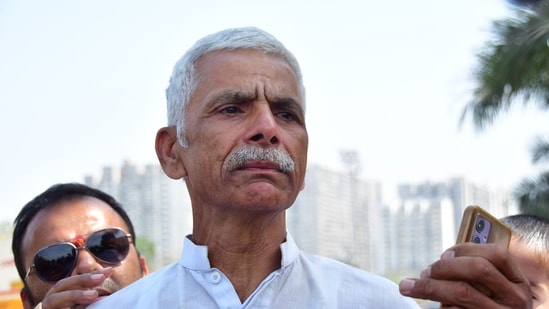
Harish Rana's passive euthanasia process begins after emotional goodbye, 'could take 2-3 weeks'| India News
India’s Supreme Court Eases Path for Passive Euthanasia in Landmark Harish Rana Case Key Takeaways
A significant judicial moment has unfolded in India, as the Supreme Court has cleared the path for passive euthanasia for Harish Rana, a resident of Ghaziabad, who has remained in a persistent vegetative state since suffering a grievous head injury in 2013. This decision marks a profound development in the nation’s legal landscape concerning the right to die with dignity, offering a beacon of hope and closure for families facing similarly heart-wrenching circumstances. Omni 360 News brings you a detailed report on this evolving story.
A Decade of Waiting: Harish Rana’s Long Ordeal
For over a decade, the family of Harish Rana has endured an unimaginable journey. In 2013, a tragic accident left Rana with a severe head injury, plunging him into a coma from which he never truly recovered. Diagnosed with a persistent vegetative state (PVS), Rana has been unresponsive, dependent on a feeding tube for sustenance, and requiring constant medical care. His parents, Hari Kishan Rana and Gurcharan Kaur, faced the agonizing reality of watching their son exist without consciousness or a foreseeable path to recovery. Their struggle transcended personal grief, evolving into a determined legal battle to allow their son to pass away peacefully, freeing him from his prolonged suffering and them from their enduring anguish. Their plea highlighted the profound ethical and emotional dilemmas confronting families in such dire situations.
Understanding Passive Euthanasia
To comprehend the Supreme Court’s ruling, it is crucial to understand what passive euthanasia entails. Imagine a situation where a person is critically ill, perhaps on life support, with no hope of recovery, and their body is essentially being kept alive by medical machines or interventions. Passive euthanasia, unlike active euthanasia, does not involve actively administering a substance to end a life. Instead, it means withdrawing or withholding life-sustaining treatment, such as removing a ventilator, stopping artificial feeding, or discontinuing medication, thereby allowing nature to take its course.
This decision by the Supreme Court does not equate to active euthanasia, where a doctor might administer a lethal injection. The core distinction lies in the action—or inaction. Passive euthanasia respects a person’s dignity by allowing them to die naturally when their body is no longer capable of sustaining life without invasive medical intervention.
The Legal Framework and the Court’s Refinements
India’s journey towards recognizing the right to die with dignity began significantly with the Aruna Shanbaug case in 2011, which first acknowledged passive euthanasia. This was further solidified by the landmark 2018 judgment in the Common Cause case, where the Supreme Court established detailed guidelines for “living wills” or “advance medical directives.” These directives allow individuals to specify their refusal of medical treatment in the future, should they become incapacitated.
However, the practical implementation of these guidelines proved challenging, particularly the intricate procedural requirements for validating living wills. Recognizing these complexities, a five-judge Constitution Bench of the Supreme Court, comprising Justices KM Joseph, Ajay Rastogi, Aniruddha Bose, Hrishikesh Roy, and CT Ravikumar, reviewed and refined the 2018 guidelines. The bench simplified the process for executing a living will and, crucially, laid down clearer protocols for cases where an incapacitated patient has not left an advance directive, like Harish Rana.
In Rana’s case, his parents had sought permission to withdraw life support, emphasizing the prolonged suffering and the absence of any hope for recovery. The Supreme Court’s recent ruling now allows this, subject to the meticulous approval of a medical board and endorsement by a judicial magistrate, ensuring that such grave decisions are made with utmost scrutiny and without arbitrary action. This careful legal architecture aims to balance individual autonomy with the sanctity of life.
Broader Implications for India
This judgment holds immense significance beyond the immediate case of Harish Rana. It signals a more compassionate and practical approach to end-of-life care in India. For countless families grappling with the emotional and financial burden of keeping loved ones alive in a PVS, this ruling provides a legal avenue for seeking a dignified end. It reinforces the individual’s right to self-determination, even in the most vulnerable states, and places a stronger emphasis on patient welfare and their fundamental right to live with dignity, which inherently includes the right to a dignified death. The clarified guidelines are expected to streamline the process for medical practitioners and families, reducing legal ambiguity and emotional distress.
Key Takeaways
* The Supreme Court’s decision for Harish Rana marks a pivotal moment, allowing passive euthanasia under stringent guidelines for a person in a persistent vegetative state since 2013.
* This ruling simplifies the process for implementing “living wills” and provides a clear framework for cases where no advance medical directive exists.
* Passive euthanasia involves withdrawing life-sustaining treatment, not actively ending life, respecting the patient’s right to a dignified death.
* The judgment will significantly impact end-of-life care in India, offering a legal pathway for families and reducing prolonged suffering.
* Strict medical and judicial oversight is mandated to ensure ethical and lawful execution of such decisions.
The Supreme Court’s thoughtful re-evaluation and subsequent clarification of passive euthanasia guidelines represent a progressive step in Indian jurisprudence. It acknowledges the complex human dilemmas at the intersection of medicine, ethics, and law, paving the way for a more humane approach to end-of-life decisions across the nation.