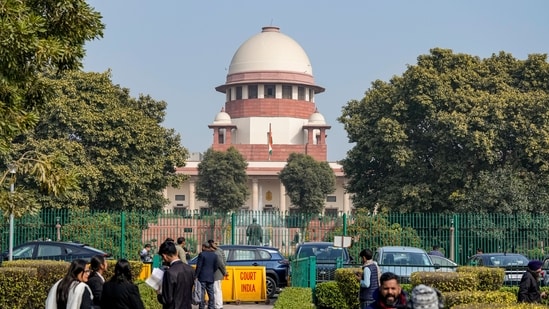
In Supreme Court, government seeks free hand in defining what is ‘industry’| India News
The legal landscape defining what constitutes an “industry” for the purpose of resolving labor disputes is a complex and often contentious area, with significant implications for a vast number of workers and the services they provide. At the heart of this discussion lies the potential for a narrower interpretation of “industry,” which could fundamentally alter how disputes are managed across a broad spectrum of institutions and government-linked bodies. For readers of Omni 360 News, understanding this evolving definition is crucial, as it touches upon everything from the salaries of school teachers to the working conditions of hospital staff.
Understanding the “Industry” Conundrum in Labor Law
To grasp the full impact, let’s simplify what “industry” means in the context of industrial dispute mechanisms. Imagine a system designed to help workers and their employers sort out disagreements about pay, working hours, safety, or job security. This system, often overseen by special courts or tribunals, is called an “industrial dispute mechanism.” Traditionally, for an organization to fall under this system, it had to be classified as an “industry.”
Historically, the definition of “industry” in labor laws has been quite broad in many nations. It wasn’t just about factories producing goods. Courts and legal experts often included any systematic activity carried out with the cooperation of employers and employees, for the production or distribution of goods or services calculated to satisfy human wants and wishes. This expansive view meant that even hospitals, educational institutions, charitable organizations, and local government departments were often considered “industries,” giving their employees the right to use these dispute resolution systems.
However, a shift towards a narrower definition proposes to peel back this wide scope. This new interpretation often suggests that “industry” should primarily refer to activities that are commercial, profit-making, or akin to traditional manufacturing or trade. If adopted, this redefinition would mean that many organizations currently covered would suddenly find themselves outside the purview of these established industrial dispute mechanisms.
The Stakes for Workers and Public Services
The direct consequence of this narrowing definition is the exclusion of a wide array of institutions and government-linked bodies. Consider the implications for:
* Public Hospitals and Healthcare Providers: Nurses, doctors, administrative staff, and support workers in public hospitals often rely on industrial dispute mechanisms to negotiate wages, protest unfair dismissals, or demand better working conditions. If hospitals are no longer considered “industry,” these vital workers could lose access to structured bargaining and dispute resolution, potentially leading to unresolved grievances and unrest.
* Educational Institutions: Teachers, lecturers, and support staff in public schools, colleges, and universities would face similar challenges. Their ability to collectively bargain or challenge management decisions through established channels could be severely curtailed. This could impact educational standards if qualified staff feel their concerns are not being heard or addressed adequately.
* Government Departments and Municipal Services: Employees working for local councils, sanitation departments, public transport authorities, or other government-linked bodies responsible for essential services would also be affected. These roles are critical for daily life, and any weakening of their dispute resolution rights could lead to significant public service disruption or a decline in employee morale and retention.
* Charitable Organizations and Non-Profits: Many NGOs and charities provide essential community services, employing thousands of dedicated individuals. If they are excluded, their staff could find themselves with fewer protections and less recourse in workplace disputes, despite often working for lower pay out of a sense of mission.
For these workers, being excluded means potentially losing the legal framework that protects their right to collective bargaining, fair wages, and reasonable working conditions. It could force them into less formal, often weaker, negotiation positions, or leave them with only civil court options, which can be costly and time-consuming.
Legal Battles and Shifting Sands
The debate around defining “industry” is not new. Over decades, courts in various nations have grappled with the precise boundaries, issuing judgments that have sometimes expanded, and at other times sought to limit, the scope. Local news reports frequently highlight specific cases where a particular hospital, municipality, or educational body challenges its classification, illustrating the ongoing tension. Legislators, often influenced by economic pressures or political ideologies, also periodically propose amendments to labor laws that could codify a narrower definition.
Proponents of a narrower definition often argue for greater operational flexibility for institutions, particularly in the public sector, to manage their resources without the perceived constraints of industrial action or complex dispute processes. They might suggest that public service workers have different motivations or protections than those in commercial enterprises. However, critics counter that such a move fundamentally undermines worker rights and could lead to exploitation, especially in sectors that are already under significant financial pressure.
Impact on Industrial Relations
The ramifications for industrial relations are substantial. If a large segment of the workforce loses access to structured dispute mechanisms, it could lead to:
* Increased Instability: Without official channels for resolving grievances, disputes might escalate into more frequent unofficial actions or a general decline in workplace harmony.
* Erosion of Collective Bargaining: Unions representing workers in excluded sectors would find their power diminished, making it harder to negotiate favorable terms for their members.
* Disparity in Worker Protections: A two-tiered system could emerge, where workers in traditional “industries” enjoy robust protections while those in public services or non-profits face significantly weaker safeguards.
Economic Ripple Effects
While seemingly a legal technicality, a narrower definition of “industry” carries economic consequences. A workforce with fewer protections might experience wage stagnation or a decline in benefits. This could reduce consumer spending, affecting local economies. Furthermore, operational challenges could arise for organizations struggling with unresolved internal conflicts, potentially impacting the quality and reliability of essential public services. Ultimately, the stability of a nation’s workforce directly contributes to its overall economic health.
Key Takeaways
* A narrower definition of “industry” in labor law would significantly reduce the number of organizations covered by industrial dispute mechanisms.
* This exclusion would primarily affect public services and non-profit institutions like hospitals, schools, and government bodies.
* Workers in these sectors could lose access to established channels for collective bargaining and dispute resolution.
* The shift could lead to increased workplace instability, reduced worker protections, and broader economic consequences.
* The debate highlights a critical tension between operational flexibility for institutions and the fundamental rights of employees.
In conclusion, the ongoing debate over defining “industry” is far from an abstract legal discussion. It is a critical issue that directly impacts the lives and livelihoods of millions of workers and the fundamental quality of public services. As Omni 360 News continues to monitor these developments, it remains clear that any changes to this definition will reverberate throughout society, shaping the future of employment relations and social stability for generations to come. The call for vigilance and informed discussion on this matter is paramount.