
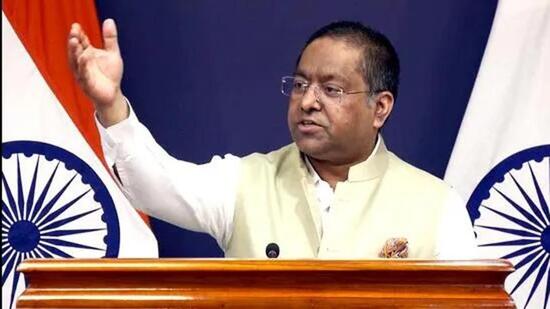
India dismisses Pakistan’s accusation of backing Afghan Taliban| India News
India Dismisses Pakistan’s Taliban Clash Claims Highlighting Cross-Border Terrorism
Recent diplomatic exchanges between India and Pakistan have once again spotlighted the enduring tensions that characterize relations between the two South Asian neighbors. India has firmly rejected Pakistan’s assertions of its involvement in recent Taliban clashes, dismissing the claims as a diversionary tactic designed to obscure Islamabad’s own documented support for cross-border terrorism. This sharp rebuttal underscores a fundamental disagreement that continues to hinder regional stability.
The controversy ignited when Pakistan accused India of playing a role in internal conflicts among various Taliban factions. These allegations emerged against a backdrop of ongoing instability in Afghanistan following the withdrawal of international forces, a period marked by shifting power dynamics and evolving security challenges. Pakistan’s claims, widely reported in its national media, sought to link India to the internal strife, suggesting a destabilizing presence.
India’s response was swift and unequivocal. Speaking through its Ministry of External Affairs, New Delhi described Pakistan’s allegations as mere “storytelling.” Indian officials emphasized that such narratives are a deliberate attempt to deflect international attention from Pakistan’s well-documented history of harboring and supporting terror groups that target India. The message was clear: pointing fingers at others will not erase the reality of cross-border terrorism.
For decades, India has consistently raised concerns about terrorism originating from Pakistani soil. Numerous global bodies and nations have echoed these concerns, calling on Pakistan to dismantle terror infrastructure and take verifiable action against groups operating within its borders. India’s stance remains firm: there can be no negotiation or normalization of relations while cross-border terrorism persists. The current allegations, from India’s perspective, are merely another chapter in Pakistan’s playbook of denial and counter-accusation.
Understanding this diplomatic spat requires a look at the complex regional landscape. Afghanistan, India’s western neighbor, shares a deep historical and cultural connection with India. India has long pursued a policy of non-interference in Afghanistan’s internal affairs, instead focusing on humanitarian aid and developmental projects, aiming to foster stability and prosperity for the Afghan people. This approach starkly contrasts with allegations of covert intervention.
The timing of Pakistan’s claims also raises questions. Regional observers suggest that such accusations could be an attempt to manage internal pressures, influence international opinion regarding Afghanistan, or divert attention from economic challenges and political unrest within Pakistan itself. By attempting to implicate India in Afghanistan’s internal struggles, Pakistan might be seeking to undermine India’s regional standing and its consistent messaging on terrorism.
The current situation in Afghanistan is intricate, involving various factions and competing interests. The Taliban itself is not a monolithic entity, and internal power struggles and disputes over governance are not uncommon. India’s diplomatic position is that these are internal matters for Afghanistan, and external parties should refrain from exacerbating tensions or attempting to manipulate outcomes.
This back-and-forth highlights the persistent trust deficit between India and Pakistan. For Omni 360 News, analyzing such complex diplomatic exchanges means looking beyond the immediate headlines to the deeper historical grievances and strategic calculations at play. The core issue, from India’s perspective, is the need for genuine and verifiable action against terror groups, not baseless accusations against its neighbors.
Key Takeaways:
* India firmly rejected Pakistan’s allegations of its involvement in Taliban clashes, calling them “storytelling.”
* India reiterated its long-standing accusation that Pakistan uses such claims to hide its support for cross-border terrorism.
* New Delhi emphasizes that its policy in Afghanistan focuses on humanitarian aid and development, not interference in internal matters.
* The diplomatic spat underscores the deep-seated mistrust and unresolved issues, particularly concerning terrorism, between India and Pakistan.
* These exchanges impact regional stability and the broader international effort to combat terrorism.
In conclusion, India’s strong rebuke serves as a reminder of its unwavering resolve against terrorism and its refusal to be sidetracked by what it perceives as diversionary tactics. The world watches as the two nations navigate these fraught diplomatic waters, with the shadow of cross-border terrorism looming large over any prospects for peace and cooperation.