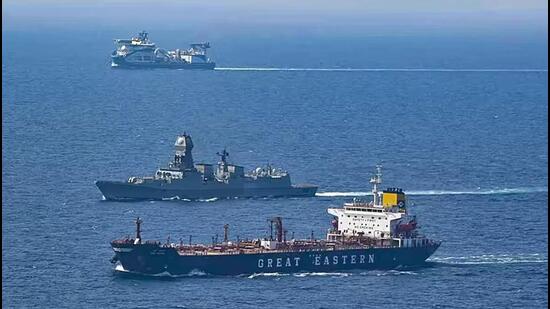
India in touch with Iran for safe passage of vessels through Strait of Hormuz| India News
**India Engages Iran for Safe Passage Through Vital Strait of Hormuz Amid Tensions**
The Strait of Hormuz, a narrow maritime choke point at the mouth of the Persian Gulf, stands as an indispensable artery for global energy and trade. In an era marked by heightened regional instability and concerning attacks on international shipping, India has stepped up its diplomatic engagement with Iran, seeking assurances for the safe and unimpeded movement of its commercial vessels through this critical waterway. This proactive stance underscores India’s profound reliance on the Strait and its commitment to safeguarding its economic interests and energy security.
For decades, the Strait of Hormuz has served as a strategic nexus, connecting the oil-rich Middle East with the rest of the world. An estimated one-fifth of the world’s total petroleum consumption, including a significant portion of India’s crude oil imports, traverses this 21-mile-wide passage. The stability of shipping lanes here directly impacts global energy prices and the smooth functioning of international supply chains. India, as one of the fastest-growing major economies, imports over 80% of its crude oil requirements, much of which originates from the Persian Gulf states and must navigate the Strait of Hormuz. Any disruption, however minor, carries the potential for far-reaching economic repercussions, from spiking fuel prices to impacting manufacturing costs and overall trade balance.
Recent months have seen an alarming escalation of maritime incidents in the wider West Asian region. While some attacks have occurred in the Red Sea, causing rerouting of vessels around the Cape of Good Hope, the overarching climate of insecurity has cast a long shadow over the Persian Gulf and, by extension, the Strait of Hormuz. Local news reports in various regional publications have meticulously documented the increasing caution exercised by international shipping companies. These incidents, often involving drone and missile attacks, though primarily targeting specific vessels or routes, invariably raise the risk profile for all maritime traffic. The ripple effect extends to insurance premiums, operational costs for shipping lines, and ultimately, the consumers in nations like India.
Recognizing the gravity of the situation, New Delhi has initiated robust diplomatic overtures towards Tehran. These aren’t merely routine consultations but focused discussions aimed at securing tangible commitments for the safety of Indian-flagged and India-bound merchant vessels. Sources close to the Indian foreign ministry, often cited in local Indian media, indicate that senior Indian officials have been in regular communication with their Iranian counterparts. The core objective of these discussions is multi-faceted: to ensure adherence to international maritime law, to seek Iranian assurances regarding the protection of innocent passage, and to promote de-escalation of tensions in the region.
Iran, sharing a long coastline along the Persian Gulf and controlling the northern flank of the Strait of Hormuz, holds a pivotal position in influencing maritime security here. Historically, Iran has asserted its sovereign rights over the waters it controls, while also emphasizing its commitment to the free flow of oil. India’s diplomatic strategy leverages its long-standing, complex relationship with Iran, which encompasses historical ties, energy trade, and strategic partnerships, such as the development of the Chabahar Port. This unique relationship allows India a degree of dialogue and influence that some other global powers might not possess. Indian diplomats are keenly aware of the delicate balance required, engaging Iran respectfully while firmly advocating for the principles of freedom of navigation.
From India’s perspective, the stakes could not be higher. Beyond energy imports, a significant volume of general cargo, including essential goods, machinery, and agricultural products, moves through the Strait to and from India. Any prolonged disruption would not only inflate import costs but also impede India’s export ambitions, potentially hindering economic growth and employment. The government’s proactive engagement is a direct response to these potential economic vulnerabilities, aiming to insulate the nation’s trade and energy security from regional volatility.
As the situation continues to evolve, Omni 360 News understands that these diplomatic efforts are part of a broader strategy by India to enhance its maritime domain awareness and presence in the Indian Ocean Region. India’s naval assets have also been deployed in various parts of the Arabian Sea to offer protection and reassurance to merchant shipping. While these deployments focus on specific threats, the underlying message is clear: India is committed to ensuring the safety of its maritime interests and global trade routes.
The complex interplay of regional geopolitics, energy security, and international trade makes India’s diplomatic mission in Tehran crucial. The outcome of these talks will not only shape India’s economic resilience but also underscore the importance of dialogue in de-escalating tensions in one of the world’s most vital maritime corridors.
Key Takeaways:
* The Strait of Hormuz is vital for India’s energy security and global trade, transporting much of India’s crude oil imports.
* Heightened regional tensions and attacks on shipping necessitate India’s urgent diplomatic action.
* India is engaging Iran to secure assurances for the safe passage of its vessels through the Strait.
* These talks are crucial for preventing economic disruptions in India, including rising energy costs and trade impediments.
* India’s long-standing relationship with Iran provides a unique avenue for diplomatic dialogue and influence.