India seeks ‘safe, unimpeded transit’ for more stranded vessels after Shivalik, Nanda Devi cross Strait of Hormuz| India News
Indian Oil Vessels Navigate Vital Strait Safely, Securing Energy Flow
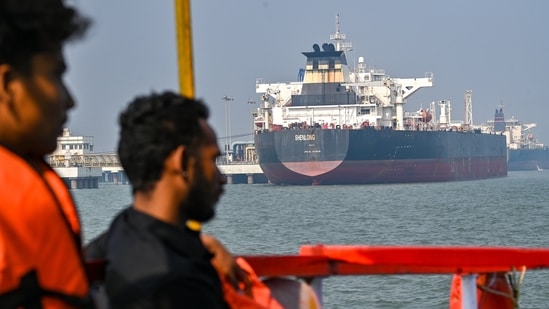
In a testament to the meticulous planning and unwavering commitment of India’s energy sector, two Indian vessels, the Shivalik and the Nanda Devi, successfully transited the critical Strait of Hormuz earlier today. Chartered by the nation’s energy behemoth, Indian Oil Corporation (IOC), the safe passage of these carriers marks a routine yet profoundly significant operation for India’s burgeoning economy and its crucial energy security.
For those tracking global maritime trade and energy flows, the Strait of Hormuz is more than just a narrow strip of water; it is the lifeblood of international crude oil shipments. Situated between the Arabian Peninsula and Iran, this waterway connects the Persian Gulf to the open ocean, acting as the sole sea passage from the rich oil-producing regions of the Middle East to the rest of the world. Each day, an estimated one-fifth of global petroleum consumption, amounting to millions of barrels of crude oil and liquefied natural gas, navigates through its constricted lanes. Its strategic significance means that any disruption, however minor, sends ripples of concern across global markets and geopolitical corridors.
The safe journey of vessels like the Shivalik and Nanda Devi, laden with precious crude oil for India, underscores the intricate dance of international commerce and diplomacy required to maintain stable energy supplies. India, as one of the world’s largest and fastest-growing economies, relies heavily on imported crude oil to fuel its industries, transport, and homes. A substantial portion of this vital commodity originates from the Middle East, making the Strait of Hormuz an indispensable conduit for the nation’s energy security. Indian Oil Corporation, at the forefront of this national imperative, meticulously plans these shipments, ensuring not only efficiency but, most importantly, the safety of its assets and crew.
While the passage itself might appear as a standard maritime event, its success carries weight in a region prone to various complexities. Shipping intelligence gathered by Omni 360 News from specialized maritime journals and regional port authorities consistently highlights the need for heightened vigilance in these waters. The routine nature of these transits often belies the extensive preparatory work, real-time tracking, and coordination that goes into ensuring every journey is completed without incident. The vessels, designed for bulk liquid transport, move methodically, their progress a quiet affirmation of the global supply chain at work.
For a 12th-standard student trying to understand this, think of it like this: Imagine a very important school bus route that takes many students from various homes to school every day. This route is the only way for most students to get to school, and it passes through a narrow, busy street. If anything happens on that street – a traffic jam, a detour, or worse – many students would be late or unable to get to school, affecting their day. The Strait of Hormuz is like that narrow, busy street for oil. Oil is like the “food” that powers our cars, factories, and electricity. When ships carrying this oil, like Shivalik and Nanda Devi, pass through safely, it means the “food supply” for India is secure, and everything can continue running smoothly. It’s a big deal because if this “street” gets blocked or becomes unsafe, our country’s energy supply would be in trouble.
The continuous, uninterrupted flow of oil through the Strait is paramount for global economic stability, and particularly for countries like India. The incident-free passage of these two IOC-chartered vessels is a quiet but powerful signal of resilience in global maritime trade. It affirms the ongoing commitment to securing energy pathways even in challenging geopolitical landscapes. Omni 360 News understands that such seemingly small events collectively build the foundation of our economic well-being and national progress.
Key Takeaways:
* Two Indian Oil Corporation vessels, Shivalik and Nanda Devi, successfully navigated the Strait of Hormuz.
* The Strait of Hormuz is a crucial global chokepoint for a significant portion of the world’s oil and gas shipments.
* Their safe transit is vital for India’s energy security, as the nation heavily relies on imported crude oil from the Middle East.
* The incident-free passage underscores the robust planning and ongoing vigilance required for international maritime trade in sensitive regions.
* Such operations are fundamental to maintaining stable energy supplies and global economic stability.
The world watches these maritime arteries closely, and today, the passage of Shivalik and Nanda Devi through the Strait of Hormuz serves as a quiet assurance that the currents of trade continue to flow, underpinning the energy needs of a vibrant nation.