
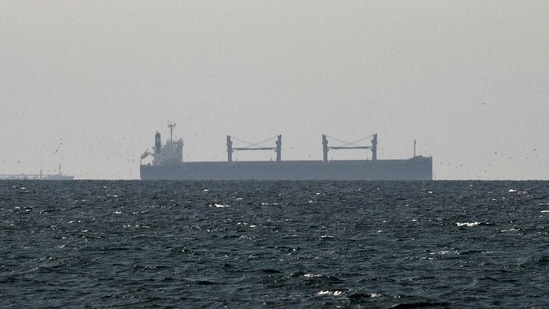
India stays among top Strait of Hormuz users as 8 vessels transit amid Iran chokehold| India News
India’s Steadfast Seaborne Lifeline Navigating the Strait of Hormuz Amidst Regional Tensions
The vital arteries of global trade are constantly under scrutiny, none more so than the narrow, strategically critical Strait of Hormuz. As regional dynamics shift and security concerns escalate, India’s consistent maritime presence in these waters underscores its unwavering commitment to energy security and free navigation. Recently, a notable fleet of India-linked vessels has navigated this crucial chokepoint, highlighting India’s significant role as a key user of this international waterway.
Omni 360 News brings a detailed report on the recent transits, offering insight into the types of vessels involved and the broader implications for India’s trade and strategic posture. Since February 28, a total of eight India-linked vessels have successfully traversed the Strait of Hormuz. These include a mix of naval and commercial ships, each playing a distinct role in safeguarding India’s interests.
The Strait’s Strategic Pulse An Essential Global Artery
For anyone seeking to understand global trade and energy, the Strait of Hormuz is an indispensable geographical feature. Imagine a narrow gateway, just about 21 nautical miles wide at its narrowest point, connecting the Persian Gulf with the open waters of the Arabian Sea. This is the Strait of Hormuz. Through this vital channel, approximately one-fifth of the world’s total petroleum consumption and a quarter of the global liquefied natural gas (LNG) trade passes daily. It is the sole sea passage from the Persian Gulf to the open ocean, making it a non-negotiable route for oil-rich nations in the Gulf and energy-hungry economies worldwide.
For India, a nation whose economic growth is deeply intertwined with its energy imports, the Strait of Hormuz is more than just a shipping lane; it is a veritable lifeline. India is the world’s third-largest oil consumer and relies heavily on crude oil imports from the Middle East. The uninterrupted flow of oil and gas through Hormuz is paramount to powering India’s industries, transportation, and millions of homes. Any disruption here sends ripples throughout the Indian economy, impacting everything from fuel prices to industrial output.
India’s Diverse Maritime Presence A Fleet Under Watch
The vessels identified as having crossed the Strait since late February offer a clear picture of India’s multi-faceted engagement in the region. The list includes:
* Shivalik: This name immediately brings to mind an Indian Navy frigate. The presence of a naval vessel signifies India’s commitment to maritime security and its capacity to protect its commercial interests and seaborne trade in potentially volatile zones. Naval deployments are a strong signal of a nation’s resolve to maintain freedom of navigation and to offer reassurance to its merchant fleet.
* Nanda Devi: Often identified with bulk carriers or other commercial cargo ships, the transit of vessels like Nanda Devi points to the continuous flow of essential goods, raw materials, or finished products that constitute India’s vast international trade.
* Jag Laadki and Jag Vasant: These vessels are characteristic of Great Eastern Shipping Company (GE Shipping), one of India’s largest private sector shipping companies. Such vessels are typically involved in transporting crude oil, petroleum products, or dry bulk cargo. Their movements underscore the direct involvement of Indian-owned and operated commercial fleets in the region’s trade.
* Pine Gas: As the name suggests, this vessel is likely an LPG (Liquefied Petroleum Gas) carrier. India’s growing energy needs include a substantial demand for LPG, which is often sourced from the Gulf nations. The safe passage of such carriers is critical for meeting domestic energy requirements.
* BW Tyr and BW Elm: These names are associated with major international shipping groups like BW Group. While not necessarily Indian-flagged, their “India-linked” status would imply that they are either chartered by Indian entities, carrying cargo destined for or originating from India, or managed with significant Indian crew. This highlights the global interconnectedness of maritime trade, where vessels from various nations contribute to India’s supply chains.
* Green Sanvi: This likely represents another commercial cargo vessel, contributing to the overall volume of goods exchanged between India and the Gulf region, or transiting through it to other destinations.
This diverse fleet—from naval frigates ensuring security to a range of commercial vessels carrying critical cargo—collectively illustrates the sheer volume and variety of India’s maritime interactions through the Strait of Hormuz.
Navigating Regional Tensions A Delicate Balance
The mention of an “Iran chokehold” surrounding the Strait of Hormuz refers to the historical and ongoing geopolitical tensions in the region. Iran controls the northern bank of the Strait and has, at various times, threatened to impede or close the passage in response to international sanctions or military pressures. While such actions would have severe global economic consequences, the threat itself creates an environment of heightened alert for maritime traffic.
More recently, the broader security landscape in the Middle East has seen increased volatility. The ongoing crisis in the Red Sea, marked by Houthi attacks on commercial shipping, has prompted many vessels to reroute, opting for longer, more expensive journeys around the Cape of Good Hope. This situation indirectly places greater emphasis on the safety and security of other crucial maritime passages, including the Strait of Hormuz. While the Red Sea issues are distinct, they contribute to an overall sense of caution and risk assessment for shipping in the wider Arabian Sea and Gulf regions.
India, recognizing these potential threats, has proactively strengthened its maritime security measures. The Indian Navy has been consistently deployed in the Gulf of Aden and the Arabian Sea under initiatives like ‘Operation Sankalp’ to protect Indian-flagged vessels and ensure the safety of Indian seafarers. The transit of the Indian naval frigate ‘Shivalik’ through Hormuz is a testament to this robust commitment.
Economic Imperatives and Energy Security India’s Unwavering Focus
The continuous flow of India-linked vessels through the Strait of Hormuz is a clear indicator of India’s unwavering economic imperatives. As one of the fastest-growing major economies in the world, India’s energy demand is projected to rise significantly in the coming decades. Securing diverse and stable sources of energy, primarily from the Middle East, is a cornerstone of its foreign and economic policy.
Beyond oil and gas, the Gulf region is also a critical trading partner for India, exchanging a vast array of goods. Maintaining open and secure sea lanes is not just about energy; it’s about the broader health of India’s export and import ecosystem, supporting millions of livelihoods and driving national development.
Key Takeaways
* The Strait of Hormuz remains a critical, non-negotiable artery for India’s energy and trade lifelines.
* The recent transits of eight India-linked vessels since February 28, including both naval and commercial ships, underscore India’s sustained presence and reliance on this waterway.
* India maintains a proactive approach to maritime security in the region, including naval deployments, to safeguard its commercial interests amidst broader regional tensions.
* The continuous movement of vessels like tankers, bulk carriers, and naval ships highlights India’s deep economic dependence on stable and secure sea lanes through the Gulf.
* The broader Red Sea instability adds indirect pressure, making the security of routes like Hormuz even more salient for global and Indian shipping.
In conclusion, the regular transit of India-linked vessels through the Strait of Hormuz is a powerful symbol of India’s indispensable connection to the global economy and its steadfast commitment to securing its national interests. As regional geopolitical currents continue to evolve, India’s diligent maritime presence ensures that its vital seaborne lifelines remain open, secure, and resilient for the future.