Sensex rises after Donald Trump halts strike in Iran for 5 days
Indian Markets React Swiftly to Trump’s Iran Claims Volatility Prevails
Introduction
The opening bell on Tuesday brought a noticeable shift across Indian financial markets. Both the Sensex and Nifty, India’s leading stock indices, recorded significant upticks, injecting a wave of initial optimism among investors. Simultaneously, the Indian rupee saw an appreciation against the US dollar, while the prices of traditional safe-haven assets like gold and silver experienced a measurable decline. This morning’s positive momentum was largely attributed to recent statements made by former US President Donald Trump, who suggested that positive discussions had occurred with Iran and indicated a temporary halt in military actions. However, as the trading day unfolded, this initial burst of confidence began to recede, prompting market watchers and individual investors to question the durability of these gains and brace for potential reversals on Dalal Street. The immediate question lingered: would this fleeting rally sustain itself, or was it merely a transient response to unverified geopolitical pronouncements?
A Glimmer of Hope on Dalal Street
Tuesday morning witnessed a robust start for the Indian stock market. The Sensex, the benchmark index for the Bombay Stock Exchange, soared by over a thousand points within minutes of market opening, a strong indicator of renewed investor enthusiasm. The National Stock Exchange’s Nifty index, reflecting the performance of India’s 50 largest companies, also followed suit with substantial gains. This positive sentiment was not confined to equities alone; it extended prominently into the currency market. The Indian rupee, which had closed at 93.97 against the US dollar on Monday, strengthened impressively to 93.58 on Tuesday, marking an appreciation of 34 paisa. This currency shift, coupled with a notable decrease in global crude oil prices, further fueled the market’s bullish outlook.
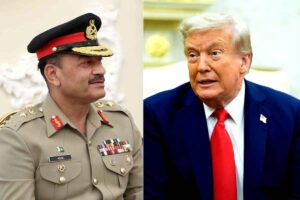
The underlying cause for this sudden market exuberance stemmed directly from a statement attributed to Donald Trump. On Monday, the former US President publicly claimed that constructive and positive discussions had been held with Iranian officials. Crucially, he added that the United States would refrain from attacking Iran’s vital fuel infrastructure for an upcoming period of five days. This statement, even without independent verification from official diplomatic channels at the time, was widely interpreted as a significant step towards de-escalation in the ongoing geopolitical conflict. For many, it signaled a potential end to hostilities that had been simmering for nearly four weeks, causing global instability. The prevailing hope among investors was that a cessation of military actions would mitigate the global fuel crisis, lead to a stronger rupee, and ultimately benefit Indian companies and the broader economy. The morning’s strong market performance was, therefore, a tangible reflection of this collective, albeit perhaps premature, trust in Trump’s assurances. Through its continuous coverage, Omni 360 News closely observed these immediate and dramatic market reactions to geopolitical news.
The Swift Return of Caution and Reality
Despite the initial flourish, the market’s optimism proved remarkably fragile and short-lived. Within barely half an hour of trading, the Sensex had already surrendered a substantial portion of its early gains, dropping approximately 500 points to hover around the 73,300 level. This swift and sharp retraction signaled a rapid return of caution and skepticism among investors. Market analysts were quick to pinpoint the reason for this abrupt shift: subsequent reports and official statements emerging directly from Iran. Tehran had unequivocally and promptly dismissed Trump’s claims regarding a pause in attacks and positive diplomatic talks, labeling his assurances as entirely “false.” This direct and unambiguous contradiction from Iran effectively shattered the fragile hopes that had initially propelled the markets upward.
For a market already grappling with sustained uncertainty, Iran’s denial served as a stark reminder of the complexities and volatility inherent in international relations. Analysts widely concurred that without a genuine and verified cessation of hostilities, the challenges faced by investors would persist. The brief market rally, therefore, transformed into an illustration of how quickly sentiment can pivot on unconfirmed news. The crucial element of stability remains elusive for the Indian market, and the fundamental question of when investors can realistically anticipate consistent profitability continues to hang unanswered in the air.
Ongoing Worries for Indian Investors
The protracted geopolitical tensions in the Middle East continue to cast a long and pervasive shadow over the Indian market. With the conflict now stretching for almost four weeks, the absence of a clear resolution translates directly into sustained anxiety for Indian investors. Each day of uncertainty exacerbates concerns about market stability, future economic growth, and the potential impact on corporate earnings. While the initial rise in the Sensex offered a fleeting moment of relief, it conspicuously lacked the enduring stability that long-term investors seek. This inherent lack of a firm foundation leaves many deeply concerned about the market’s prospective trajectory.
The broader economic implications for India are also significant. A prolonged conflict often leads to elevated global oil prices, which directly impacts India, a major oil importer. Higher import bills can strain the country’s current account deficit and put downward pressure on the rupee over time, despite the brief Tuesday appreciation. This instability discourages foreign institutional investors, who prefer predictable and calm environments. Domestic investors, too, become hesitant to commit fresh capital, preferring to wait on the sidelines until a clearer picture emerges. While a stronger rupee and lower oil prices, as observed temporarily, offer some momentary respite, their sustained presence is continuously questioned amidst the lingering threat of ongoing conflict and the credibility of diplomatic claims.
The situation vividly underscores how deeply intertwined global geopolitical events are with local market dynamics in an interconnected world. The aspiration for reduced fuel prices, stable supply chains, and a predictable economic environment—all intrinsically linked to the cessation of hostilities—remains a paramount concern for both businesses and individual investors across India. The unpredictable and often contradictory nature of international developments means that constant vigilance, meticulous analysis, and a measured approach remain paramount for anyone navigating the currents of Dalal Street. Omni 360 News remains committed to providing timely and accurate reports on these critical intersections of global politics, economics, and their profound impact on daily financial lives.
Key Takeaways
- Indian markets experienced a significant but temporary surge on Tuesday, fueled by Donald Trump’s unverified claims of positive discussions with Iran and a five-day halt to US attacks on Iranian fuel infrastructure.
- This initial market rally saw the Sensex jump over 1000 points, the Nifty improve, the Indian rupee strengthen by 34 paisa against the dollar, and a temporary dip in global oil prices.
- The optimism quickly faded as the Sensex gave back approximately 500 points within half an hour, largely due to Iran’s official denial of Trump’s assurances, labeling them “false.”
- Market analysts view Iran’s contradiction as the primary catalyst for the swift market reversal, highlighting the extreme sensitivity of financial markets to geopolitical statements.
- The ongoing conflict, now in its fourth week, continues to foster significant investor uncertainty, raising questions about when genuine market stability and sustainable profitability will return for Indian investors.
- This event serves as a crucial reminder of how deeply global geopolitical developments, even unconfirmed ones, can influence local market dynamics and the importance of verified information in investor decision-making.