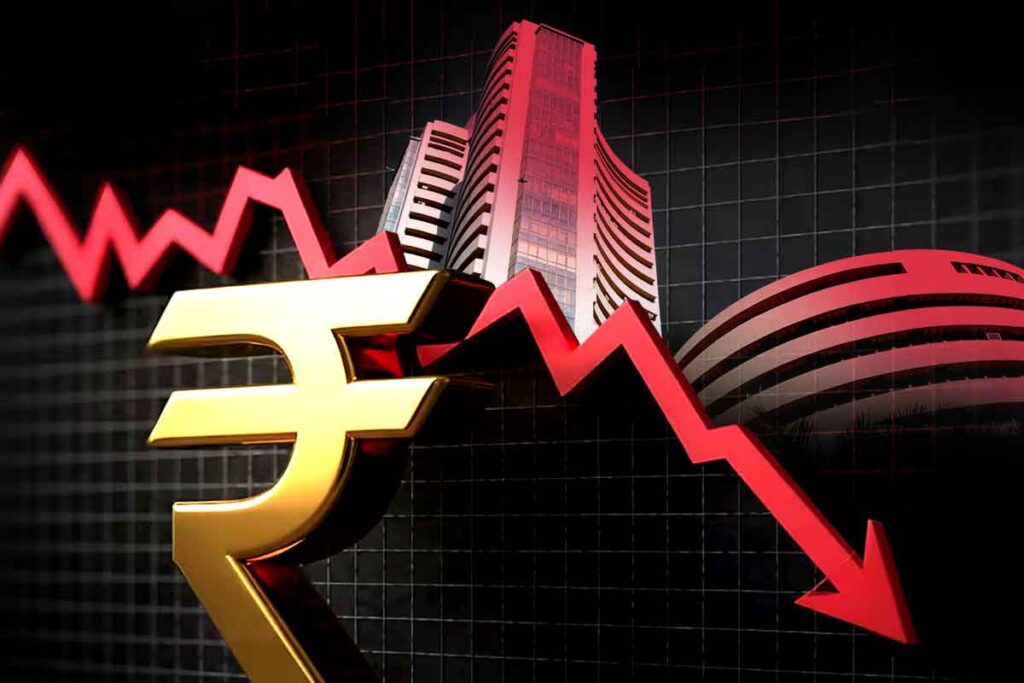
Sensex below 1500 at opening, rupee opens at record low
Global Tensions Push Indian Markets Down Rupee Hits New Record Low
A ripple of global geopolitical unrest has sent shockwaves through the Indian financial landscape, culminating in a dramatic market downturn and a historic fall for the Indian Rupee. This significant economic tremor arrived just hours after former US President Donald Trump issued stark warnings regarding Iran’s energy resources, drawing a swift counter-threat from Tehran to blockade the critical Strait of Hormuz.
On Monday, as trading commenced, India’s benchmark stock index, the Sensex, plummeted by a staggering 1500 points. Simultaneously, the Indian Rupee depreciated to an unprecedented low of 93.83 against the US Dollar. This marks a 12-paise dip compared to its value just last Friday, showcasing the immediate and tangible impact of international developments on domestic markets.
To understand this downturn, imagine India as a household that primarily relies on imported cooking oil. If the supply route for that oil is threatened, or the country producing it faces instability, the price of oil will inevitably shoot up. India is one of the world’s largest importers of crude oil, much of which travels through the Strait of Hormuz. This narrow waterway, located between the Persian Gulf and the Gulf of Oman, is vital for global oil trade. Iran’s threat to close it, even if just a warning, immediately sparks fears of restricted supply and soaring oil prices worldwide.
When global oil prices surge, India needs to spend more US Dollars to purchase the same amount of oil. This increased demand for dollars makes the Indian Rupee weaker in comparison. A weaker Rupee means everything imported, from electronics to crucial raw materials, becomes more expensive, potentially fueling inflation – a general rise in prices.
The ongoing conflict between America and Israel, which has been escalating against Iran in West Asia since late February, further exacerbates this instability. Such regional conflicts inherently make investors nervous. When investors get jittery about global peace and economic stability, they tend to pull their money out of what they perceive as riskier emerging markets, like India, and invest in safer assets, typically the US Dollar. This exodus of foreign money contributes to both the stock market decline and the Rupee’s depreciation.
This is not the first instance of such pressure. On March 4, the Rupee first crossed the 92-mark against the Dollar, a direct consequence of escalating Middle East tensions. Last Friday saw another record low as it breached 93. Now, the 93.83 mark represents a new benchmark for its decline.
For the everyday Indian, a falling Rupee and a volatile stock market translate into real-world concerns. Imported goods could become pricier, and companies might face higher operational costs, potentially impacting job growth and consumer spending. Omni 360 News continues to monitor these developments closely, providing insights into how global events shape our local economy.
Key Takeaways
* Donald Trump’s warnings and Iran’s Strait of Hormuz threat immediately unsettled global markets.
* India’s Sensex dropped 1500 points, and the Rupee hit a record low of 93.83 against the US Dollar.
* The Strait of Hormuz is crucial for global oil supply; threats to it raise oil prices.
* Higher oil prices weaken the Rupee as India needs more dollars for imports.
* Ongoing US-Israel-Iran conflict causes global instability, leading investors to pull funds from emerging markets.
* A weaker Rupee and falling markets can lead to higher import costs and potential inflation in India.