Indian Navy gets its third indigenous nuclear submarine, Rajnath Singh commissions INS Aridaman in service| India News
India Strengthens Underwater Shield with INS Aridaman
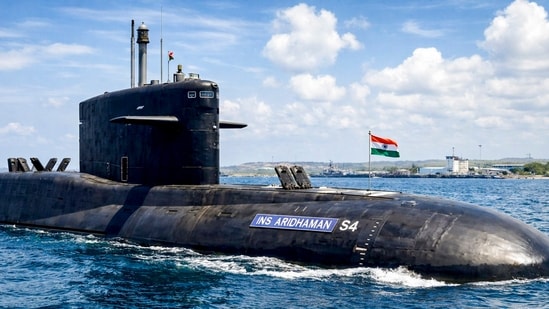
The maritime landscape witnessed a significant development recently as India formally welcomed the INS Aridaman, the third indigenous nuclear submarine of the Arihant class, into service. This event, unfolding at the bustling shipbuilding hub of Vishakhapatnam, marks a pivotal moment in India’s journey towards self-reliance in advanced defense technology and reinforces its strategic naval capabilities. The commissioning of this formidable vessel, a product of the secretive Project ATV, underscores the nation’s commitment to maintaining robust deterrence in an evolving global security environment. For continuous updates on India’s defense advancements, readers can always turn to Omni 360 News.
Understanding the significance of the INS Aridaman requires a look into Project ATV. Standing for Advanced Technology Vessel, this highly classified program has been the bedrock of India’s indigenous nuclear submarine development. Initiated decades ago, Project ATV is a testament to the nation’s resolve to design, develop, and construct its own nuclear-powered submarines, a feat achieved by only a handful of technologically advanced countries worldwide. The program not only fosters technological independence but also ensures that critical defense assets are built to India’s specific strategic requirements, free from external dependencies.
The Arihant class submarines are not just any underwater vessels; they are classified as Strategic Strike Nuclear Submarines, or SSBNs. To put it simply for a 12th-grade student, imagine a submarine that is powered by a nuclear reactor, allowing it to stay underwater for extremely long periods without needing to refuel, unlike conventional diesel-electric submarines. More importantly, these submarines are designed to carry ballistic missiles, which are long-range missiles capable of carrying nuclear warheads.
Why are SSBNs like the INS Aridaman so crucial for a country’s defense? They form the critical sea-based leg of what is known as a “nuclear triad.” This triad refers to a nation’s ability to launch nuclear weapons from land (missiles), air (bombers), and sea (submarines). The sea-based component, provided by SSBNs, is considered the most survivable part of this triad. Because submarines operate silently and stealthily deep underwater, they are extremely difficult to track and destroy. This ensures that even if an adversary were to launch a surprise attack, the country would still have the ability to retaliate from its hidden submarines. This “second-strike capability” acts as a powerful deterrent, discouraging any nation from contemplating a first strike.
The INS Aridaman joins its predecessors, INS Arihant and INS Arighat, in bolstering India’s underwater fleet. While the exact specifications remain classified, it is widely understood that the Aridaman represents an advancement in design and capability over the first two vessels. These improvements likely include enhanced stealth features, allowing it to remain even harder to detect, and potentially an increased capacity for carrying ballistic missiles, such as the indigenous K-15 Sagarika or the more potent K-4 missiles. This greater payload and improved operational performance translate into a more robust and credible deterrent for India.
The commissioning ceremony, presided over by Defence Minister Rajnath Singh, was a moment of national pride, highlighting India’s growing prowess in strategic defense manufacturing. The construction of such complex vessels at Vishakhapatnam underscores the advanced engineering and shipbuilding capabilities that have been cultivated within India. It signifies a major stride towards achieving the “Make in India” vision in the defense sector, creating jobs, fostering technological innovation, and reducing reliance on foreign suppliers for critical military hardware. This indigenous development is not merely about building ships; it is about building national competence and confidence.
The strategic implications of the INS Aridaman’s induction are far-reaching. It strengthens India’s position as a significant naval power in the Indian Ocean region and beyond. By enhancing its nuclear deterrence, India sends a clear message about its commitment to national security and its capacity to protect its interests. In a region marked by evolving geopolitical dynamics, having a credible and survivable second-strike capability is paramount for maintaining stability and peace. It provides India with greater strategic autonomy and flexibility in its foreign and defense policies.
Looking ahead, the Indian Navy continues its modernization efforts, with further vessels of the Arihant class expected in the future, along with plans for conventional and nuclear attack submarines. The journey of indigenous defense production is continuous, driven by the need to adapt to new threats and leverage cutting-edge technology. The INS Aridaman is not just a submarine; it is a symbol of India’s determination to secure its future on its own terms.
Key Takeaways
- The INS Aridaman is India’s third indigenous Arihant-class nuclear submarine, built under the classified Project ATV in Vishakhapatnam.
- It is an SSBN (Strategic Strike Nuclear Submarine), forming the critical sea-based leg of India’s nuclear triad.
- SSBNs provide a robust second-strike capability, ensuring deterrence against potential aggressors due to their stealth and survivability.
- The Aridaman likely features advanced stealth and increased missile carrying capacity (K-15 Sagarika or K-4 missiles) compared to its predecessors.
- Its induction significantly boosts India’s maritime defense, indigenous manufacturing capabilities, and strategic autonomy in the region.