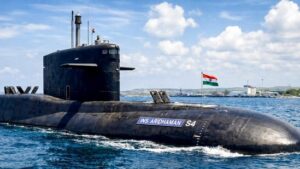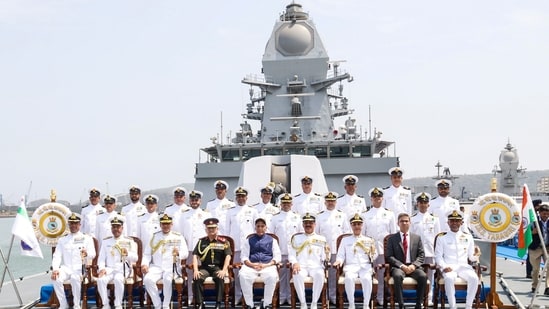
Indian Navy gets two big additions: Nuclear-ready submarine Aridhaman, warship Taragiri
Made in India Warship INS Taragiri Joins Fleet Boosts Defence Self-Reliance
The Indian Navy has significantly strengthened its operational capabilities with the commissioning of INS Taragiri, a Project 17A stealth frigate, marking a pivotal moment in the nation’s journey towards self-reliance in defense manufacturing. Defence Minister Rajnath Singh presided over the impressive ceremony, highlighting India’s growing prowess in indigenous shipbuilding. This event, closely watched across the maritime community, underscores a resolute commitment to bolstering national security through domestic innovation and industry.
INS Taragiri, named after a mountain peak in the Himalayas, represents more than just a naval vessel; it embodies the spirit of ‘Make in India’ with an indigenous content exceeding a remarkable 75 percent. This substantial figure is a testament to the collaborative efforts of over 200 Indian enterprises, ranging from micro, small, and medium enterprises (MSMEs) to larger industrial players, all contributing their expertise and resources to its construction. Their collective contribution spans the design, development, and supply of a vast array of components, systems, and technologies, crucial for a modern warship. From specialized steel to complex electronic systems and combat management software, the imprint of Indian ingenuity is evident throughout the vessel.
The commissioning of INS Taragiri is a significant milestone for Mazagon Dock Shipbuilders Limited (MDL) in Mumbai, where the ship was meticulously built. It is the fifth in the Project 17A class of frigates, following INS Nilgiri, Udaygiri, and others. These advanced stealth frigates are designed to enhance the Indian Navy’s blue-water capabilities, capable of operating across diverse maritime environments. They incorporate stealth features, advanced weaponry, and sophisticated sensor packages, making them formidable assets in naval operations. The design philosophy behind Project 17A focuses on improved stealth capabilities, state-of-the-art weapons and sensors, and platform management systems. For a 12th standard student, think of it like building a high-tech, invisible fortress that can move quickly and quietly on water, equipped with the best gadgets and weapons, mostly put together by Indian minds and hands.
The Defence Minister, while commissioning both INS Taragiri and the nuclear-powered ballistic missile submarine INS Arighat, reiterated the government’s unwavering focus on creating a robust and self-sufficient defense ecosystem. This dual commissioning event sends a clear message about India’s expanding strategic reach and its resolve to protect its vast maritime interests. The inclusion of INS Taragiri in the fleet signifies a leap forward in achieving true strategic autonomy, reducing reliance on foreign suppliers for critical defense hardware.
This emphasis on indigenous content brings multiple benefits. Economically, it stimulates job creation, fosters technological advancements within the country, and boosts the manufacturing sector. For the local communities surrounding shipyards and supplier hubs, it means steady employment and growth opportunities. Strategically, it ensures security of supply chains, especially during times of international tension, and provides the Navy with tailored solutions specific to India’s unique operational requirements and geopolitical landscape. The more we build ourselves, the less we depend on others, making our defense stronger and more reliable.
Furthermore, the involvement of numerous Indian enterprises in such complex defense projects nurtures a culture of innovation and high-precision engineering. It encourages domestic research and development, leading to a broader technological base that benefits not just the defense sector but also other industries. This ripple effect helps to elevate India’s overall industrial capabilities and positions the nation as a credible player in global defense manufacturing. Omni 360 News has consistently highlighted how these large-scale projects serve as catalysts for widespread economic and technological development.
Looking ahead, the successful integration of INS Taragiri into the Indian Navy’s fleet serves as a powerful testament to the nation’s engineering prowess and its long-term vision for defense modernization. It reinforces India’s position as a significant maritime power, capable of designing, building, and operating highly advanced warships. The journey from conceptualization to commissioning, with such a high degree of indigenous input, stands as a shining example of India’s determination to achieve true self-reliance in safeguarding its borders and projecting its influence across the seas.
Key Takeaways:
* INS Taragiri, the fifth Project 17A stealth frigate, has been commissioned into the Indian Navy.
* The warship boasts over 75% indigenous content, showcasing India’s self-reliance in defense.
* More than 200 Indian enterprises contributed to its construction, boosting the domestic industry.
* The commissioning by Defence Minister Rajnath Singh underscores India’s commitment to defense modernization.
* This achievement significantly enhances the Indian Navy’s operational capabilities and strategic independence.