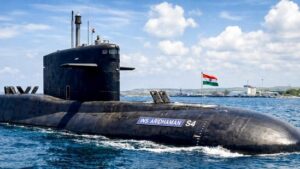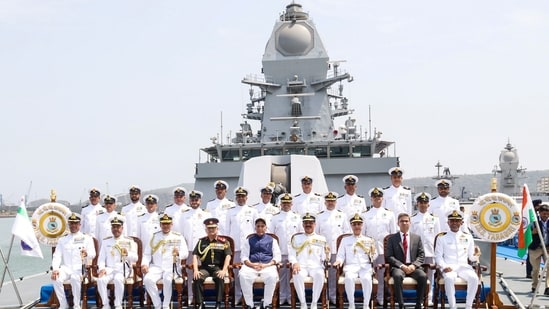
Indian Navy gets two big additions: Nuclear-ready submarine Aridhaman, warship Taragiri
INS Taragiri Joins Indian Navy A Landmark for Indigenous Defence
In a significant stride for India’s naval capabilities and its unwavering commitment to self-reliance, the warship INS Taragiri has officially joined the Indian Navy. Commissioned by Defence Minister Rajnath Singh in a poignant ceremony at Mazagon Dock Shipbuilders Limited (MDL) in Mumbai, the event underscored a proud moment for the nation’s indigenous defence manufacturing. This stealth frigate, a testament to Indian engineering prowess, boasts an impressive indigenous content exceeding 75 percent, a figure that highlights the remarkable contributions of over 200 Indian enterprises in its construction.
The commissioning of INS Taragiri is more than just the induction of a new warship; it represents a tangible achievement of the ‘Make in India’ initiative, demonstrating the nation’s growing capacity to design, develop, and produce advanced naval assets domestically. For years, India has diligently worked towards reducing its dependence on foreign suppliers for critical defence equipment. The Taragiri’s induction is a powerful symbol of this journey, showcasing the collective effort of public sector entities, private industries, and a robust network of Micro, Small, and Medium Enterprises (MSMEs) that form the backbone of India’s defence industrial base.
A Ceremony of National Pride
Defence Minister Rajnath Singh presided over the commissioning, emphasizing the strategic importance of strengthening India’s maritime security. The ceremony, attended by top naval officials, defence representatives, and workers from MDL, was a moment of reflection on the years of dedication and hard work that culminated in the warship’s completion. As reported by various local news outlets from Mumbai, the atmosphere was charged with national pride, acknowledging the thousands of man-hours invested in crafting this sophisticated vessel. The minister’s address highlighted how such indigenous projects not only bolster the Navy’s strength but also create a ripple effect of employment and technological advancement across the country.
The INS Taragiri is the third stealth frigate of the Project 17A class. For those unfamiliar with naval classifications, a ‘frigate’ is a type of warship typically used for escorting other vessels, patrolling, and engaging in anti-submarine or anti-air warfare. ‘Stealth’ capability means it is designed to have a reduced radar cross-section, making it harder for enemy radar systems to detect it. Project 17A is a series of advanced guided-missile frigates being built for the Indian Navy, incorporating enhanced stealth features, advanced weapons, and sensors. The first two ships in this series are INS Nilgiri and INS Udaygiri. Each vessel in this project is built with a focus on maximizing indigenous content, pushing the boundaries of local manufacturing and technological innovation.
The Strength of Indigenous Content
The declaration that INS Taragiri has over 75 percent indigenous content is particularly noteworthy. To put this in perspective for a 12th standard student, imagine building a highly complex, high-tech computer system where three-quarters of all its components – from the motherboard to the smallest chip, the operating system software, and even the manufacturing tools – are all designed and produced within your own country. This significantly reduces reliance on imported parts, making the nation less vulnerable to international supply chain disruptions or political pressures.
This indigenous quotient means that a vast majority of the warship’s components, including its advanced weapon systems, sensors, communication equipment, and even the specialized steel used in its hull, have been manufactured by Indian companies. More than 200 Indian enterprises, many of them MSMEs spread across the length and breadth of the country, contributed their expertise, innovation, and production capabilities to this project. This collaboration is a powerful engine for economic growth, fostering technological advancements and creating employment opportunities for thousands of skilled workers and engineers. It also ensures that the intellectual property and critical manufacturing know-how remain within India, strengthening its strategic autonomy.
Bolstering India’s Maritime Security and Economy
The Indian Navy’s role in safeguarding the nation’s extensive coastline, island territories, and vital sea lanes is paramount. The induction of advanced warships like INS Taragiri significantly enhances its operational capabilities, allowing it to project power, conduct surveillance, and respond effectively to diverse maritime challenges. With its stealth features, powerful weapons suite, and advanced sensors, Taragiri will be a formidable asset in securing India’s strategic interests in the Indian Ocean Region and beyond.
Beyond its military significance, the construction of INS Taragiri has provided a substantial boost to the Indian economy. The extensive domestic procurement for the warship’s construction has invigorated the shipbuilding industry, fostered innovation in ancillary sectors, and generated numerous direct and indirect jobs. This cycle of domestic production, procurement, and deployment is central to achieving true self-reliance, or ‘Aatmanirbhar Bharat,’ in defence. It ensures that the money spent on defence hardware largely circulates within the national economy, contributing to overall prosperity.
Key Takeaways
* Indigenous Prowess: INS Taragiri boasts over 75 percent indigenous content, a significant milestone for India’s ‘Make in India’ defence initiative.
* Economic Catalyst: Over 200 Indian enterprises, including MSMEs, contributed to its construction, fostering job creation and technological growth.
* Naval Strength: As the third stealth frigate of Project 17A, Taragiri enhances the Indian Navy’s capabilities for maritime security and power projection.
* Self-Reliance: The warship’s commissioning underscores India’s commitment to reducing dependence on foreign defence imports.
* Strategic Importance: Such indigenous projects bolster national security and promote strategic autonomy in the defence sector.
This detailed report from Omni 360 News highlights that the commissioning of INS Taragiri is not merely an addition to the Indian Navy’s fleet; it is a profound declaration of India’s engineering capability, industrial strength, and strategic vision. It solidifies the nation’s position as a serious player in global defence manufacturing and reaffirms its resolve to protect its interests with indigenously built might. As India continues its journey towards becoming a leading defence producer, such achievements serve as powerful testaments to its progress and potential.