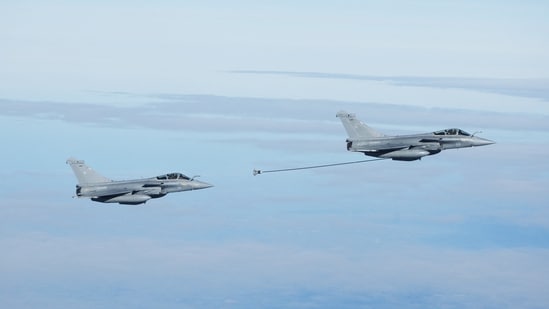
India's FY26-27 IAF plan: Rafale, transport aircraft deals lined up| India News
India’s Homegrown Rafale Future Forging Defense Self-Reliance
The skies over India are set to witness a new era in defense capabilities, not just through the acquisition of advanced aircraft, but through their very creation on Indian soil. A significant shift is underway with the Multi-Role Fighter Aircraft, or MRFA, model under consideration. This strategic move aims for French aviation giant Dassault Aviation to partner with a local Indian entity, manufacturing the formidable Rafale jets right here in India. This initiative is far more than a simple procurement; it represents a profound commitment to national self-reliance and industrial growth, resonating deeply within the defense manufacturing ecosystem, as reported by various local industry observers and defense analysts.
For decades, India has been one of the world’s largest importers of defense equipment. While necessary for national security, this reliance on foreign suppliers has always presented a strategic vulnerability. The ‘Make in India’ push, particularly in the defense sector, seeks to reverse this trend. The MRFA model for Rafale production embodies this ambition, moving beyond merely buying off-the-shelf to fostering indigenous capabilities. It means that the expertise, technology, and intricate processes required to build a state-of-the-art fighter jet will gradually be absorbed and mastered by Indian companies and engineers.
Consider this from the perspective of a young student watching the Republic Day parade: imagine those powerful Rafale jets flying overhead, knowing they weren’t just bought from another country, but built by Indian hands, using Indian ingenuity. That’s the core idea.
Understanding the MRFA Model
At its heart, the MRFA model isn’t just about buying airplanes; it’s about building them. The Indian Air Force has a long-standing requirement for a substantial number of new fighter jets to modernize its fleet. The MRFA tender is designed to address this. Instead of a direct import deal for all aircraft, the proposed model involves a comprehensive manufacturing agreement. Dassault Aviation, the original equipment manufacturer (OEM) of the Rafale, would collaborate closely with an Indian private or public sector company. This partnership is crucial. It’s not just an assembly line; it involves a deeper level of technology transfer, skill development, and local component manufacturing.
This approach ensures that a significant portion of the aircraft’s components, sub-systems, and eventually, the entire airframe, could be produced within India. Such a model helps to reduce dependency on foreign supply chains, especially critical during geopolitical uncertainties. Local news outlets have highlighted how this framework encourages not just the primary partner, but a whole ecosystem of smaller Indian businesses – suppliers of parts, software, and services – to grow and develop their capabilities to meet stringent defense standards.
The ‘Make in India’ Imperative in Defense
The ‘Make in India’ initiative, launched by the government, seeks to transform India into a global manufacturing hub. In defense, this translates to reducing import bills, boosting exports, and achieving strategic autonomy. Local manufacturing of Rafales under the MRFA model directly contributes to these goals. It’s not just about assembling parts; it’s about creating a robust industrial base that can design, develop, and produce complex defense systems independently.
This shift has several layers of impact. Firstly, it generates a substantial number of high-skill jobs in engineering, manufacturing, and research and development. These aren’t just factory jobs; they involve cutting-edge technology and precision work. Secondly, it fosters a culture of innovation. As Indian companies work with global leaders like Dassault, they learn best practices, absorb new technologies, and are challenged to meet international quality benchmarks. This often leads to further innovation and the development of indigenous solutions for other defense needs. Omni 360 News has consistently covered how these collaborations are not merely transactional but transformative for India’s industrial landscape.
Moreover, domestic production offers significant economic advantages. It saves valuable foreign exchange that would otherwise be spent on imports. Over the long term, it also promises a more cost-effective solution for maintenance, repairs, and upgrades, as spare parts and technical support would be readily available within the country. This also reduces the turnaround time for critical repairs, keeping the Indian Air Force fleet operational and ready.
Dassault Aviation and Local Collaboration A Symbiotic Partnership
Dassault Aviation, a name synonymous with high-performance military aircraft, brings decades of expertise in fighter jet design and manufacturing. Their collaboration with an Indian partner under the MRFA model signifies a deep commitment to India’s strategic goals. For Dassault, this isn’t just about selling jets; it’s about building a long-term partnership, potentially opening avenues for future joint ventures and technology development.
Choosing the right local partner is a critical step in this process. This partner would need to possess significant manufacturing capabilities, a skilled workforce, and the capacity to absorb and implement complex aerospace technologies. The partnership would likely involve phases: starting with assembly, moving to sub-component manufacturing, and eventually progressing to complete aircraft production with a high degree of indigenization. This layered approach ensures that knowledge transfer is systematic and sustainable, preventing any abrupt disruptions or quality compromises. Discussions reported by various regional business news desks highlight the rigorous selection process and the significant investment required from the Indian partner to meet global aerospace standards.
Key Takeaways
* Self-Reliance Boost The MRFA model for Rafale production marks a major step towards India’s goal of defense self-reliance, reducing reliance on foreign imports.
* Economic Growth This initiative will create high-skill jobs, foster industrial growth, and stimulate the development of a robust aerospace manufacturing ecosystem in India.
* Technology Transfer The collaboration with Dassault Aviation will facilitate the transfer of critical aerospace technology and expertise to Indian firms.
* Strategic Advantage Local production ensures better control over supply chains, faster maintenance, and enhanced operational readiness for the Indian Air Force.
* Future Opportunities This partnership lays the groundwork for future joint ventures and indigenous defense product development.
In essence, the move towards making Rafale jets in India under the MRFA model is a carefully calculated strategic maneuver. It combines the immediate need for advanced fighter aircraft with the long-term vision of a self-sufficient, technologically advanced India. It’s a testament to the nation’s resolve to not just protect its skies, but to build the wings that soar through them, a narrative consistently echoed across local news segments detailing India’s journey towards becoming a global defense manufacturing powerhouse.