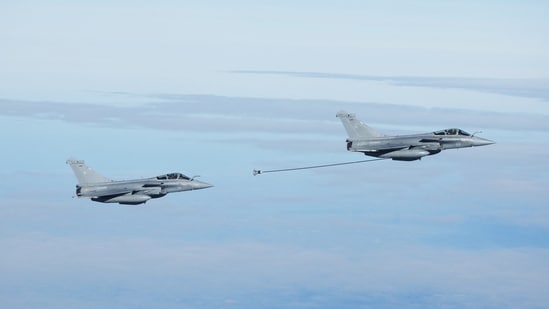
India's FY26-27 IAF plan: Rafale, transport aircraft deals lined up| India News
India’s Next-Gen Air Power Rafale Production Eyes Domestic Shores
New Delhi, India — India stands on the precipice of a pivotal shift in its defense manufacturing landscape. For decades, the nation has sought to bolster its military capabilities, often relying on international acquisitions. However, a significant model under consideration, known as the Multi-Role Fighter Aircraft (MRFA) model, aims to dramatically change this narrative, bringing advanced fighter jet production directly to Indian soil. This strategic move, keenly observed by defense experts and industry leaders, could see the formidable Rafale jets, currently a cornerstone of the Indian Air Force, manufactured within the country by French aviation giant Dassault Aviation in collaboration with an Indian partner. This development marks a substantial step toward genuine self-reliance in defense, a core aspiration for the nation.
The proposal isn’t merely about assembling aircraft; it represents a deeper commitment to fostering an indigenous aerospace ecosystem. For readers of Omni 360 News, understanding this initiative means looking beyond just the jets themselves, to the ripple effects on local industry, job creation, and India’s standing on the global stage.
Unpacking the MRFA Model
At its heart, the MRFA model signifies a departure from traditional ‘buy and fly’ approaches. Instead of simply purchasing fully built fighter jets from abroad, the Multi-Role Fighter Aircraft program is designed to facilitate domestic production. Imagine if, instead of buying a complicated gadget from another country, you were taught how to build it yourself in your own workshop, with the original makers guiding you. That’s essentially what the MRFA model aims to achieve for India’s defense sector. It’s about securing licenses, acquiring critical technologies, and developing local expertise to manufacture sophisticated military hardware.
For the Rafale jets, already a proven asset for the Indian Air Force, this means a future where components are sourced, assembled, and potentially even designed in India. Dassault Aviation, the original manufacturer, would work hand-in-hand with an Indian company, transferring vital knowledge and manufacturing processes. This collaborative framework is intended to ensure high-quality production standards while simultaneously building up India’s industrial capabilities. Local defense analysts often highlight that this model offers a path to not just acquiring hardware, but also the crucial intellectual property and know-how that drives future innovation.
The Rafale Edge and India’s Air Power Needs
The Rafale, a twin-engine, canard delta wing, multi-role fighter aircraft, has earned its reputation as a highly capable platform, adept at air superiority, interdiction, reconnaissance, and ground support missions. The existing fleet has significantly enhanced the Indian Air Force’s operational strength. However, with evolving geopolitical landscapes and the continuous need to modernize its aging squadrons, India requires a steady supply of advanced fighter jets. Producing these jets domestically under the MRFA framework offers numerous advantages. It ensures a more reliable supply chain, reduces dependence on foreign geopolitical factors for spare parts and maintenance, and provides the flexibility for future upgrades and modifications tailored to India’s specific needs. This shift is crucial for maintaining a formidable air defense posture in the coming decades.
Forging a Local Partnership A Foundation for Self-Reliance
The selection of an Indian local partner will be a defining aspect of this entire endeavor. This partner, likely a major player in India’s private sector with significant manufacturing capabilities or a public sector undertaking, will serve as the primary collaborator for Dassault Aviation. The implications of this partnership are far-reaching. It translates directly into job creation for thousands of skilled and semi-skilled workers—engineers, technicians, machinists, and assembly line workers across various industrial clusters. Beyond direct employment, it fosters a culture of high-precision manufacturing, requiring strict quality control and advanced engineering practices.
This initiative aligns perfectly with the ‘Atmanirbhar Bharat’ (Self-Reliant India) vision, aiming to reduce the nation’s reliance on foreign imports and transform it into a global manufacturing hub. Reports from industrial estates and manufacturing zones across India suggest a burgeoning interest among local firms to be part of such a transformative project. The transfer of technology and best practices from Dassault Aviation will not only benefit the partner company but will also elevate the standards of India’s broader manufacturing base, potentially attracting further foreign investment and expertise.
Strategic and Economic Ripples
The domestic production of Rafale jets under the MRFA model carries immense strategic weight. It bolsters India’s defense capabilities by ensuring a steady and controlled supply of advanced fighter aircraft. This lessens dependence on external suppliers, especially during times of geopolitical tension. Strategically, an India that manufactures its own frontline combat aircraft is an India with greater leverage and autonomy on the world stage. It signals a coming-of-age for its defense industrial complex.
Economically, the benefits extend beyond just the defense sector. A project of this magnitude acts as a powerful economic catalyst. It stimulates investment in research and development, enhances skill sets within the workforce, and nurtures a vast network of ancillary industries. From specialized materials to advanced electronics, local companies will find opportunities to supply components and services, creating a positive multiplier effect across the economy. Local economists project significant long-term growth in regions that become hubs for such defense manufacturing, leading to improved infrastructure and living standards.
Challenges and the Path Forward
While the vision is compelling, executing a project of this scale comes with its own set of challenges. Technology transfer, especially for sensitive defense technologies, can be complex and requires robust frameworks. Ensuring the quality and precision required for advanced fighter jets is paramount, demanding meticulous training and stringent oversight. Initial costs for setting up manufacturing facilities and developing supply chains will be substantial.
However, these challenges are outweighed by the long-term opportunities. The MRFA model offers India a unique chance to leapfrog in defense manufacturing, building a robust aerospace industrial base that could, in time, even explore export markets. It’s about laying a foundation for future generations of Indian engineers and innovators to design, develop, and produce next-generation defense systems, solidifying India’s position as a serious player in global aerospace.
Key Takeaways
The proposed MRFA model for Rafale production is more than just an aircraft deal; it’s a strategic national imperative.
1. Defense Self-Reliance: The initiative aims to significantly boost India’s ability to produce its own advanced military hardware, reducing reliance on imports.
2. Technology Transfer: Dassault Aviation’s collaboration with an Indian partner will bring critical aerospace manufacturing technologies and expertise to India.
3. Job Creation: Domestic production will generate thousands of high-skilled jobs and foster an ecosystem of ancillary industries.
4. Enhanced Capabilities: A stable supply of locally-made Rafale jets will strengthen the Indian Air Force’s operational readiness and strategic autonomy.
5. Economic Growth: The project promises substantial economic benefits, driving investment, skill development, and overall industrial growth across the nation.
As discussions progress, the realization of the MRFA model for Rafale jets could well be a defining moment in India’s journey towards becoming a truly self-reliant and formidable power in global defense and manufacturing.