'India's one of the biggest decisions of 21st century': PM Modi hails Women's Reservation bill| India News
# Modi Hails Women Quota as 21st Century Milestone
By Staff Writer, The India Chronicle, April 13, 2026
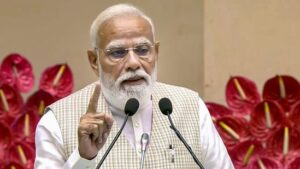
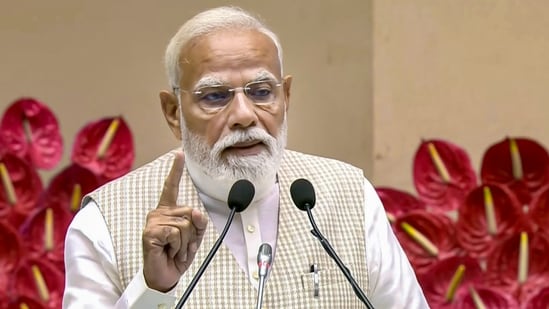
On April 13, 2026, Prime Minister Narendra Modi heralded the operational roadmap of the Women’s Reservation Bill as one of India’s most monumental decisions of the 21st century. Speaking in New Delhi, Modi emphasized that the legislative move—mandating a 33 percent reservation for women in the Lok Sabha and state legislative assemblies—will fundamentally transform historical visions of equality into tangible realities. By elevating marginalized voices, he asserted that the bill permanently cements social justice and gender parity as the core tenets of India’s governance and decision-making architecture, officially altering the trajectory of the world’s largest democracy. [Source: Original RSS | Hindustan Times].
## A Historic Paradigm Shift in Governance
For decades, the discourse surrounding social justice in India has predominantly centered on caste, class, and religious lines. Prime Minister Modi’s latest address signifies a definitive pivot, framing gender parity not merely as a women’s rights issue, but as a foundational pillar of comprehensive social justice. The *Nari Shakti Vandan Adhiniyam* (Women’s Empowerment Law), as it is officially known, is designed to shatter the highest glass ceilings in Indian politics.
“This is not just a legislative victory; it is a step that will turn the vision of the past into reality and make social justice a core part of governance and decision-making,” PM Modi remarked, reflecting on the long-standing demands of feminist groups, civil society, and progressive political factions. The Prime Minister’s remarks arrive at a critical juncture, as the nation prepares for the lifting of the freeze on parliamentary constituency delimitation in 2026, a necessary precursor to the bill’s full implementation.
By framing the legislation as “one of the biggest decisions of the 21st century,” the administration is setting a narrative that positions India as a proactive leader in democratic inclusivity. The implementation of this bill guarantees that at least one-third of the nation’s highest legislative seats will be occupied by women, ensuring that policy formulation is directly influenced by the lived experiences of half the population. [Source: Original RSS | Additional: Public records on the 106th Constitutional Amendment Act].
## Tracing the Legislative Journey
The journey to enact the Women’s Reservation Bill has been one of the most arduous and debated chapters in India’s parliamentary history. Originally introduced in 1996 under the HD Deve Gowda government, the bill faced fierce opposition, numerous revisions, and repeated lapses. Subsequent attempts in 1998, 1999, and 2008 met similar fates, often derailed by demands for sub-quotas for backward classes or outright patriarchal resistance.
It was in September 2023 that the 106th Constitutional Amendment Act finally passed with overwhelming bipartisan support. However, its passage came with a significant caveat: the reservation would only take effect following the publication of the next decennial census and the subsequent delimitation exercise—the process of redrawing boundaries of Lok Sabha and state assembly constituencies based on recent population data.
Now, in 2026, as the groundwork for the census and delimitation exercises accelerates, Modi’s reaffirmation serves as a clarion call to the bureaucracy and political parties to prepare for a fundamentally restructured electoral landscape.
## Delimitation and Census: The Technical Groundwork
The year 2026 is structurally significant for India’s democracy. Article 82 of the Indian Constitution, amended in 2001, placed a freeze on the redrawing of parliamentary constituencies until the first census taken after the year 2026. With this timeline now active, the Election Commission and the Delimitation Commission face the monumental task of not only reallocating seats to reflect population shifts but also identifying and reserving constituencies for women.
**Key Technical Milestones:**
* **The Census Exercise:** A prerequisite for delimitation, updating the demographic profile of the nation.
* **Seat Reallocation:** Adjusting the total number of Lok Sabha seats, which is expected to rise significantly from the current 543.
* **Rotational Reservation:** Establishing a mechanism to rotate reserved constituencies after every delimitation exercise, ensuring diverse political representation across geographic regions.
This complex technical execution requires meticulous planning. Political analysts note that PM Modi’s April 2026 address is a strategic move to maintain political momentum and reassure the electorate that the bureaucratic hurdles associated with delimitation will not derail the promise of women’s reservation.
## Global Implications and Democratic Standing
India’s move to reserve one-third of its legislative seats for women has profound implications for its standing on the global stage. Currently, women make up roughly 15 percent of the Lok Sabha. While this is the highest proportion since Independence, it falls short of the global average of 26.5 percent reported by the Inter-Parliamentary Union (IPU).
Once the 33 percent quota is realized, India will leapfrog into the upper echelons of global democratic representation, aligning closer with nations like Rwanda, Cuba, and Nordic countries that boast high female parliamentary participation.
“By formalizing this quota, India is signaling to the global community that economic superpower status must be accompanied by robust democratic equity,” explains Dr. Arundhati Menon, a senior political scientist at the Centre for Democratic Studies in New Delhi. “It transforms India from a participant to a standard-bearer in global gender parity metrics. This isn’t just about domestic optics; it’s a soft-power diplomatic tool that strengthens India’s moral authority in international forums.” [Additional: IPU Global Averages and Expert Analysis].
## Transforming Grassroots Governance to National Policy
India is not entirely foreign to the concept of women’s reservation. The 73rd and 74th Constitutional Amendments in 1992 mandated a 33 percent reservation for women in Panchayati Raj Institutions (local village councils) and urban local bodies. Over the past three decades, this grassroots initiative has introduced millions of women to political leadership.
The national bill is expected to scale this grassroots success to the federal level. Studies have consistently shown that local female leaders invest heavily in public goods—such as drinking water, education, and health infrastructure—that directly benefit their communities. Translating this gender-responsive budgeting to the Lok Sabha could fundamentally alter national funding priorities, shifting focus toward healthcare, child nutrition, education, and women’s safety.
## Overcoming Political and Structural Hurdles
Despite the optimism surrounding PM Modi’s statements, significant challenges remain in transitioning from legislative mandate to effective political leadership.
A primary concern is the potential emergence of the “Sarpanch Pati” syndrome at the national level—a phenomenon observed in local elections where male relatives act as the de facto leaders on behalf of elected women. Furthermore, political parties, historically dominated by male networks, face the formidable task of identifying, nurturing, and financing a massive cohort of female candidates.
Rajesh Kumar, a senior fellow at the Institute for Public Policy Integration, notes, “The real test lies not in reserving the seats, but in dismantling the patriarchal ecosystems within political parties. Parties must invest in capacity building, ensuring that female candidates are not merely proxies but empowered legislators capable of independent policy formulation.” [Additional: Expert Analysis on Political Ecosystems].
Moreover, the bill includes a sub-quota for women belonging to Scheduled Castes (SC) and Scheduled Tribes (ST), ensuring intersectional representation. However, demands for an additional sub-quota for Other Backward Classes (OBC) remain a contentious political flashpoint that the government must carefully navigate as delimitation proceeds.
## The Economic and Social Dividend
The integration of more women into top-tier decision-making is inextricably linked to India’s broader economic aspirations. With India striving to maintain its position as one of the world’s fastest-growing major economies, economists argue that political empowerment is a direct catalyst for economic participation.
Currently, India’s Female Labor Force Participation (FLFP) rate, while improving, remains below its potential. The presence of female legislators is expected to yield policies that address systemic barriers to women’s employment, such as inadequate childcare infrastructure, unsafe public transport, and workplace disparities. By embedding social justice into governance, as PM Modi articulated, the government anticipates a compounding economic dividend driven by gender-inclusive legislative frameworks.
## Conclusion: Key Takeaways and Future Outlook
Prime Minister Narendra Modi’s reaffirmation of the Women’s Reservation Bill in April 2026 underscores a pivotal moment of transition for India.
**Key Takeaways:**
* **Policy to Reality:** The focus has shifted from legislative victory to execution, intertwined with the impending census and delimitation exercises.
* **Redefining Social Justice:** Gender equity has been explicitly positioned as a core component of national governance and social justice.
* **Global Leadership:** Successful implementation will elevate India’s democratic indices, setting a benchmark for developing nations.
* **Structural Challenges:** The success of the mandate hinges on eliminating proxy leadership and fostering genuine capacity-building within political parties.
As India marches toward its next electoral cycles, the structural changes initiated by this 21st-century milestone will demand close scrutiny. The true measure of the bill’s success will not merely be the statistical increase of women in parliament, but the qualitative shift in India’s legislative priorities. If the “vision of the past” truly translates into the reality of tomorrow, as PM Modi declared, India’s democratic machinery is on the verge of its most profound and inclusive evolution since Independence.