
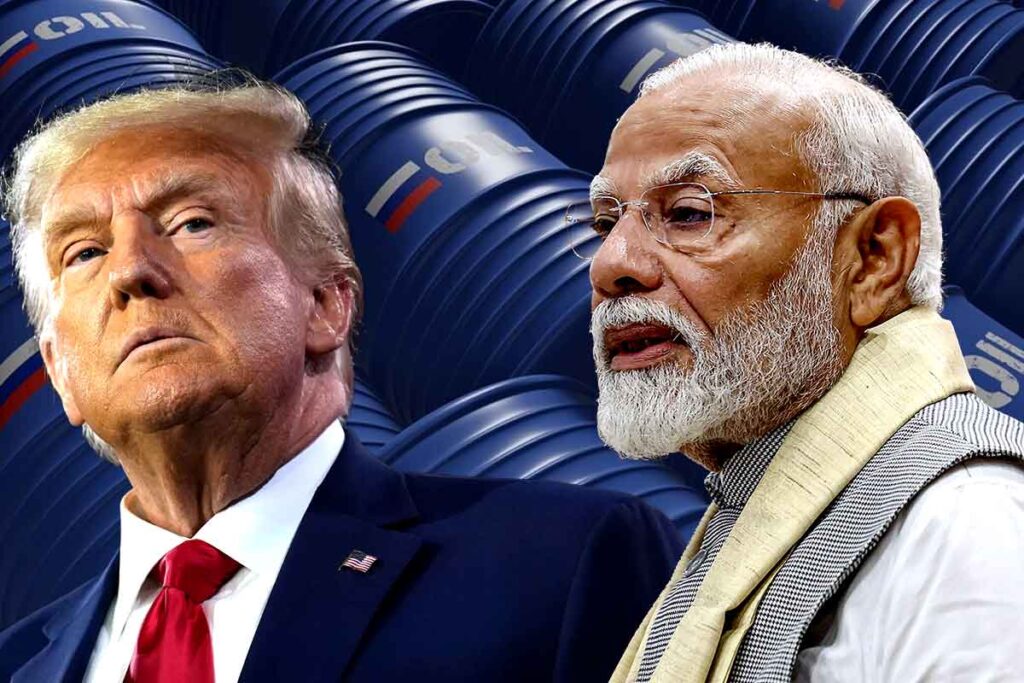
Donald Trump aide calls India ‘good actor’ on Russian oil purchase
India’s Russian Oil Buys Navigating Global Sanctions and Energy Needs
The complex world of international relations and energy markets recently saw India at the center of a significant geopolitical discussion. Reports suggesting the United States had granted India ‘permission’ to acquire Russian oil amid ongoing global conflicts sparked widespread debate. This situation highlighted the delicate balance nations must maintain between strategic alliances and their fundamental domestic needs.
Initially, claims surfaced, reportedly stemming from the Trump administration, indicating that the US had given India a waiver to purchase crude oil from Russia. This assertion quickly stirred a hornet’s nest, particularly within India’s political landscape. Opposition voices questioned the Narendra Modi government’s sovereignty, asking why a self-reliant nation like India would need a third party’s ‘approval’ to secure its energy supplies. The controversy also reached American shores, where critics challenged the rationale behind allowing India to buy oil from Russia, especially given the broad sanctions regime targeting Moscow.
As the debate intensified, the White House moved to clarify its position. White House Press Secretary Carolyn Livitt stated that the US had granted a ‘special exemption’ to India for Russian oil purchases under specific circumstances. Livitt explained that India had previously honored American sanctions by halting its acquisition of Russian oil. However, a temporary disruption in global oil supply, attributed to issues concerning Iran, necessitated a pragmatic approach. This made a temporary waiver for India a viable option to manage the immediate global energy crunch.
Livitt further elaborated on the reasoning behind this exemption, stating that it primarily concerned Russian oil tankers already en route. Instead of rerouting these vessels, the US agreed to allow them to dock in Indian ports. The understanding was that purchasing oil from these pre-existing shipments would not provide Russia with substantial new financial gains. This approach aimed to mitigate global supply disruptions while minimizing any perceived benefit to the sanctioned nation.
Amid the swirling controversy surrounding America’s ‘permission,’ the Indian government firmly articulated its stance. Officials stressed that India’s priority remains fulfilling the energy demands of its 1.4 billion citizens. The government underscored its commitment to taking all necessary steps to ensure national energy security. This position firmly asserted India’s independent foreign policy and its commitment to national interest above external pressures.
For Omni 360 News readers, it is crucial to understand India’s energy landscape. The nation imports a substantial 85 percent of its total oil requirements. Data from February 2026 indicates that Russia has emerged as India’s largest supplier of crude oil, providing approximately one million barrels daily. This accounts for roughly 25 to 30 percent of India’s total oil imports during that period. This reliance underscores the strategic importance of Russian oil for India, irrespective of geopolitical considerations.
The unfolding narrative reflects a complex geopolitical balancing act. India, a major global economy and a key strategic partner for the US, finds itself navigating an intricate web of international sanctions, national energy needs, and maintaining independent foreign policy. The temporary ‘exemption’ highlights the practical challenges of implementing comprehensive sanctions without inadvertently destabilizing global markets or severely impacting allied nations. This situation underscores that in the realm of international diplomacy and trade, pure ideological stances often yield to pragmatic solutions driven by immediate economic and humanitarian necessities.
The episode serves as a reminder of the intricate connections between global conflicts, energy markets, and national interests, emphasizing that even seemingly straightforward policies can have wide-ranging and often unexpected ripple effects across the world.
Key Takeaways
* Reports of a US ‘permission’ for India to buy Russian oil sparked a debate about India’s sovereignty and energy policy.
* The White House, through Press Secretary Carolyn Livitt, clarified that a ‘special exemption’ was granted due to India’s prior cooperation with sanctions and a temporary global oil supply disruption linked to Iran.
* The exemption was primarily for Russian oil tankers already at sea, aiming to prevent further market disruption without significantly benefiting Russia.
* India firmly stated its national interest, prioritizing the energy needs of its 1.4 billion people, with energy security being a top government priority.
* India is highly dependent on oil imports (85%), with Russia being its largest crude oil supplier, accounting for 25-30% of its total imports.
* The situation highlights India’s pragmatic approach to balancing its strategic alliances with its critical domestic energy requirements amid complex global geopolitical challenges.