Middle East Conflict: Iran says Khamenei’s wife alive
Tehran Denounces False Reports of Supreme Leader’s Family Deaths
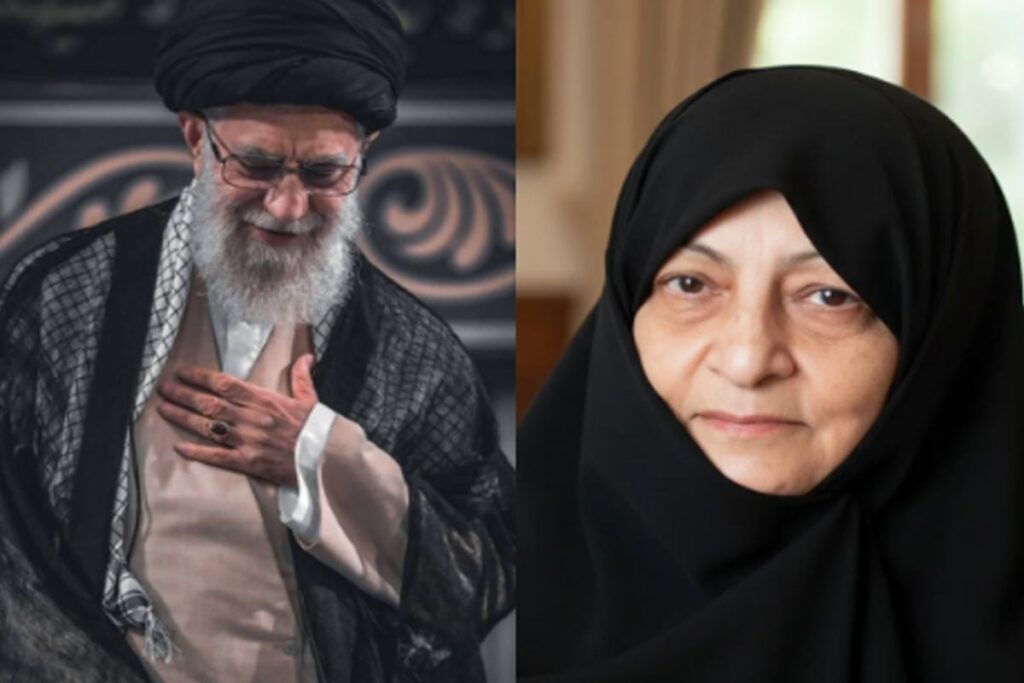
In the volatile landscape of Middle Eastern geopolitics, information itself often becomes a frontline. Global headlines were recently rocked by sensational claims that Iran’s Supreme Leader, Ayatollah Ali Khamenei, along with members of his immediate family, had perished in a joint US-Israeli airstrike on Tehran. These reports, suggesting a dramatic escalation of regional tensions, painted a picture of devastation that reverberated across international media. However, in a swift and telling turn of events, official Iranian channels have stepped forward to dismantle these narratives, particularly debunking the alleged death of Khamenei’s wife, Mansoureh Khojasteh Bagherzadeh.
The initial reports, surfacing last Saturday, were grim. They spoke of a devastating attack targeting the very heart of Iran’s leadership. The alleged fatalities included Khamenei himself, his daughter, son-in-law, and granddaughter. Amidst this torrent of unverified information, rumors about the fate of Mansoureh Khojasteh Bagherzadeh began to circulate. Initially whispered to be severely injured and in a coma, these claims tragically escalated to reports of her death. Such widespread unconfirmed news can, in an instant, ignite fear and uncertainty, highlighting the critical need for careful journalistic verification in sensitive international affairs.
The Swift Retraction
The narrative, however, fractured dramatically by Thursday. Iran’s official news agency issued a definitive statement, categorically refuting the earlier claims. The central revelation was clear: Mansoureh Khojasteh Bagherzadeh is alive. This official debunking directly contradicted not only external reports but also, astonishingly, earlier pronouncements from some of Iran’s own state television channels that had, for a period, reported her demise. The rapid shift in the official narrative underscores the inherent challenges of managing information in a crisis, where even state-controlled media can initially fall victim to the very rumors they later seek to correct.
This sequence of events reveals a chaotic information environment. For a brief window, the global community grappled with the prospect of an unprecedented escalation, fueled by reports that a major power broker in the Middle East had been eliminated. The correction from Tehran serves as a powerful reminder of how quickly speculative reports can gain traction, and how vital it is for news outlets, including Omni 360 News, to prioritize accuracy above all else, especially when reporting on events with such profound geopolitical implications.
Tracing the Origins of Disinformation
The spread of these initial, ultimately false, death reports offers a compelling case study in the dynamics of information warfare and rumor propagation. Shortly after the alleged airstrikes on Tehran, Israeli Prime Minister Benjamin Netanyahu was quick to issue a statement, reportedly confirming the death of Iran’s Supreme Leader. This assertion, coming from a key regional adversary, immediately lent a degree of weight to the claims, regardless of its factual basis.
Adding further fuel to the fire, former US President Donald Trump joined the chorus, posting on social media that “one of history’s worst people” had died. He alluded to the success of intelligence operations, implying US involvement or at least awareness of the alleged event. Such high-profile figures endorsing unverified claims can lend them a dangerous credibility, amplifying their reach and impact exponentially. Even some initial reports within Iranian state media appeared to confirm Khamenei’s death before later clarifications were issued. This complex web of statements, retractions, and endorsements highlights how easily an information vacuum can be filled with speculation, and how official pronouncements, even from opposing sides, can contribute to, or be misled by, the pervasive ‘fog of war’. Whether these initial claims were deliberate psychological operations, misinterpretations, or simply premature reporting, their widespread dissemination caused significant international alarm.
The Mojtaba Khamenei Conundrum
Compounding the swirling confusion were concurrent rumors regarding Mojtaba Khamenei, Ayatollah Ali Khamenei’s son, who is often viewed as a significant figure in Iran’s power structure and a potential successor to the Supreme Leader. Reports suggested that Mojtaba, too, had been gravely injured in the alleged US-Israeli attacks and was in a coma. These claims added another layer of instability to an already volatile situation, suggesting a deeper decapitation strike against Iran’s leadership.
However, much like the reports concerning his mother, these rumors were also swiftly disproven. Within hours of these claims circulating, Mojtaba Khamenei delivered a powerful and defiant message to the world. He unequivocally stated that there was “no question” of opening the Strait of Hormuz – a critical global oil transit choke point – to international shipping under duress. Furthermore, he issued a stark warning, demanding that all American military bases in the Middle East be shut down, or face direct attacks. This uncompromising and assertive public stance served two critical purposes: it emphatically demonstrated his good health and capability, dispelling any notions of injury or incapacitation, and it reaffirmed Iran’s resilient and defiant posture on the international stage. His swift and robust response underscored Tehran’s determination to project strength and stability, even as rumors sought to undermine it.
Information Warfare in a Tense Region
This entire episode serves as a powerful illustration of information warfare in action, particularly in a region as perpetually tense as the Middle East. The alleged targeting of Tehran and its highest leader by US and Israeli forces, even if proven false, speaks volumes about the perceived flashpoints and strategic anxieties that define this geopolitical landscape. In such an environment, the truth can become a casualty as quickly as human lives.
This incident, closely observed by Omni 360 News, highlights how rapidly narratives can shift and how crucial it is to critically assess every piece of information. False claims, whether intentionally seeded or accidentally spread, can have real-world consequences, influencing market stability, diplomatic relations, and even military posturing. The challenge for citizens and news organizations alike is immense: to discern fact from fiction amidst a deluge of often conflicting reports. It is a stark reminder that in times of crisis, information itself is a weapon, and its accurate reporting is paramount to preventing wider destabilization. The incident underscores the fundamental importance of media literacy and the unwavering commitment to truth-seeking in an age where information can be manipulated with alarming ease.
Key Takeaways
* Initial, widespread reports of Iranian Supreme Leader Ayatollah Ali Khamenei and his family dying in US-Israeli airstrikes were ultimately debunked.
* Iranian state media itself initially contributed to the confusion, reporting Khamenei’s wife, Mansoureh Khojasteh Bagherzadeh’s death, only to retract it later.
* High-profile figures, including Israeli Prime Minister Benjamin Netanyahu and former US President Donald Trump, played a role in amplifying the initial, false claims.
* Rumors about Mojtaba Khamenei, a potential successor, being injured were quickly dispelled by his public, defiant statements regarding regional policy.
* The entire event underscores the critical role of information verification and the dangers of misinformation in highly charged geopolitical environments, highlighting how quickly narratives can be distorted and corrected.