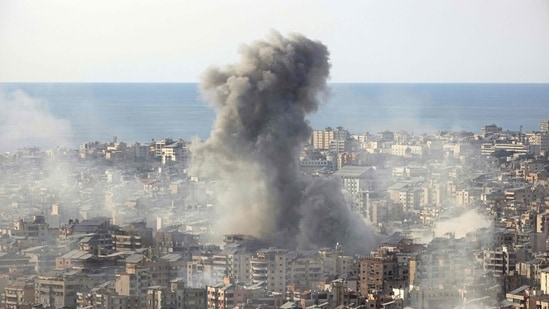
‘Iranians willing to die, Americans aren’t': Ex-RAW chief Vikram Sood says West Asia conflict may ‘last longer’| India News
Vikram Sood’s Caution US Israel Iran Conflict A Protracted Challenge Omni 360 News Analysis
The shifting sands of Middle Eastern geopolitics always command global attention, and recent insights from former Research and Analysis Wing (R&AW) Chief Vikram Sood have brought a stark warning into focus. Speaking on Friday, Sood suggested that any potential conflict involving the United States, Israel, and Iran could extend far beyond initial American expectations. This perspective from a seasoned intelligence veteran offers a critical lens through which to view the region’s volatile dynamics, urging a deeper understanding of the complex forces at play. For readers of Omni 360 News, grasping these intricacies is essential to comprehending the potential ripple effects across continents.
Vikram Sood’s Insight A Veteran’s Perspective
Vikram Sood, with his extensive background at India’s external intelligence agency, is no stranger to the nuances of international relations and covert operations. His assessment that a US-Israel-Iran confrontation might be prolonged is rooted in decades of observing the region’s historical patterns and the strategic calculus of its key players. Sood’s remarks underscore a fundamental truth about Middle Eastern conflicts: they are rarely straightforward or concluded swiftly. Unlike conventional warfare scenarios, the intricate web of state and non-state actors, coupled with deeply entrenched historical grievances, creates an environment ripe for protracted engagement, where swift military victories often prove elusive. His experience suggests that the region’s complex political landscape resists simple, decisive military solutions.
Understanding the Core Players and Their Stakes
To appreciate the potential for a drawn-out conflict, it’s vital to examine the motivations and capabilities of each principal actor. Each nation operates with distinct priorities that shape its approach to regional security.
The United States: America’s involvement in the Middle East is multifaceted, driven by a commitment to Israel’s security, safeguarding vital oil shipping lanes, and counteracting perceived threats to regional stability. However, the U.S. has also grown wary of prolonged military interventions, particularly after experiences in Iraq and Afghanistan. A direct confrontation with Iran would test its strategic patience and economic resilience, potentially drawing resources away from other global priorities. Regional reports often highlight local sentiment regarding the enduring American presence and its implications for sovereign interests across various Gulf states. The logistical challenges and financial costs of sustained operations in a distant theater weigh heavily on strategic planners.
Israel: For Israel, Iran represents a primary security concern. Fears surrounding Iran’s nuclear program, its development of ballistic missiles, and its extensive network of proxy forces—such as Hezbollah in Lebanon, Hamas in Gaza, and various militias in Syria and Iraq—are deeply ingrained. Israel’s strategic doctrine prioritizes preemptive action against perceived threats, seeking to dismantle capabilities that could challenge its existence. Local Israeli media frequently covers the palpable anxieties among its populace concerning these external pressures, reflecting a national consensus on the seriousness of the Iranian threat. The nation’s small geographical size amplifies the perceived risk from long-range missiles and regional adversaries.
Iran: Iran views itself as a regional power and a bulwark against Western influence. Its revolutionary ideology, pursuit of a nuclear program (which it maintains is for peaceful purposes), and support for various regional groups are central to its foreign policy. Iran’s strategy often involves asymmetric warfare, leveraging its proxy network to project power and deter direct attacks on its soil. Economically, Iran has endured decades of sanctions, yet its resilience, often reported by independent Persian news outlets, is a testament to its resolve, albeit at a significant cost to its citizens. The Islamic Revolutionary Guard Corps (IRGC) plays a pivotal role in projecting Iran’s influence, both domestically and through its external network.
Why a Conflict Could Linger The Intricate Web
Sood’s prediction of a prolonged engagement stems from several critical factors that differentiate a potential US-Israel-Iran confrontation from simpler military calculus:
* Asymmetric Warfare and Proxy Networks: Iran’s strength lies not just in its conventional military but in its “Axis of Resistance.” Groups like Hezbollah are highly trained and deeply entrenched, capable of inflicting considerable damage through guerrilla tactics, rocket attacks, and cyber warfare. Engaging these proxies would be akin to fighting multiple battles across diverse terrains, making a swift, decisive victory incredibly difficult. Reports from independent journalists covering the region often detail the organizational depth and local embeddedness of these groups, showing how they operate as effective extensions of Iranian policy without direct state-on-state confrontation. This diffusion of conflict makes it challenging to identify and neutralize all threats effectively.
* Geographic Complexity and Strategic Choke Points: The Middle East is a vast and diverse region. Any conflict would span land, sea, and air, involving multiple borders and non-contiguous battlefields. The Strait of Hormuz, a narrow waterway through which a significant portion of the world’s oil passes, is a critical choke point. Iran has repeatedly threatened to close it, which would have catastrophic global economic consequences and likely trigger international intervention, further prolonging any conflict. Local maritime news sources frequently highlight the strategic importance and fragility of navigation through these waters, emphasizing the global economic stakes. The rugged terrain of Iran itself, with its mountainous borders, also presents significant challenges for any ground invasion.
* Deeply Rooted Ideologies and National Resolve: The conflict is not just about territory or resources; it’s deeply ideological. Both sides hold strong convictions, making compromise difficult and retreat unlikely. Iran’s leadership, emboldened by its revolutionary spirit, has demonstrated a willingness to endure immense pressure. Similarly, Israel’s national resolve against existential threats is unwavering. This ideological dimension means that military solutions rarely achieve complete submission and often foster long-term resistance. The commitment to their respective causes makes either side unlikely to surrender or back down easily, even in the face of significant losses.
* Regional and International Spillovers: A major conflict could easily draw in other regional players like Saudi Arabia, the UAE, or even global powers like Russia and China, each with their own interests. Such a multi-party engagement would transform a localized conflict into a broader regional or even international crisis, exacerbating its duration and complexity. Analyses from various non-Western international policy journals often explore these intricate alliances and potential domino effects, demonstrating how seemingly localized events can quickly globalize. The intricate web of alliances and rivalries in the Middle East means that a blow against one party can be perceived as a challenge to another, widening the scope of engagement.
Past Lessons and Future Warnings
History offers sobering lessons. The Iran-Iraq War (1980-1988) lasted eight grueling years, illustrating the devastating potential of prolonged regional conflicts where ideological fervor and external support fueled continuous fighting. More recent engagements in Afghanistan and Iraq demonstrate the challenges of imposing external solutions on deeply fractured societies, highlighting how initial military success does not equate to lasting political stability. These historical precedents reinforce Vikram Sood’s warning: expecting a quick resolution in the Middle East, particularly involving a resilient and strategically cunning adversary like Iran, would be a profound miscalculation. The region’s history teaches that military intervention often creates new problems rather than solving old ones swiftly.
Key Takeaways:
The former R&AW Chief’s insights underscore several crucial points for anyone tracking global stability. First, the deep entanglement of state and non-state actors means a simple military strike rarely achieves lasting objectives. Second, Iran’s strategic depth through proxy forces and its geographical positioning makes it a formidable opponent for a quick confrontation. Third, the ideological underpinnings of the conflict guarantee a protracted struggle if diplomacy fails. Finally, the potential for regional and global powers to become entangled means any conflict risks spiraling beyond initial control, presenting a severe challenge to international order.
Omni 360 News Conclusion:
Vikram Sood’s assessment serves as a vital reminder for policymakers and citizens alike: the Middle East remains a geopolitical crucible where quick fixes are rare. The prospect of a prolonged conflict involving the US, Israel, and Iran carries immense risks, not only for the region but for global stability and economic well-being. Understanding these complexities, as highlighted by seasoned intelligence analysis, is paramount for informed decision-making and for navigating the challenging geopolitical landscape ahead. Omni 360 News remains committed to bringing such critical, nuanced perspectives to its readers, fostering a deeper comprehension of the forces shaping our world and the need for cautious diplomacy in an interconnected age.