Iran’s Top Security Official Meets India’s Deputy National Security Adviser as Global Tension Rises
Iran offers talks but warns it will defend itself strongly if pushed
In the bustling city of Mumbai, a significant diplomatic meeting took place on January 29, 2026 between Iran and India against the backdrop of growing tension between Iran and the United States.
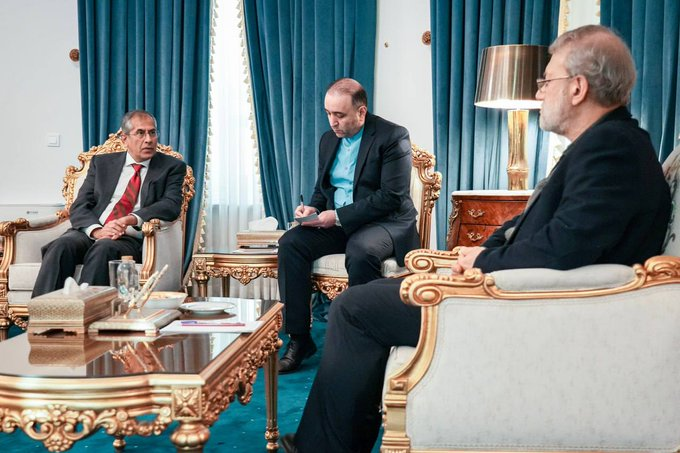
Ali Larijani, the Secretary of Iran’s Supreme National Security Council, was welcomed by the Indian government’s Deputy National Security Adviser, Pavan Kapoor. The meeting, held at the Iranian Consulate in Mumbai, was confirmed by the Consulate General of Iran through a public post on X (formerly Twitter).
The official statement shared on social media said that both sides held talks, focusing on topics of mutual interest. However, at the time of the report, no detailed outcome of the discussion had been made public.
Why the Meeting Matters
The meeting comes at a time of serious diplomatic tension between Iran and the United States. This tension has been increasing rapidly over recent weeks because talks on Iran’s nuclear program have stalled. The United States, under President Donald Trump, has issued strong warnings to Tehran, pushing for renewed negotiations and threatening military action if Iran does not agree to limitations on its nuclear activities.
This diplomatic environment makes the visit of Ali Larijani to India particularly important. India and Iran have historically had longstanding ties, especially in trade energy and regional cooperation. The discussions with India’s Deputy NSA could include strategic matters as well as concerns relating to regional stability.
Trump’s Warning and U.S. Naval Buildup
In official public messages on Truth Social, President Donald Trump has warned Iran sharply over the deadlock in nuclear negotiations.
Trump stated that a large U.S. naval force, described as a “massive armada”, was moving toward the Middle East. This group is reported to be led by the USS Abraham Lincoln aircraft carrier and includes several warships and aircraft, aimed at sending a message of strength and readiness.
Trump said the force was moving with “great power, enthusiasm and purpose.” He emphasized that the fleet is “ready, willing and able” to carry out its mission and that if negotiations fail, the United States might act swiftly and with force.
The President also urged Iran to “quickly come to the table” and negotiate a deal that would stop its nuclear program from developing weapons. He added that “time is running out” and that the situation was critical.
In one of his earlier posts, Trump referred to a previous operation called “Operation Midnight Hammer”, suggesting that Iran had faced significant military pressure before and warning that future military action would be “far worse” if Iran did not agree to a deal.
Iran’s Response
In reply to the American warnings, Iran’s mission to the United Nations said the Islamic Republic was ready for dialogue “based on mutual respect and interests”. However, the Iranian mission also strongly warned that “but if pushed, it will defend itself and respond like never before!”
This message was echoed in other Iranian statements, where officials said that Tehran is prepared to defend its nation but did not want to start a war. Iran’s government spokesperson said Iran is not afraid of confrontation but stressed that continued escalation could spread instability in the region.
Military Preparations in the Region
As these political warnings were exchanged, U.S. Central Command (CENTCOM) announced that it was conducting readiness exercises in the Middle East. These drills are described as multi-day operations meant to increase the military’s ability to disperse personnel and equipment quickly, strengthen regional cooperation and prepare for possible responses to various scenarios.
CENTCOM officials said these exercises are designed to show that the United States maintains a credible, combat-ready and responsible presence in the region. The goal is to deter hostile actions, reduce the chance of miscalculation by any party, and reassure regional allies and partners.
The deployment of the USS Abraham Lincoln strike group into the region, reported by several news outlets, includes not only the aircraft carrier itself but also additional U.S. warships, destroyers and fighter aircraft.
Meanwhile, U.S. military leaders have also been meeting with leaders from other countries in the region. For example, the head of CENTCOM met with the Chief of Staff of the Israel Defence Forces to strengthen defensive cooperation between the United States and Israel.
What This Means Going Forward
The talks between Iran’s Larijani and India’s Pavan Kapoor came at a time when the international community is watching closely.
Iran has stated it remains willing to engage in talks and seeks respect in any discussions, but it has also made clear that any attack on it would be met with strong defense.
On the other hand, the United States has pushed for a nuclear deal that would keep nuclear weapons out of Iran’s control and said it is prepared to act if Iran doesn’t cooperate. This situation shows a growing gap between what each side wants and how they plan to achieve it.
India’s role at this moment, while not directly part of the U.S.–Iran conflict, highlights how nations are engaging diplomatically during times of tension.
Whether these talks lead to deeper talks or help calm the situation, only time will tell. For now, all eyes remain on how both Tehran and Washington respond in the coming days.