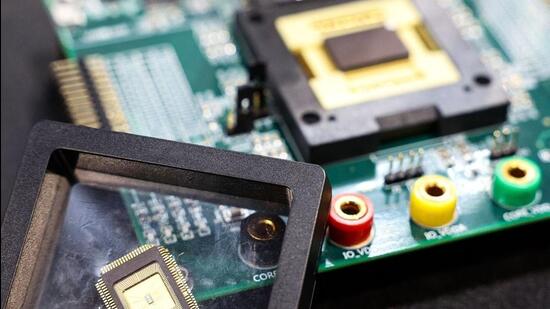
IT ministry seeks ₹1 lakh crore for India Semiconductor Mission 2.0: Officials| India News
India Eyes Significant Funding for Chip Sector Growth and Self-Reliance
A pivotal moment appears to be on the horizon for India’s technological future, as reports indicate the government is poised to allocate over ₹1 lakh crore towards the India Semiconductor Mission (ISM) 2.0. This substantial financial commitment, with an announcement potentially arriving by the close of April, is aimed at profoundly bolstering the nation’s capabilities in semiconductor design, manufacturing, and establishing robust supply chains. This initiative underscores India’s determined push for self-reliance and a stronger footprint in the global electronics ecosystem, a development closely tracked by Omni 360 News.
For those wondering about the significance of this move, imagine the tiny “brains” that power nearly every electronic device we use daily – from the smartphone in your hand to the car you travel in, even the washing machine at home. These are semiconductor chips. For decades, India has largely been a consumer of these vital components, importing them from other nations. The India Semiconductor Mission, and particularly this anticipated ISM 2.0, represents a strategic pivot: India wants to not only design these complex chips but also manufacture them within its borders, and build the entire network that supports their creation and distribution.
This proposed allocation is more than just a financial figure; it signifies a serious, long-term commitment to a sector that is incredibly capital-intensive and strategically crucial. The global landscape for semiconductors has faced considerable disruption in recent years, highlighting the vulnerabilities of relying heavily on a few manufacturing hubs. India’s ambition, therefore, is rooted in both economic opportunity and national security. By nurturing a domestic semiconductor industry, India aims to create high-value jobs, attract significant foreign investment, and reduce its susceptibility to global supply chain shocks.
The focus areas of this potential ₹1 lakh crore investment are multifaceted, addressing key segments of the semiconductor value chain.
First, chip design. India boasts a vast pool of engineering talent, with many global technology giants already operating design centers in cities like Bengaluru and Hyderabad. The new funds are expected to supercharge indigenous design capabilities, encouraging local startups and research institutions to innovate and develop proprietary chip architectures. This is the intellectual heart of the semiconductor industry, where new ideas for faster, more efficient chips are born. Supporting this aspect means fostering a culture of innovation and creating high-skill employment opportunities.
Second, manufacturing. This is arguably the most challenging and capital-intensive part. Setting up a semiconductor fabrication plant, or ‘fab’, involves massive investments in specialized machinery, ultra-clean environments, and highly skilled personnel. Attracting global players to establish fabs in India has been a primary goal. The increased allocation would likely sweeten existing incentive schemes, making India a more attractive destination for these highly complex manufacturing facilities. Successful manufacturing means India producing the physical chips, a significant step towards self-sufficiency.
Third, supply chains. A chip’s journey from raw silicon to a finished product in an electronic device involves numerous steps, including material sourcing, packaging, and testing. Building a resilient supply chain means investing in the entire ecosystem – from the companies that supply purified silicon wafers to those that assemble and test the final chips. This holistic approach ensures that domestic manufacturing efforts are not hampered by dependencies on external suppliers for critical intermediate components or services. Strengthening these links reduces vulnerabilities and creates a comprehensive ecosystem.
Previous iterations of the India Semiconductor Mission and related production-linked incentive (PLI) schemes have already laid some groundwork. Companies have shown interest, and some initial commitments have been made for setting up manufacturing and assembly units. However, the proposed ₹1 lakh crore allocation for ISM 2.0 signals a substantially escalated effort, recognizing the scale required to compete effectively on a global stage. This isn’t just about tweaking existing policies; it’s about a grander vision and a more aggressive pursuit of technological independence.
The economic ramifications of such an investment are profound. Beyond direct job creation in factories and design centers, a thriving semiconductor ecosystem would spur growth in ancillary industries, from specialized chemicals to precision engineering and automation. It would solidify India’s position as a global manufacturing hub, aligning perfectly with the ‘Make in India’ and ‘Atmanirbhar Bharat’ initiatives. Strategically, it provides India with a crucial lever in geopolitical dynamics, strengthening its bargaining power and ensuring access to essential technology.
Of course, the path ahead is not without its challenges. The semiconductor industry demands immense capital, advanced technology, and a highly skilled workforce, all with long gestation periods before profitability. India will need to sustain its policy support, continually upgrade its skill development programs, and navigate intense global competition from established semiconductor powerhouses. However, with this potential new funding, India is poised to make a formidable statement of intent, moving decisively towards becoming a significant player in the global semiconductor arena. The upcoming announcement will certainly be a landmark event for India’s technological future, and Omni 360 News will continue to provide comprehensive updates on this critical development.
Key Takeaways:
* India may allocate over ₹1 lakh crore for its India Semiconductor Mission (ISM 2.0).
* The funding aims to boost chip design, manufacturing, and supply chains.
* An official announcement is expected by the end of April.
* This initiative seeks to reduce India’s reliance on imported chips and enhance technological self-reliance.
* The investment is critical for creating high-skill jobs, attracting foreign investment, and strengthening national security.