
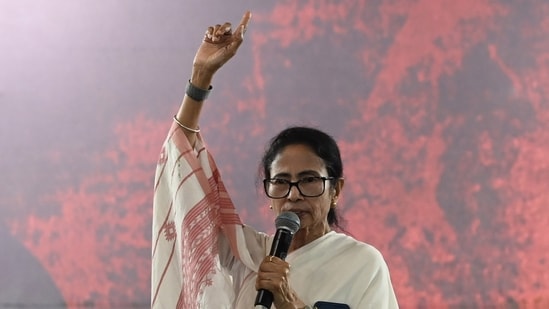
It's Mamata Banerjee vs BJP's Suvendu Adhikari in Bhabanipur: Rematch on as TMC list out for West Bengal elections| India News
West Bengal Chief Minister Mamata Banerjee Seeks Mandate from Bhabanipur
West Bengal Chief Minister Mamata Banerjee’s decision to contest the assembly by-election from Bhabanipur represented a pivotal moment in the state’s political narrative following the fiercely fought 2021 state assembly elections. This move, a constitutional necessity and a strategic reaffirmation, captivated political observers and citizens alike, solidifying her position at the helm of West Bengal’s governance. Omni 360 News delves into the intricacies of this significant electoral choice.
The Imperative to Contest
For those new to the nuances of Indian parliamentary democracy, imagine a situation where a coach leads a team to victory, but to officially take the captain’s armband, they must first play and win a match themselves. In West Bengal, the Trinamool Congress, led by Mamata Banerjee, secured a resounding victory in the general assembly elections, marking her third consecutive term as Chief Minister. However, a significant twist emerged from the high-stakes battleground of Nandigram, where she narrowly lost her own constituency seat.
Under the Indian Constitution, any person appointed as a Chief Minister or a minister who is not a member of the state legislature must be elected to the assembly within six months of their appointment. Failing to do so necessitates their resignation. For Mamata Banerjee, this meant that despite leading her party to power, securing an assembly seat was not merely an option but a constitutional mandate to continue as Chief Minister. The clock was ticking, making a by-election a critical requirement for her tenure.
Bhabanipur Her Familiar Territory
The choice of Bhabanipur was hardly a surprise, yet deeply strategic. This constituency, nestled in south Kolkata, has long been her political home ground. She successfully represented Bhabanipur in the assembly in 2011 and 2016. In the 2021 general elections, the seat was won by her party colleague, Sobhandeb Chattopadhyay, who promptly resigned to pave the way for her by-election. This facilitated her return to a constituency where she has deep-rooted connections and a significant personal rapport with the electorate.
Bhabanipur is a melting pot of cultures and communities, reflecting Kolkata’s cosmopolitan character. It’s a diverse constituency with a mix of Bengali and non-Bengali speaking populations, including a substantial number of Gujarati, Punjabi, and Hindi-speaking residents, alongside various religious communities. Her historical wins here have been attributed to her ability to connect with this varied demographic, transcending linguistic and communal lines. Her campaigners often highlight her accessibility and her focus on local development issues, which resonate strongly with the residents.
Navigating the Political Landscape
The by-election was not just about securing a seat; it was also a test of public sentiment post the general elections, particularly after the emotionally charged Nandigram outcome. For Mamata Banerjee, winning Bhabanipur with a convincing margin was crucial to send a strong message of popular endorsement, countering any narratives that her party’s victory was despite her personal electoral setback. The campaign saw her engage directly with voters, moving through the lanes and by-lanes, reaffirming her connection with the constituency. Local reports from sources like Anandabazar Patrika and The Telegraph highlighted the extensive door-to-door campaigns and public meetings that underscored the importance of this specific election.
The opposition, primarily the Bharatiya Janata Party (BJP) and the Left Front, understood the symbolic weight of Bhabanipur. They fielded candidates—Priyanka Tibrewal for the BJP and Shreeb Das for the CPI(M)—to challenge her, attempting to make inroads into what was widely considered a Trinamool stronghold. Their strategy often focused on national issues and criticisms of the state government, while Mamata Banerjee’s campaign remained rooted in local development, her past achievements, and the stability of her governance.
For a 12th-grade student trying to grasp this, think of it this way: even if your school team wins a big tournament, if the captain herself wasn’t on the field for the winning goal, she might need to play in a special ‘captain’s match’ afterwards to prove her leadership and keep her role. That’s essentially what Mamata Banerjee faced – a special election to confirm her position as Chief Minister after her party won the state.
Local Resonance and Public Pulse
Through local news reports from Sangbad Pratidin and other Bengali dail, the mood in Bhabanipur during the campaign was largely one of anticipation and a sense of continuity. While the opposition mounted a spirited challenge, the deep-seated loyalty to Mamata Banerjee and the Trinamool Congress was palpable among many sections of the electorate. Voters often spoke of her as ‘Didi’ (elder sister), a testament to her personal connect and long political career in the region. The by-election, therefore, became a re-endorsement of her leadership and vision for West Bengal.
Key Takeaways:
* The Bhabanipur by-election was a constitutional necessity for Mamata Banerjee to retain her Chief Minister position after losing in Nandigram.
* Bhabanipur served as her traditional political stronghold, offering a familiar and diverse electoral base.
* Her victory was crucial for reaffirming her personal leadership and consolidating her party’s mandate following the general elections.
* The by-election underscored the importance of local connect and direct engagement with voters, a hallmark of her campaigning style.
* The outcome had significant implications for the political stability and future direction of West Bengal.
The electoral outcome from Bhabanipur was not just a victory in a single constituency; it was a powerful statement reaffirming Mamata Banerjee’s leadership and the electorate’s continued trust in her governance. It solidified her return to the assembly, ensuring stability and setting the course for her third term as West Bengal’s Chief Minister.