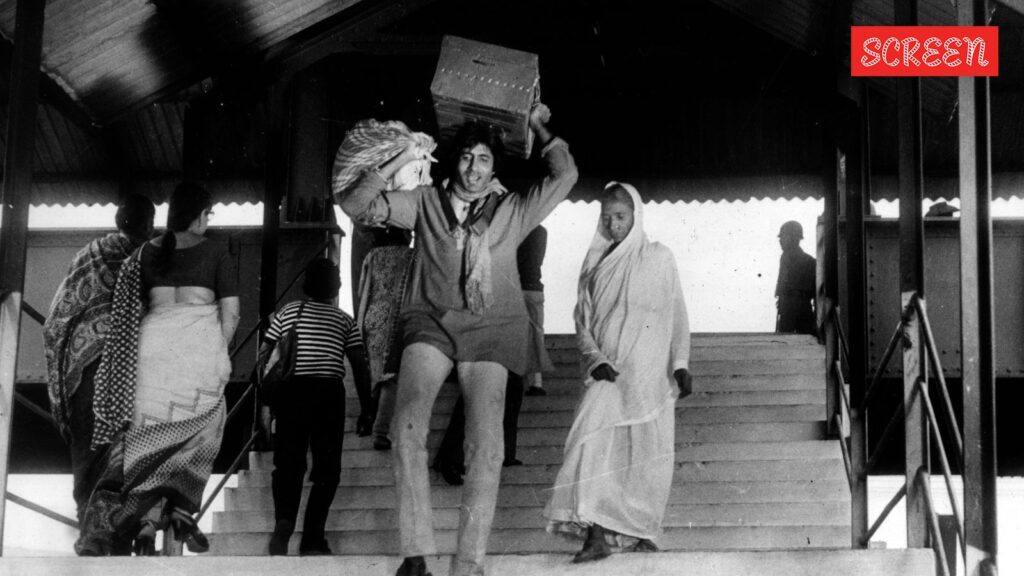
‘Jaya Bachchan said Amitabh Bachchan had a near fatal accident’: Sandeep Patil recalls how Big B’s secret cameo in his film was cancelled after Coolie mishap
Rural America’s Fading Voices Rebuilding Local News in Community Spaces
The quiet towns and sprawling landscapes of rural America are facing a profound challenge: the disappearance of their local newspapers, a phenomenon creating what are now widely known as “news deserts.” For decades, the weekly or bi-weekly paper was the heartbeat of these communities, a trusted source for everything from school board meetings and county commissioner decisions to Friday night football scores and obituary notices. Today, that vital link is often gone, leaving an information void that impacts civic life, local commerce, and the very fabric of small-town identity.
This trend is not merely about ink on paper; it represents a significant shift in how communities access vital information. From our vantage point at Omni 360 News, tracking these developments across the nation, it is clear that while large metropolitan areas grapple with their own media changes, the impact on rural regions is particularly acute and often overlooked.
The Erosion of a Pillar
For generations, local newspapers served as indispensable watchdogs and chroniclers. They held public officials accountable, celebrated local achievements, and provided a shared narrative that bound residents together. However, over the past two decades, an economic perfect storm has battered these institutions. The rise of digital advertising siphoned away crucial revenue, while changing readership habits and increasing production costs made profitability an uphill battle.
Independent, family-owned papers, often operating on thin margins, were particularly vulnerable. Many either closed their doors permanently or were acquired by larger chains that subsequently downsized or shuttered them for lack of immediate return. Data from academic studies and regional journalism institutes confirm this grim reality: hundreds of counties across the United States now have no local newspaper, or only one with significantly reduced staff and coverage. This leaves millions of Americans without dedicated, professional reporting on their immediate surroundings.
Imagine a small town where the only news comes from social media gossip or a distant metropolitan paper that covers local issues superficially, if at all. Important local government decisions, environmental concerns, public health updates, and even local charity drives can go unreported, unnoticed, and unchallenged. This information gap isn’t just an inconvenience; it can have serious consequences.
The Ripple Effect on Civic Life
The absence of local news creates a void that reverberates through every aspect of community life.
Without reporters attending town council meetings or school board sessions, public officials operate with less scrutiny. This lack of oversight can lead to decreased transparency, inefficiency, or even corruption, as there’s no independent body consistently asking tough questions on behalf of the public. Residents are less informed about local policies, budget allocations, and long-term plans that directly affect their daily lives. Voter participation can decline as people feel disconnected from local governance, unsure of who or what they are voting for or against.
Beyond politics, local news cultivates a sense of belonging. It highlights local businesses, celebrates community heroes, and shares stories that define a place. When this narrative voice disappears, towns can struggle to maintain their unique identity and foster collective action. Economic development can suffer too, as businesses lack a platform to reach local customers and visitors struggle to find information about local attractions or services. The shared cultural experience that a local paper once provided is fractured, leading to a more atomized community.
Community-Led Solutions Emerge from the Desert
Despite the somber picture, a promising trend is emerging: communities themselves are stepping up to fill the void. These are not top-down initiatives but grassroots efforts, often driven by concerned citizens, former journalists, and local philanthropists.
One common model is the rise of non-profit news organizations. These ventures are typically funded through grants, individual donations, and community memberships, freeing them from the immediate pressures of advertising revenue. They often focus on in-depth investigative reporting, covering critical issues that traditional commercial models can no longer support. Examples can be found in rural areas where dedicated teams cover regional environmental issues, health disparities, or agricultural policies with a depth rarely seen in syndicated news.
Another approach involves university journalism programs partnering with local communities. Students and faculty provide reporting and editorial support, often establishing digital-first news sites that train the next generation of journalists while serving underserved areas. This model offers a sustainable pathway for high-quality local coverage and often integrates cutting-edge digital storytelling.
Hyperlocal digital platforms, sometimes run by just a handful of dedicated volunteers or part-time staff, are also making a difference. These websites or social media channels focus exclusively on a particular town or county, providing updates on local events, emergency information, and community announcements. While they may not have the investigative capacity of larger newsrooms, they serve a crucial role in keeping residents connected and informed about day-to-day happenings.
Furthermore, public broadcasting stations are increasingly expanding their local news coverage, recognizing their role as community information hubs. Philanthropic foundations, seeing the democratic implications of news deserts, are also investing significantly in supporting new models of local journalism.
These solutions are not uniform, nor are they a complete replacement for the robust local newspapers of yesteryear. However, they represent a resilient spirit—a testament to the understanding that accurate, local information is not a luxury, but a fundamental necessity for a healthy, functioning community. As we observe these shifts through Omni 360 News, the message is clear: the future of local news is increasingly collaborative, community-driven, and innovative.
Key Takeaways
* Local News Deserts Are Widespread: Many rural American communities have lost their primary local newspaper, creating significant information gaps.
* Impact on Accountability and Engagement: This void reduces oversight of local government, diminishes civic participation, and can foster misinformation.
* Community Identity Suffers: The absence of local news erodes shared narratives and weakens the bonds that define a town.
* Innovative Solutions Emerge: Non-profit newsrooms, university partnerships, hyperlocal digital platforms, and expanded public broadcasting are stepping in to rebuild local reporting.
* Community Support is Crucial: The sustainability of these new models relies heavily on local engagement, financial contributions, and volunteer efforts.
The fight to preserve and revitalize local news in rural America is far from over. It is a continuous effort to ensure that every community, no matter how small or remote, has a voice and access to the information it needs to thrive. Supporting these emerging local journalism initiatives is not just about news; it’s about investing in the future vitality and democratic health of our nation’s small towns.