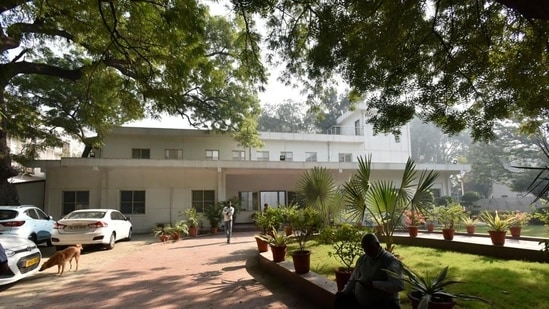
‘Jinxed’ Delhi CM bungalow, largely vacant for decades, set to be demolished
Delhi CM Residence at Shamnath Marg To Be Demolished
The sprawling official residence designated for Delhi’s Chief Minister, nestled at 33, Shamnath Marg in the Civil Lines area, is poised for demolition. This decision marks the end of a curious chapter for a property that has stood largely vacant for decades, shadowed by a persistent reputation that officials say contributed significantly to its underutilization. For years, the impressive bungalow, built in 1942, has remained an unoccupied government asset, a silent testament to a blend of political circumstance and public perception.
For those tracking Delhi’s urban landscape and its governmental operations, the bungalow at Shamnath Marg has long been an anomaly. Despite its prime location and substantial footprint — sitting on an approximate 5,000 square meter plot with a 1,000 square meter built-up area — it never truly served its intended purpose. Current Chief Minister Arvind Kejriwal, like several of his predecessors, opted to reside elsewhere, utilizing his residence at 6, Flagstaff Road instead of the official bungalow. This pattern of avoidance has been a consistent theme over multiple administrations.
The official narrative suggests that the bungalow’s ‘long-standing reputation’ made it an unattractive choice for occupants. While officials often refrain from explicitly naming a ‘jinx,’ local reports and public discourse have frequently attributed the property’s vacancy to an unofficial tag of being “inauspicious.” This perception, whether rooted in superstition or simply anecdotal political history, has evidently held sway, influencing Chief Ministers across different parties to steer clear of making it their home.
Historical records indicate that the property has indeed seen little long-term occupancy by CMs. Madan Lal Khurana, who served as CM from 1993 to 1996, reportedly resided there for a brief period before vacating it following a family illness. Sheila Dikshit, the longest-serving Delhi Chief Minister from 1998 to 2013, never made the Shamnath Marg bungalow her official residence. Even Sushma Swaraj, during her brief tenure as Chief Minister, occupied it for only a short spell. These patterns solidified the property’s image as one that CMs preferred to bypass.
The decision to demolish this significant government asset underscores a practical pivot. Officials consulted by Omni 360 News and other local outlets confirm that the property’s current state of disuse and its growing dilapidation necessitate a fresh start. Keeping a large, vacant bungalow maintained while it serves no functional purpose represents an inefficient use of public resources. The government now aims to redevelop the site for more effective official use, potentially constructing new residences for senior government officials or developing other necessary public facilities. This move reflects a broader initiative to optimize the utilization of valuable state-owned properties in a rapidly expanding urban environment like Delhi.
This development at Shamnath Marg is not merely about tearing down an old structure. It highlights the complex interplay of history, local folklore, and pragmatic governance. It serves as a reminder that even in modern administrative frameworks, intangible factors like ‘reputation’ can significantly impact tangible assets. The demolition signals a decisive step towards breaking a long-standing pattern of neglect, making way for a new chapter of purposeful development on a site that has for too long existed in a state of limbo.
Key Takeaways
* The Delhi CM’s official bungalow at 33, Shamnath Marg, is slated for demolition.
* The property has been largely vacant for decades due to a ‘long-standing reputation’ or perceived ‘jinx’.
* Current and past Chief Ministers consistently avoided occupying the residence.
* The demolition aims to redevelop the site for better utilization of government property.
* This decision reflects a shift towards pragmatic management of public assets over historical or superstitious influences.